

Cost, Quality, Compliance and Service Compared
Hospital buyers often frame the choice as Made in India vs imported urology instruments, as if the country on the box decided the outcome. It does not. A well-run manufacturer anywhere can make a reliable instrument, and a weak one anywhere can make a bad one. What origin does change is cost, lead time, regulation, service access and, in public tenders, preference rules.
This guide compares domestic and imported urology instruments on eight criteria, explains where each tends to win, gives a decision guide, and includes a free workbook that calculates landed cost and five-year cost of ownership. It is written for hospital administrators, urologists, procurement teams and distributors. AHCR is an Indian manufacturer, so weigh our view accordingly and use the scorecard to test any supplier, including us.
Where India stands today
India’s medical device market is estimated at roughly US$14 to 16 billion, and the country has long relied on imports. Government statements to Parliament have put import dependence at around 70 percent (Medical Dialogues), although estimates differ by source and year, and one industry report estimates that domestic manufacturing’s share of local demand rose from about 20 percent in 2022 to about 45 percent in 2025. The domestic base is broad but fragmented, with roughly 800 manufacturers.
Policy is changing the picture. The Production Linked Incentive scheme for medical devices carries an outlay of ₹3,420 crore and pays a 5 percent incentive on incremental sales of domestically made devices over FY2022-23 to FY2026-27 (India Briefing). Exports reached US$4.1 billion in FY25 (report). For buyers, the practical message is that domestic supply is real and growing, but its strength varies by product category.
Eight criteria that matter more than origin
Score every supplier on the same eight criteria. Our guide to validating quality before a bulk order and virtual factory audit checklist show how to gather the evidence, and the guide to certifications explains what each certificate proves.
Domestic vs imported: side by side
This table shows general tendencies. Individual suppliers vary widely, so treat each row as a question to check, not a conclusion.
| Criterion | Domestic supply tends to | Imported supply tends to | What to check |
|---|---|---|---|
| Price | Avoid import duty and long freight | Carry duty, freight and exchange-rate exposure | Landed cost, not unit price |
| Lead time | Shorter, with stock closer to you | Longer, with customs and shipping steps | Written delivery commitment |
| Service and spares | Engineers and spares in country | Depends on the local distributor | Engineer location, response time, spares stock |
| Customisation | More flexible on OEM and specifications | Fixed catalogue configurations | OEM options in writing |
| Technology range | Strong in instruments and mid-range equipment | Broader in high-end platforms | Is the exact product available domestically? |
| Regulatory path | Manufacturing licence | Registration and import licence | Valid documents for the exact device |
| Installed base fit | Check compatibility case by case | Often strongest within one brand | Written compatibility confirmation |
| Procurement preference | May qualify as a local supplier | May face preference rules in public tenders | Local-content class in the bid |
Cost: what origin changes
Unit price is one layer of the bill. Origin affects several of the others, which is why a lower quote can still cost more. See our guide to the factors that influence surgical instrument pricing in India for the manufacturing side.
The Government of India told Parliament in December 2025 that devices made under the PLI scheme are about 10 to 30 percent cheaper than comparable imports (Medical Dialogues). Treat that as a useful signal, not a rule: the PLI covers specific, mostly high-end categories, so it does not mean every Indian-made instrument is that much cheaper.
To compare fairly, convert each quotation to landed cost (price plus freight, insurance, duty, non-recoverable tax and clearance), then add installation, consumables, service contract and expected downtime over the equipment’s life. For machines with recurring costs, see lithotripter cost versus ROI and lithotripter spare parts and troubleshooting. The workbook below does the arithmetic.
Regulation and compliance
In India, devices are regulated under the Medical Devices Rules, 2017. A domestic manufacturer needs a manufacturing licence: state authorities license Class A and B devices (Form MD-5), and CDSCO licenses Class C and D (Form MD-9), with some low-risk devices exempt. An imported device needs a registration and import licence. Either supplier should also show an ISO 13485 certificate, and CE marking is relevant for export markets.
Ask both kinds of supplier for the same documents and check that the name, address, scope and validity dates match. Our guide on manufacturer vs trader explains why it matters to know who actually makes the product.
Service, spares and lead time
This is where domestic supply most often has a practical edge. A supplier with engineers in your country can respond in days and stock the spares you need. With imported equipment, service depends on the local distributor’s capability, and some repairs mean shipping parts or units abroad. Whichever route you choose, ask for:
- The location and number of service engineers, and a written response time.
- How long spares will remain available, with a price list.
- The repair turnaround and whether a loan unit is provided.
- Delivery time in writing, and what happens if it is missed.
Our guide to choosing a lithotripter supplier applies these questions to one product, and the same checks work for any equipment.
When imported is the right choice
Imported products are the better choice in some cases, and a fair comparison says so:
- The category is not made domestically. High-end, technology-intensive platforms remain more import-reliant, and a qualified domestic alternative may simply not exist.
- Installed base. If you already own a system from a specific brand, new parts may need to match it.
- Clinical preference backed by evidence. A team may prefer a particular platform for documented reasons.
- Tender requirements. Some bids ask for specific approvals or reference sites.
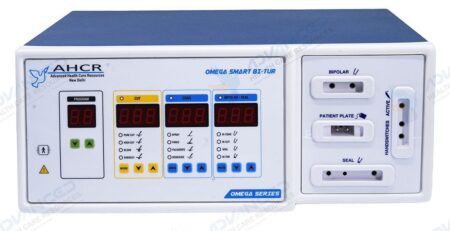
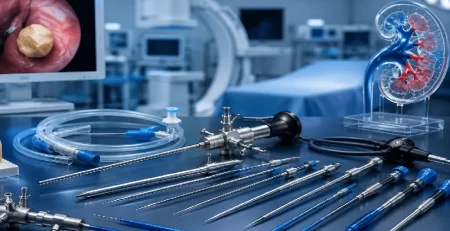
In urology, many reusable instruments, sets and mid-range equipment are available from domestic manufacturers, such as pneumatic lithotripters, the 400W bipolar TURP system, the bladder stone set and cystoscopy sets. Use our guides on bladder stone lithotripsy options and cystoscope sheath sizes to define what you actually need.
Public procurement preferences
In government procurement, the Public Procurement (Preference to Make in India) Order gives preference to local suppliers. Bidders are classed by local content: Class-I local suppliers offer 50 percent or more, and Class-II fall between the lower threshold and 50 percent. Medical-device thresholds follow Department of Pharmaceuticals guidelines and are stated in each bid, and false local-content declarations can lead to rejection.
If you buy through a tender, write the specification so that qualified domestic and imported bidders can both respond. Our urology instrument tender specification checklist covers this, including the compliance documents to require.
A decision guide
If none of the questions settles the choice, compare total cost and evidence, and let the scorecard decide.
Three example scenarios
These examples show how the guide works in practice. They are illustrations, not recommendations for your hospital.
| Scenario | Likely direction | What to focus on |
|---|---|---|
| Government district hospital buying reusable cystoscopy and PCNL sets under a tender with a Make in India preference | Domestic suppliers that meet the local-content class | A neutral specification, the documents to require, and total cost. See the tender checklist |
| Private hospital adding a high-end platform that no qualified domestic maker offers | Imported supplier | Service contract, spares availability, training and the distributor’s capability |
| Overseas distributor sourcing reusable urology instruments and OEM lines | An Indian manufacturer is a reasonable candidate | A virtual audit, samples, a small first order and written compatibility |
Five steps to a fair comparison
- Write a neutral specification that qualified suppliers of either origin can meet.
- Request the same documents and evidence from every supplier.
- Convert each quotation to landed cost and five-year total cost.
- Score each supplier on the same eight criteria.
- Verify the leading supplier with samples, references or an audit, then start with a small order.
If you are an overseas buyer
The same logic applies in reverse. For a hospital or distributor outside India, the question becomes India versus your local or regional suppliers and other exporters. Indian manufacturers can offer competitive pricing, OEM flexibility and CE-marked, ISO 13485 certified products, but you should verify each claim. Start with how to import surgical instruments from India, then run a virtual factory audit. Our guides on why hospitals worldwide source urology instruments from India, what makes a reliable exporter, exporting urology instruments from India and OEM supply add context, and the qualities to look for in a manufacturer help you choose.
Free domestic vs imported comparison workbook
We built a workbook to compare up to three quotations. It calculates landed cost per unit, five-year total cost of ownership and cost per unit per year, scores suppliers on eight weighted criteria, and tracks the evidence each supplier provides. All example numbers are invented, so overwrite them with your own.
Explore AHCR’s urology instruments range, the hysteroscopy set (see our hysteroscopy set-up guide) or the full catalogue.
Common mistakes when choosing between domestic and imported
- Choosing by country of origin. Score the evidence, not the label.
- Comparing unit price only. Landed cost and running costs decide the real price.
- Ignoring service. A cheap machine that is down for weeks is expensive.
- Skipping verification. Check certificates and licences for every supplier, domestic or imported.
- Writing a brand-locked specification. It shuts out qualified bidders and invites disputes.
- Forgetting compatibility. Confirm fit with existing equipment in writing.
Frequently asked questions
Are Indian-made urology instruments as good as imported ones?
Quality depends on the manufacturer’s system, not the country on the label. Compare suppliers on evidence: a valid ISO 13485 certificate, CE or licence documents, inspection and traceability records, samples and references. Established Indian manufacturers can meet these tests, and some imported products fail them, so test every supplier the same way.
Is Made in India cheaper than imported?
Often, but not always. Domestic supply avoids import duty and long freight, and the Government of India has told Parliament that devices made under its PLI scheme are about 10 to 30 percent cheaper than comparable imports. That figure applies to PLI categories, not to every instrument, so compare total cost over several years rather than unit price.
When is an imported product the better choice?
When the technology or product category is not available from a qualified domestic manufacturer, when it must fit an installed base from a specific brand, or when a clinical team has strong evidence-based reasons to prefer a particular platform. High-end, technology-intensive categories remain more import-reliant.
What licences should I check for Indian-made and imported devices?
For Indian-made devices, ask for the manufacturing licence number. State authorities license Class A and B devices (Form MD-5) and CDSCO licenses Class C and D (Form MD-9), and some low-risk devices are exempt. For imported devices, ask for the registration and import licence. Both kinds of supplier should show an ISO 13485 certificate.
What is a Class-I local supplier?
Under the Public Procurement (Preference to Make in India) Order, a Class-I local supplier offers goods with local content of 50 percent or more. Thresholds for medical devices are set in Department of Pharmaceuticals guidelines and stated in each bid, and false declarations can lead to rejection.
How should I compare an Indian quotation with an imported one?
Convert both to landed cost: price plus freight, insurance, duty, non-recoverable taxes and clearance. Then add installation, consumables, service contract and expected downtime over the life of the equipment. The free workbook in this guide does the calculation for you.
Does AHCR supply urology instruments outside India?
Yes. AHCR is a New Delhi manufacturer that supplies hospitals, clinics and distributors in India and exports to the Asia-Pacific region, the Middle East, Africa and the Americas. Because AHCR is an Indian manufacturer, use the scorecard in this guide to test it as you would any other supplier.
Compare us against any supplier
AHCR (Advanced Health Care Resources) is an ISO 13485 and CE certified manufacturer in Okhla Industrial Area, New Delhi. Send us your requirement and the quotations you already have, and we will answer the same questions we suggest you ask everyone else.
This guide is general information, not legal, regulatory or procurement advice. Figures come from the sources linked and change over time. Follow your organisation’s procurement rules and applicable regulations.






Leave a Reply