
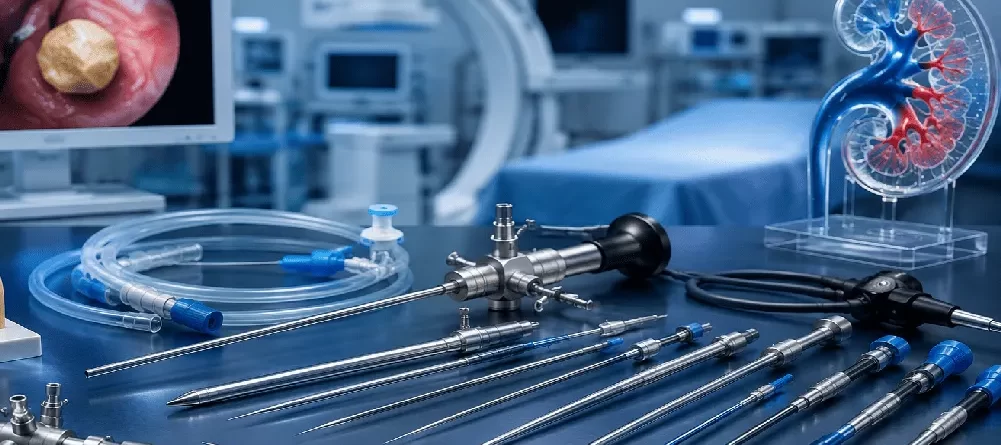
Kidney stone treatment has changed significantly over the years. What once required open surgery is now commonly managed through minimally invasive procedures that reduce patient trauma, shorten recovery time, and improve procedural precision.
One of the biggest developments in this shift has been the advancement of Percutaneous Nephrolithotomy (PCNL). Today, PCNL is considered one of the most effective procedures for managing large or complex kidney stones. But the success of modern PCNL is not just about surgical technique — it is heavily dependent on the quality and evolution of the equipment used during the procedure.
From nephroscopes and dilators to advanced lithotripters and irrigation systems, PCNL equipment has evolved to support safer access, better visualization, and more efficient stone clearance.
Understanding PCNL in Modern Urology
Percutaneous Nephrolithotomy (PCNL) is a minimally invasive procedure used to remove large kidney stones directly through a small incision in the back.
It is commonly recommended when:
- Kidney stones are too large to pass naturally
- Shock wave lithotripsy is ineffective
- Multiple stones are present
- Complex stone formations require surgical intervention
Compared to traditional open surgery, PCNL offers:
- Smaller incisions
- Reduced blood loss
- Faster recovery
- Higher stone clearance rates
As minimally invasive urology continues to evolve, PCNL has become a standard procedure in advanced stone management.
The Early Days of PCNL Equipment
Early PCNL procedures were effective but technically demanding. Initial equipment setups had limitations such as larger tract sizes, restricted visualization, and less refined instrumentation.
Surgeons often had to work with bulkier systems that increased tissue trauma and reduced procedural flexibility. As the demand for minimally invasive kidney stone treatment increased, manufacturers began improving equipment to enhance both patient safety and surgical efficiency.
Better Imaging Changed Everything
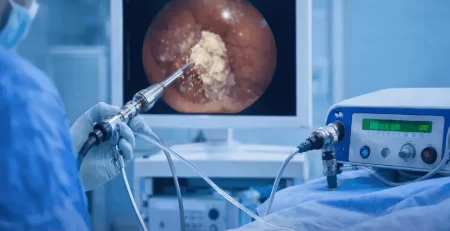
One of the biggest improvements in modern PCNL equipment has been visualization.
Modern nephroscopes now provide:
- Improved optical clarity
- Better illumination
- Enhanced visualization inside the renal collecting system
Clear visualization is critical during PCNL procedures because surgeons rely entirely on endoscopic imaging while navigating the kidney and fragmenting stones.
Advanced urology equipment systems now support more accurate stone identification and better procedural control, helping surgeons reduce unnecessary manipulation and improve stone clearance outcomes.
The Evolution of Nephroscopes
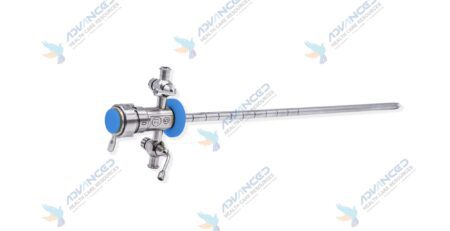
Nephroscopes used in PCNL procedures have become more refined over time.
Earlier systems were bulkier and less ergonomic. Modern nephroscopes are designed with:
- Improved handling
- Better maneuverability
- Reduced surgeon fatigue
- More efficient access to difficult anatomical areas
The rise of mini-PCNL has also encouraged the development of smaller and more precise instruments that reduce tissue trauma while maintaining procedural effectiveness.
This evolution has made PCNL safer, faster, and more patient-friendly.
Advances in Renal Dilatation Systems
Creating the renal access tract is one of the most important steps in a PCNL procedure.
Older methods often required more force and could increase tissue disruption. Modern dilatation systems are designed for more controlled and gradual tract expansion.
Today’s PCNL procedures commonly use:
- Fascial dilators
- Metallic telescopic dilators
- Balloon dilatation systems
These systems improve procedural safety and support smoother renal access during stone removal procedures.
A complete PCNL surgery set is now designed to support efficient workflow and minimize complications during minimally invasive kidney stone surgery.
Modern Lithotripters Improved Stone Fragmentation
Stone fragmentation technology has also evolved significantly.
Earlier lithotripsy systems could be slower and less controlled, especially while treating hard kidney stones. Modern systems provide stronger fragmentation power with greater precision.
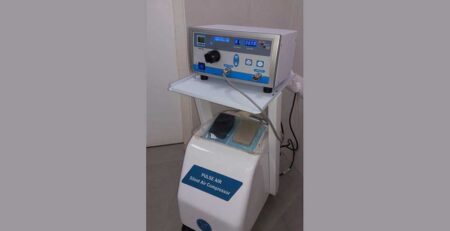
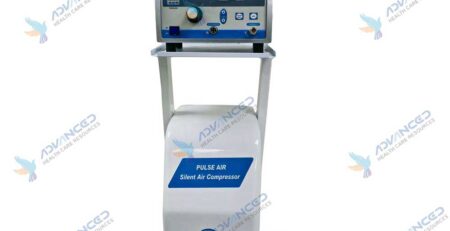
A modern pneumatic lithotripter for kidney stone treatment offers:
- Controlled stone fragmentation
- Reliable performance during high-volume procedures
- Reduced procedure time
- Effective fragmentation of hard stones
Pneumatic lithotripters continue to be widely used because they are durable, cost-effective, and highly effective in endourology procedures.
Improved Irrigation and Suction Systems
Fluid management has become another important area of advancement in PCNL equipment.
Maintaining a clear operating field during kidney stone procedures is essential for procedural safety and visibility.
Modern irrigation and suction systems help:
- Maintain clear visualization
- Remove stone fragments efficiently
- Reduce intrarenal pressure
- Improve procedural control
Advanced suction irrigation systems now support more controlled fluid management, especially during longer or more complex PCNL procedures.
The Shift Toward Mini-PCNL
One of the biggest developments in modern stone management has been the rise of mini-PCNL.
Traditional PCNL procedures used larger access tracts. Mini-PCNL uses smaller instruments and smaller tract sizes while still maintaining effective stone clearance.
Benefits of mini-PCNL include:
- Reduced bleeding
- Less post-operative pain
- Shorter hospital stays
- Faster patient recovery
This shift has increased demand for compact and highly precise PCNL equipment.
Why Hospitals Are More Selective About PCNL Equipment
Hospitals today evaluate PCNL equipment differently than they did a decade ago.
The focus is no longer only on purchasing instruments — it is about building reliable and efficient stone management workflows.
Healthcare providers typically assess:
- Imaging quality
- Instrument durability
- Ease of sterilization
- Compatibility with existing systems
- Manufacturer support and responsiveness
Many hospitals prefer working directly with experienced urology equipment suppliers that understand real clinical workflows and long-term support requirements.
Global Demand for Advanced PCNL Equipment
The demand for advanced PCNL equipment continues to grow across APAC, the Middle East, Africa, Europe, and the Americas.
This growth is being driven by:
- Increasing kidney stone cases globally
- Rising adoption of minimally invasive urology
- Hospital infrastructure upgrades
- Demand for faster patient recovery
As procedural volumes increase, hospitals are investing in reliable systems that improve efficiency without compromising patient safety.
The Growing Role of Indian Manufacturers
India has become an important manufacturing hub for endourology and PCNL equipment.
Global buyers increasingly look for manufacturers that provide:
- ISO and CE-certified products
- Consistent manufacturing quality
- Export capability
- OEM and bulk order support
An experienced urology instruments manufacturer in India can support hospitals and distributors with dependable and scalable solutions for modern stone management.
The Future of PCNL Equipment
PCNL equipment will continue evolving alongside advances in minimally invasive surgery.
Future developments are expected to focus on:
- Better digital imaging integration
- Smarter irrigation systems
- Compact instrumentation
- Improved stone fragmentation technology
The goal remains the same — improving surgical precision while reducing procedural complexity and patient recovery time.
Conclusion
PCNL has evolved from a technically demanding procedure into a highly refined and efficient approach to kidney stone treatment. Much of this progress has been driven by advancements in the equipment used during the procedure.
Modern PCNL systems now offer:
- Better visualization
- Safer renal access
- More precise stone fragmentation
- Improved procedural efficiency
As minimally invasive urology continues to expand globally, reliable and well-designed PCNL equipment will remain central to effective stone management and better patient outcomes.
Also read:
Understanding ISO Certification in Surgical Instrument Manufacturing
Frequently Asked Questions About Surgical Instrument Manufacturing in India
Exporting PCNL Equipment: Standards, Certifications, and Best Practices


Leave a Reply