

Choosing between monopolar vs bipolar TURP is no longer only a clinical debate. For a hospital buying a TURP machine, it decides which generator you purchase, which irrigation fluid you stock, which consumables you reorder for years, and how much risk your team carries in every prostate resection.
This guide explains how each technology works, what the best clinical evidence says, how the costs compare, and how to pick the right bipolar TURP machine or monopolar setup for your department. It is written for urologists, OT managers and procurement teams.
Why the energy type matters in TURP
Transurethral resection of the prostate (TURP) remains a standard surgical treatment for benign prostatic obstruction. The surgeon passes a resectoscope through the urethra and uses an electrified loop to cut and coagulate prostate tissue while irrigation fluid keeps the view clear.
The key difference is the electrical circuit. That one design choice determines the type of fluid you can use, the safety profile, the equipment you must buy and the consumables you will stock. If you want a feature-by-feature checklist for choosing a bipolar generator, see our guide on how to choose a bipolar TURP machine for your urology OT. This article answers the earlier question: monopolar or bipolar?
How monopolar and bipolar TURP work
Monopolar TURP
In a monopolar circuit, current leaves the generator, passes through the resection loop, travels through the patient’s body and returns through a pad placed on the thigh. Because saline would scatter that current, the surgeon must irrigate with a non-conductive fluid such as glycine, sorbitol or mannitol. These fluids are hypotonic, so if the patient absorbs a large volume through opened prostatic veins, blood sodium can fall. This condition is called TUR syndrome.
Bipolar TURP
In bipolar TURP, both the active and return electrodes sit at the resectoscope tip, so current only travels a short path through the tissue between them. That allows the use of normal saline irrigation and removes the need for a return pad. Saline is isotonic, so absorption is far less likely to dilute blood sodium.
Monopolar vs bipolar TURP: side-by-side comparison
| Feature | Monopolar TURP | Bipolar TURP |
|---|---|---|
| Current path | Loop, through the patient, to a return pad | Between two electrodes at the resectoscope tip |
| Irrigation fluid | Non-conductive: glycine, sorbitol or mannitol | Normal saline |
| Patient return pad | Required | Not required |
| TUR syndrome | Higher risk (dilutional low sodium) | Probably much lower risk |
| Blood transfusion | Higher | Probably lower |
| Symptom relief at 12 months | Similar | Similar |
| Large glands, long resections | Needs close time and fluid monitoring | Better suited; saline is more forgiving |
| Cardiac implants | Current crosses the body; extra precautions | Generally lower interference risk; coordinate with cardiology |
| Capital cost | Lower where a standard ESU exists | Higher unless your generator is bipolar-capable |
| Running cost | Glycine or sorbitol bags, return pads, loops | Saline bags, bipolar loops (reusable or disposable) |
What the evidence says about bipolar vs monopolar TURP
The strongest evidence is the Cochrane systematic review by Alexander and colleagues, published in 2019. It pooled 59 randomised trials with 8,924 men. The average prostate volume in the trials ranged from about 39 to 83 mL. In summary:
- Symptoms: bipolar TURP probably makes little or no difference to symptom score or quality of life at 12 months.
- TUR syndrome: bipolar TURP probably reduces it, with a relative risk of 0.17, which the reviewers translate to roughly 20 fewer events per 1,000 men.
- Blood transfusion: probably reduced, with a relative risk of 0.42.
- Erectile function, incontinence and repeat TURP: probably similar, although the certainty is lower for incontinence and repeat surgery.
A commentary on the review suggested that bipolar’s advantages matter most for larger glands, where longer resections raise the risk of TUR syndrome and bleeding. The review itself had very little data on gland size, so treat that as informed opinion rather than proven fact. A separate 2022 literature review likewise found similar operative time, hospital stay and quality of life, with less hyponatraemia and blood loss after bipolar TURP.
The practical message for buyers: bipolar delivers the same symptom relief with a safety margin, and the safety gain is the main reason to pay more for it.
Cost: monopolar vs bipolar TURP machine
When hospitals ask for a bipolar TURP machine price in India, the generator is only the first line of the bill. A fair comparison counts everything over the life of the equipment. For a broader view of what moves instrument prices, read our guide to the top factors that influence surgical instrument pricing in India.
- Capital cost. Monopolar resection can run on a standard electrosurgical unit that most hospitals already own. Bipolar needs a bipolar-capable generator and a compatible resectoscope.
- Consumables. Monopolar needs glycine or sorbitol bags and return pads. Bipolar needs saline bags and bipolar loops, which may be reusable or disposable depending on the system.
- Complications. A transfusion, an extended stay or an ICU day costs far more than the price gap between consumables.
- Service and training. Compare warranty, AMC, spare availability and who trains your OT staff.
Use this worksheet to compare quotations. Send the questions in the last column to each supplier and record their written answers.
| Cost line | Monopolar | Bipolar | Ask the supplier |
|---|---|---|---|
| Generator / ESU | Often already owned | Bipolar-capable unit needed | Is the quoted generator validated for saline bipolar use, and what is the warranty? |
| Resectoscope and cables | Monopolar set | Bipolar-compatible set | Will it work with my existing resectoscopes and loops? |
| Loops per case | Reusable or disposable | Reusable or disposable | How many uses does each loop give, and what is the replacement price? |
| Irrigation fluid per case | Glycine or sorbitol | Normal saline | Which irrigation fluid does the system require? |
| Return pads | One per case | None | Are pads included in the quote? |
| Warranty, AMC and spares | Per supplier | Per supplier | What does the warranty cover, what does the AMC cost, and how fast is service in my region? |
| Training | Minimal | Short for experienced TURP surgeons | Is on-site training for OT staff included? |
| Cost of complications | Higher risk | Lower risk | Review your own records of transfusions and extra bed-days to see what a complication costs you. |
Which TURP system should you choose?
There is no single right answer, but three questions settle most cases. Work through the decision guide below with your urology team.
Many centres treat roughly one hour of resection as a practical ceiling for monopolar TURP because of fluid absorption. If your case mix regularly goes beyond that, bipolar is the safer investment. If you are buying new equipment and are unsure, bipolar is the default, because it is safer in more situations and keeps your options open as case volume grows.
Starting a larger stone and prostate service? Our checklist for setting up a stone management center shows how TURP equipment fits into the wider urology OT.
What to check before you buy a TURP machine
Whichever technology you choose, verify these points in writing:
- Output power, and whether cutting and coagulation settings can be adjusted separately.
- Validation for continuous normal saline use (for bipolar systems).
- Compatibility with your existing resectoscopes, loops and cables.
- Safety features such as automatic cut-off and fault alarms.
- Reusable and disposable electrode options and their long-term price.
- Warranty, AMC pricing, spares stock and service response time in your region.
For a deeper checklist on generators, read our bipolar TURP machine buying guide. If you are comparing manufacturers, the qualities to look for in a urology instruments manufacturer in India and our guide to validating quality before a bulk order will help.
TURP systems from AHCR
AHCR (Advanced Health Care Resources) manufactures both technologies, so you can compare them on fit rather than on what one supplier happens to sell.
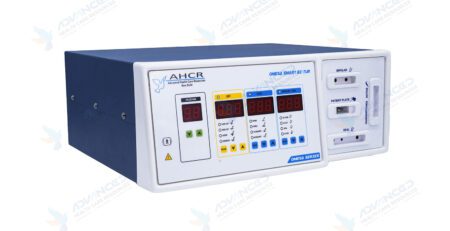
- 400W BI-TUR normal saline bipolar TURP system
Saline-based resection, 400 W output, and compatibility with reusable and disposable accessories. Also suited to hospitals upgrading from monopolar. - 400W monopolar cautery
A monopolar option for centres that want to keep a conventional setup. - Vessel sealing system with saline bipolar TURP
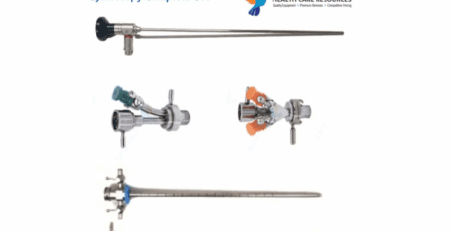
A combined platform for departments that also work in laparoscopy. - Cystoscopy sheaths and accessories
Complete your endoscopy setup. See what urologists ask before buying a sheath.
Browse the full urology instruments range, the bipolar TURP category, or related guides on reusable flexible cystoscopes and the Teflon urethral dilator set.
Common mistakes when buying a TURP machine
- Comparing generator prices only. Consumables and complications often outweigh the difference.
- Skipping compatibility checks. Confirm that your resectoscope, loops and cables fit the new generator.
- Ignoring consumable supply. A narrow or proprietary electrode range raises long-term cost.
- Underestimating training. Even a familiar technique needs setting-specific training for OT staff and biomedical engineers.
- Using monopolar for long resections without monitoring. Track resection time and fluid balance on every case.
- Skipping the AMC. OT downtime is expensive, so agree service terms before you sign.
Buying from overseas? Our guides on how to import surgical instruments from India, what makes a reliable urology instruments exporter and exporting urology instruments from India explain documents, verification and shipping.
Frequently asked questions
What is the difference between monopolar and bipolar TURP?
In monopolar TURP, current passes from the resection loop through the patient’s body to a return pad, so the irrigation fluid must be non-conductive, such as glycine or sorbitol. In bipolar TURP, current flows between two electrodes at the resectoscope tip, so normal saline can be used and no return pad is needed.
Is bipolar TURP better than monopolar TURP?
For symptom relief at 12 months, the two are probably similar. The Cochrane review of 59 randomised trials found bipolar TURP probably lowers the risk of TUR syndrome and blood transfusion. Surgeon experience, gland size and patient factors still guide the choice for each case.
Does bipolar TURP eliminate TUR syndrome?
No technique removes every risk. Bipolar TURP uses isotonic saline, which makes dilutional hyponatraemia much less likely, but absorbing large volumes of any irrigant can still cause fluid overload. Teams should keep monitoring resection time and fluid balance.
Can monopolar TURP use normal saline?
No. Saline conducts electricity, so it disperses the current in a monopolar circuit and the loop cannot cut effectively. Monopolar resection needs a non-conductive irrigant.
How much does a bipolar TURP machine cost in India?
Price depends on generator power, accessories, whether electrodes are reusable or disposable, warranty and service terms. Request a written quotation and compare total cost of ownership, including consumables and AMC, rather than the generator price alone.
Can I upgrade from monopolar to bipolar TURP?
Many hospitals upgrade by adding a bipolar-capable generator. Check that your resectoscope, bipolar loops and cables are compatible before you buy, because a monopolar resectoscope usually cannot be used as it is.
Which TURP machine should a small hospital buy?
If you are buying new equipment and expect to treat a range of gland sizes, a saline bipolar system is the usual choice. A 400W monopolar unit can still serve low-volume centres with trained teams and strict fluid monitoring. AHCR supplies both options and can advise on fit.
Ready to choose your TURP system?
AHCR is an ISO 13485 and CE certified manufacturer based in Okhla Industrial Area, New Delhi, supplying hospitals, clinics and distributors in India and overseas. Tell us what you need and we will help you compare options. Why do hospitals buy from India? Read why hospitals worldwide source urology instruments from India, or check which certifications matter.
This article is for general information and procurement guidance. It is not medical advice. Surgeons should choose the technique and equipment for each patient according to clinical judgement and local guidelines.






Comment (1)
[…] pneumatic lithotripter for URS and PCNL, lithotripter probe sizes, choosing a bipolar TURP machine, monopolar vs bipolar TURP, cystoscopy sheath questions, the PCNL instrument checklist and what a complete PCNL set includes. […]