
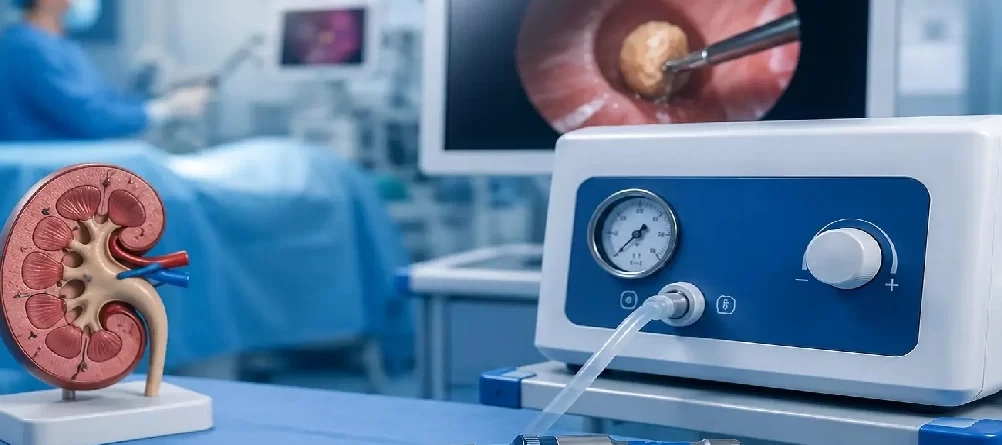
Kidney stone treatment has evolved significantly over the past two decades, with minimally invasive techniques such as Ureteroscopy (URS) and Percutaneous Nephrolithotomy (PCNL) becoming standard procedures in modern urology departments. At the heart of many successful stone removal procedures is the pneumatic lithotripter, a device that uses compressed air to fragment urinary stones efficiently and safely.
While many hospitals focus primarily on purchase price when evaluating lithotripters, experienced urologists understand that long-term performance, reliability, maintenance requirements, and procedural efficiency are equally important. Choosing the wrong system can result in inconsistent stone fragmentation, increased procedure times, higher maintenance costs, and surgeon frustration.
This guide explains the key factors hospitals and urology centers should consider when selecting a pneumatic lithotripter for URS and PCNL procedures.
Understanding the Role of a Pneumatic Lithotripter
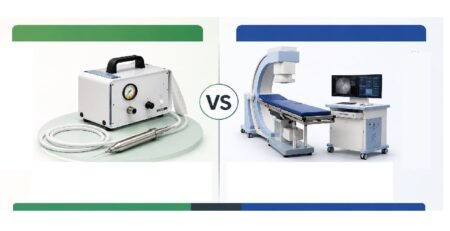
A pneumatic lithotripter converts compressed air into mechanical energy that is transmitted through a probe to break urinary stones into smaller fragments. The technology is widely used because it offers reliable stone fragmentation across a broad range of stone compositions while remaining cost-effective compared to laser systems.
In both URS and PCNL procedures, the objective remains the same: efficiently fragment stones while minimizing trauma to surrounding tissue and reducing overall procedure time.
How a Pneumatic Lithotripter Works
Compressed Air Source
        ↓
Pneumatic Generator
        ↓
Energy Transfer Through Probe
        ↓
Stone Fragmentation
        ↓
Removal of Stone Fragments
A well-designed lithotripter delivers consistent energy transfer, allowing surgeons to achieve predictable fragmentation throughout the procedure.
Match the Device to Your Procedure Volume
One of the first considerations is procedural volume. A hospital performing a few stone procedures per week has different requirements than a dedicated urology center handling dozens of URS and PCNL cases every month.
High-volume centers require equipment capable of delivering consistent performance throughout continuous use. Components should withstand repeated sterilization cycles and maintain reliable fragmentation efficiency over time.
Facilities experiencing growing patient demand should also consider future scalability. Investing in a robust system today can eliminate the need for premature upgrades later.
Evaluate Stone Fragmentation Performance
The primary purpose of a pneumatic lithotripter is stone fragmentation. Unfortunately, not all systems perform equally.
A high-quality system should provide:
- Consistent fragmentation across various stone compositions
- Reliable energy transmission with minimal loss
- Efficient stone breaking without excessive retropulsion
- Stable performance throughout long procedures
When evaluating equipment, hospitals should request demonstrations using representative stone models and assess how effectively the system fragments different stone types.
A lithotripter that reduces fragmentation time by even a few minutes per case can significantly improve operating room efficiency over hundreds of procedures annually.
Consider Compatibility with URS and PCNL Instruments
Not every lithotripter is equally suitable for both URS and PCNL applications.
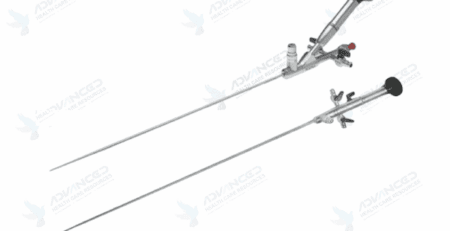
For URS procedures, smaller probes and precise energy delivery are critical because surgeons operate within narrow anatomical spaces. Excessive probe movement or stone migration can complicate the procedure.
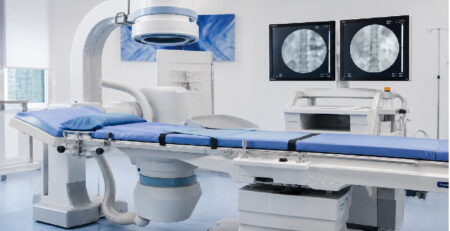
For PCNL procedures, the emphasis shifts toward powerful fragmentation capable of handling larger stone burdens efficiently.
Lithotripter Requirements by Procedure Type
URS Procedures
│
├─ Smaller probes
├─ Precise control
├─ Reduced stone migration
└─ Flexible scope compatibility

PCNL Procedures
│
├─ Higher fragmentation power
├─ Larger probe options
├─ Faster stone clearance
└─ Continuous performance
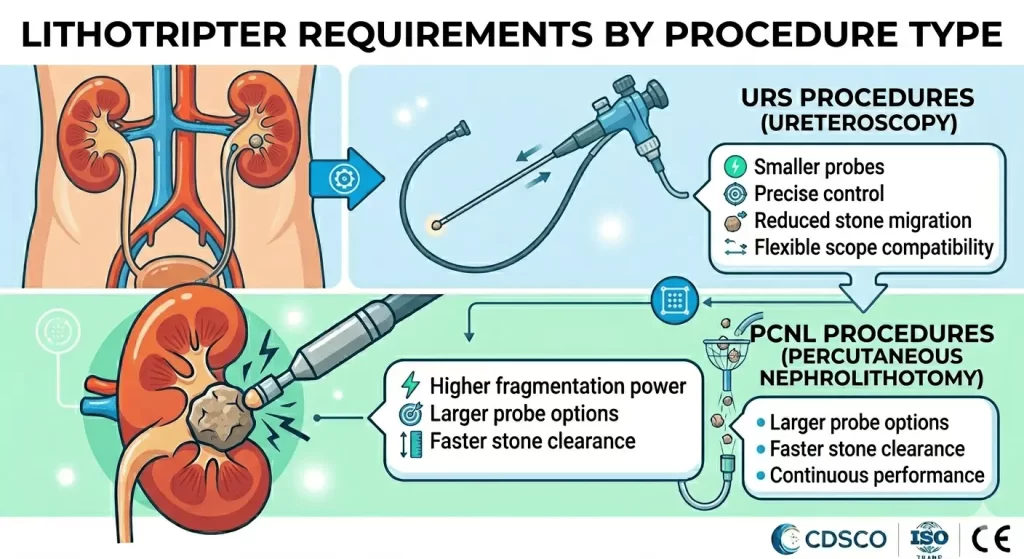
The ideal pneumatic lithotripter supports both applications through multiple probe configurations and adjustable operating parameters.
Assess Reliability and Build Quality
A lithotripter often becomes one of the most frequently used devices in a urology department. Reliability therefore becomes a major purchasing consideration.
Hospitals should evaluate:
- Manufacturing quality
- Component durability
- Sterilization compatibility
- Expected service life
- Availability of replacement parts
- Clinical track record
Equipment downtime can disrupt surgical schedules and increase operating costs. Choosing a system built for long-term reliability often provides a lower total cost of ownership despite a higher initial investment.
Review Service and Technical Support
Even the most advanced equipment requires maintenance and occasional servicing. Hospitals should evaluate the manufacturer’s support infrastructure before making a purchasing decision.
Important questions to ask include:
- Is local technical support available?
- What is the average service response time?
- Are spare parts readily available?
- Is user training included?
- Does the supplier offer preventive maintenance programs?
Strong after-sales support often proves more valuable than a marginal reduction in purchase price.
Verify Regulatory Compliance and Certifications
Medical devices should always meet applicable regulatory and quality standards.
When evaluating a pneumatic lithotripter, verify the availability of:
- CDSCO registration
- ISO 13485 certification
- CE certification where applicable
- Product validation documentation
- Quality assurance records
Regulatory compliance provides confidence that the device has been manufactured under recognized quality management systems.
Evaluate Ease of Use
User-friendly equipment contributes directly to procedural efficiency.
Surgeons and operating room staff benefit from systems that offer intuitive controls, quick setup, and minimal training requirements. Devices with clear interfaces and simple operating workflows help reduce errors and improve consistency across surgical teams.
Hospitals should involve surgeons, nurses, and biomedical engineers during equipment evaluation to ensure the system meets operational requirements from multiple perspectives.
Think Beyond Purchase Price
The most common procurement mistake is focusing solely on acquisition cost.
The true cost of a pneumatic lithotripter includes maintenance, service requirements, probe replacement, operating room efficiency, device lifespan, and clinical performance.
A lower-priced system that experiences frequent downtime or requires costly repairs may ultimately cost more than a premium device with superior reliability and support.
For this reason, hospitals should evaluate total cost of ownership rather than initial purchase price alone.
Conclusion
Choosing the right pneumatic lithotripter for URS and PCNL procedures requires balancing clinical performance, reliability, regulatory compliance, service support, and long-term operating costs. The best system is not necessarily the cheapest option—it is the one that consistently delivers efficient stone fragmentation while supporting surgeons and minimizing operational disruptions.
Hospitals that evaluate lithotripters through the lens of total value rather than purchase price alone are better positioned to improve procedural outcomes, enhance operating room efficiency, and maximize their investment over the life of the equipment.
When reviewing pneumatic lithotripter options, decision-makers should prioritize proven performance, durable construction, responsive support, and compatibility with the evolving needs of modern urology practice.




Leave a Reply