
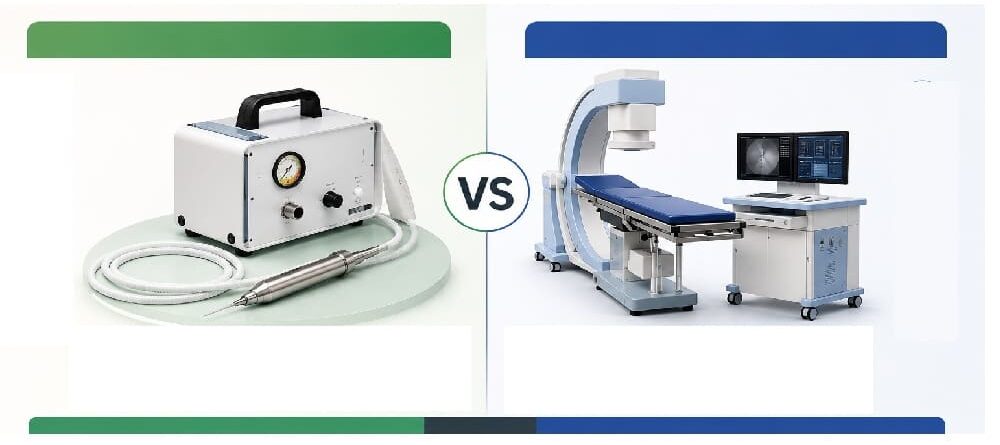
Choosing between a portable lithotripter machine and a fixed lithotripter machine is one of the biggest infrastructure decisions a hospital or urology center will make when setting up kidney stone treatment services. The right choice affects your case volume, staffing model, maintenance costs, and ultimately how many patients you can serve. This guide breaks down the real-world pros and cons of each option so you can make a confident, informed decision.
Table of Contents
- What Are Portable and Fixed Lithotripters?
- Portable Lithotripter Machines: Pros and Cons
- Fixed Lithotripter Machines: Pros and Cons
- Clinical Outcomes: Does Portability Affect Results?
- Which One Is Right for Your Hospital?
- Final Thoughts and Next Steps
 What Are Portable and Fixed Lithotripters?
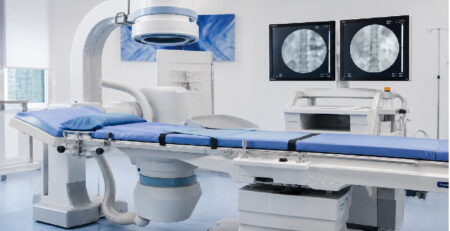
A fixed lithotripter machine is permanently installed in a dedicated treatment room, typically integrated with imaging systems, anesthesia equipment, and a consistent support staff. A portable lithotripter machine, by contrast, is designed to be moved between departments, satellite clinics, or even multiple facilities — sometimes housed in a mobile unit or trailer that travels between hospitals on a set schedule.
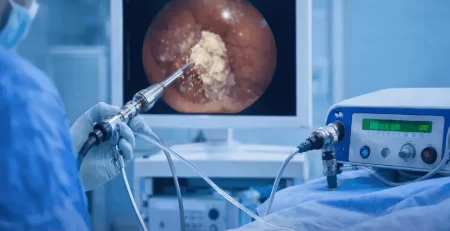
Both machine types use the same core ESWL or intracorporeal lithotripsy technology to fragment kidney stones; the difference lies entirely in deployment, logistics, and how the equipment is used day to day.
Portable Lithotripter Machines: Pros and Cons
Pros
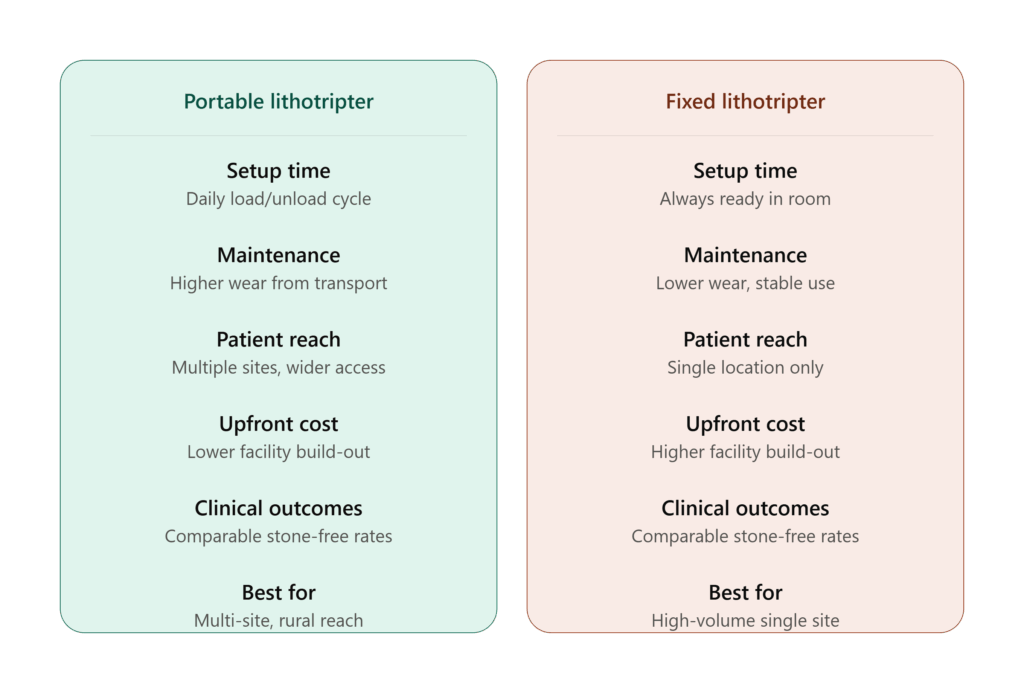
- Wider patient reach — hospitals can extend lithotripsy services to satellite clinics or rural facilities that couldn’t otherwise justify a dedicated unit.
- Lower upfront facility costs — no need to build a permanent treatment suite with fixed plumbing and shielding.
- Flexible scheduling — the machine can be shared across multiple sites, improving utilization for facilities with lower individual case volume.
- Strong patient and physician satisfaction in many practices, since patients can be treated closer to home rather than traveling to a central hospital.
Cons
- Higher wear and tear — constant transport and setup/teardown cycles increase the breakdown rate compared to stationary units left undisturbed in one room.
- Setup and teardown time — mobile units generally require dedicated staff time each day to unload, calibrate, and prepare equipment before the first case, and to secure it again afterward.
- Site limitations — not every facility has the loading dock access, equipment pad, or space required to host a mobile lithotripsy unit.
- Downtime risk — if a portable unit breaks down away from its home base, repairs can take longer to arrange, potentially costing a full day of scheduled cases.
Fixed Lithotripter Machines: Pros and Cons
Pros
- Lower mechanical wear — stationary machines aren’t subjected to the vibration and handling stress of repeated transport, which typically means a longer service life.
- Consistent, dedicated staff — the same technicians and support team operate the unit daily, which often improves procedural efficiency and troubleshooting speed.
- Simpler logistics — no daily setup/teardown cycle, no transport scheduling, no dependency on road conditions or vehicle availability.
- Easier integration with existing imaging and recovery infrastructure already in the treatment room.
Cons
- Higher upfront investment — building or retrofitting a dedicated treatment suite adds to total project cost.
- Limited to one location — patients outside the immediate service area must travel to access treatment.
- Utilization risk — a fixed unit sitting idle between cases still incurs fixed overhead, so lower-volume facilities may see a longer return on investment.
Clinical Outcomes: Does Portability Affect Results?
One of the most common questions hospitals ask before investing in a lithotripter machine is whether portability compromises clinical outcomes. Comparative studies looking at mobile versus fixed lithotripsy programs have generally found similar stone-free rates and retreatment rates between the two setups, even when mobile units were used less frequently by a wider group of urologists. In other words, a well-maintained portable unit with a trained support team can deliver clinical results comparable to a fixed installation — the deciding factor tends to be logistics and cost efficiency, not treatment quality.
Which One Is Right for Your Hospital?
The right choice depends heavily on your patient volume, geography, and growth plans:
- Choose a fixed lithotripter if you have consistent, high patient volume at a single location and want to minimize long-term maintenance costs and staffing complexity.
- Choose a portable lithotripter if you’re aiming to expand kidney stone treatment access across multiple facilities, serve a rural or underserved region, or want to test demand before committing to a permanent installation.
- Consider a hybrid model — many larger hospital networks run a fixed unit at their main campus while using a portable machine to serve satellite locations, maximizing both reach and utilization.
Budget is also a major factor. If you’re still comparing the numbers, our detailed breakdown on Lithotripter Machine Price in India: Factors That Affect Cost can help you estimate total investment for either option, and Pneumatic Lithotripsy Machine Price in India: What Hospitals Should Know Before Buying walks through how to calculate your break-even timeline.
Final Thoughts and Next Steps
Both portable and fixed lithotripter machines can deliver excellent clinical outcomes when properly maintained and operated by a trained team. The right decision comes down to your facility’s patient volume, geographic reach, and long-term growth strategy — not just the upfront price tag.
If you’re evaluating options for your hospital or clinic, our team can help you compare portable and fixed lithotripsy equipment based on your specific case volume, budget, and facility layout. Request a free consultation and we’ll help you find the right fit — no obligation, just honest guidance from a team that’s helped hospitals across India set up both portable and fixed lithotripsy programs.
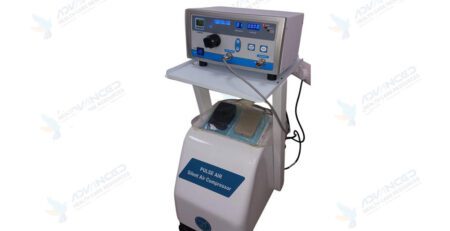
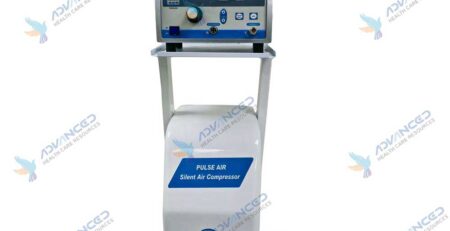
Buy complete set of Pneumatic Lithotripter
Contact Lithotripter manufacturers in India.





Leave a Reply