
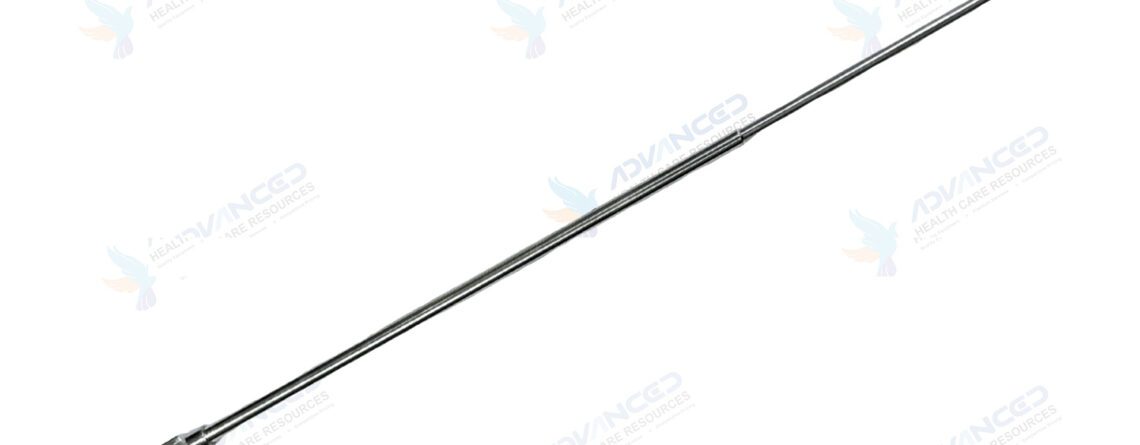
A practical procurement checklist for urology departments, biomedical engineers, and hospital purchase committees evaluating renal access needles for Percutaneous Nephrolithotomy (PCNL).
Why the Puncture Needle Deserves Procurement Attention
In Percutaneous Nephrolithotomy (PCNL), the initial renal puncture is widely regarded as the most technically demanding and risk-concentrated step of the entire procedure. A well-designed PCNL puncture needle directly influences access time, radiation exposure, bleeding risk, and the number of puncture attempts required before a guidewire can be safely placed. Yet in many hospital procurement processes, puncture needles are treated as a low-cost consumable line item rather than a clinical-outcome variable.
Choosing the wrong needle specification, tip design, or supplier does not just create inconvenience in the operating room — it can extend procedure time, increase fluoroscopy exposure for both patient and surgical team, and in worst cases contribute to failed access, bleeding, or urosepsis. Below is what hospital purchase committees, biomedical engineers, and urology department heads should evaluate before finalizing a renal access needle order.
1. Gauge and Length Compatibility
PCNL puncture needles are most commonly supplied in 18-gauge (18G), with 17.5G and 21G variants used depending on technique and patient anatomy. Gauge selection should match:
- The outer diameter of the guidewire the department already stocks (commonly 0.035-inch or 0.038-inch)
- The dilation system in use — metal telescopic dilators, Amplatz serial dilators, or balloon dilators may each have slightly different tolerance requirements
- Patient body habitus and skin-to-stone distance, particularly for pediatric or bariatric cases where longer needle shafts may be required
Hospitals should confirm gauge and length options are available as a matched set, not assume interchangeability across brands.
2. Tip Design and Bevel Geometry
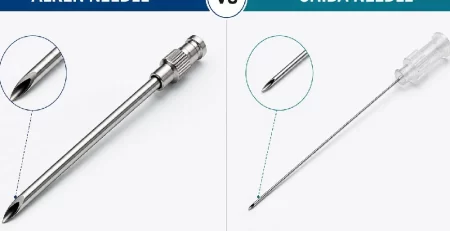
The bevel angle and sharpness of the needle tip affect how cleanly it passes through skin, muscle, and renal parenchyma. A well-balanced, sharp bevel — the design principle behind needles such as the Alken needle for PCNL — supports precise entry with minimal tissue trauma and better tactile feedback for the surgeon feeling each tissue layer during puncture.
Purchase committees should request sample units for hands-on evaluation by the urology team before bulk ordering, since tip “feel” is subjective and technique-dependent.
3. Needle Material and Build Quality
Most puncture needles are constructed from surgical-grade stainless steel with a hollow metallic shaft to allow guidewire passage. Hospitals should check for:
- Corrosion resistance, particularly for reusable instruments undergoing repeated sterilization cycles
- Rigidity that resists bending under puncture pressure without becoming brittle
- A consistent, burr-free internal lumen so the guidewire advances smoothly without catching
4. Echogenicity for Ultrasound-Guided Puncture
As ultrasound-guided and combined fluoroscopy-ultrasound renal access techniques become more widely adopted, tip echogenicity has become an increasingly important specification. An echogenic tip improves needle visibility under ultrasound, which can reduce the number of puncture attempts and shorten access time. Departments that rely primarily on fluoroscopic guidance may not need this feature, but any hospital transitioning toward ultrasound-guided or radiation-reduction protocols should prioritize it.
5. Guidewire and Dilator Compatibility
A puncture needle does not function in isolation — it is the entry point for the guidewire, and the guidewire in turn determines how smoothly tract dilation proceeds. Before purchasing, confirm the needle’s internal diameter is compatible with the specific guidewires and dilators already in use, including:
- Standard J-tip guidewires
- Stiff or super-stiff guidewires used for tract dilation
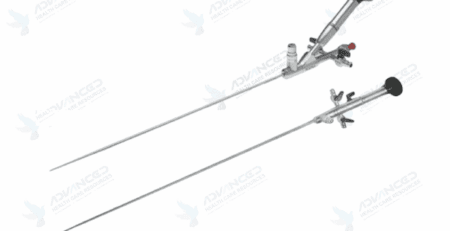
- Metal telescopic dilators or Amplatz-style serial dilators
Mismatched compatibility between a new needle batch and existing dilation systems is a common, avoidable source of intraoperative delay.
6. Sterility, Packaging, and Shelf Life
For single-use needles, verify the sterilization method (typically ethylene oxide or gamma irradiation), confirm packaging integrity standards, and check quoted shelf life against your department’s actual consumption rate to avoid expiry-related wastage. For reusable metal needles, confirm compatibility with your hospital’s existing autoclave or sterilization protocols and request manufacturer guidance on maximum reprocessing cycles before structural integrity is affected.
7. Single-Use vs. Reusable Needles
This is one of the most consequential procurement decisions. Single-use puncture needles eliminate cross-contamination risk and remove dependency on sterilization turnaround, which matters for high-throughput departments or those with limited central sterile supply capacity. Reusable needles typically have a lower cost-per-use over time for high-volume centers, provided sterilization infrastructure is reliable and consistently monitored. Hospitals should base this decision on procedure volume, infection-control policy, and sterilization capacity rather than upfront unit price alone.
8. Regulatory Certification and Documentation
Any puncture needle purchased for clinical use should come with verifiable regulatory documentation, including:
- CE marking (for markets requiring it) or equivalent regional regulatory approval
- ISO 13485 certification for the manufacturer’s quality management system
- Batch-level traceability and certificates of conformity
- Country-specific import/registration documentation where applicable
Procurement teams should request these documents upfront rather than after an order is placed, since gaps here can create compliance issues during hospital accreditation audits.
9. Clinical Evidence and Track Record
Where possible, favor needle and dilator systems with published clinical comparison data. For example, retrospective studies comparing Alken metallic telescopic dilators against Amplatz serial dilators have reported lower blood transfusion rates and lower postoperative pain scores with the Alken system, with comparable stone-clearance efficacy between the two. Evidence like this can meaningfully inform which access system a department standardizes around, rather than relying purely on vendor claims.
10. Supplier Reliability and After-Sales Support
A puncture needle is a recurring consumable, not a one-time capital purchase. Before committing to a supplier, hospitals should evaluate:
- Consistency of stock availability and lead times, especially for high-volume urology departments
- Responsiveness to quality complaints or batch issues
- Willingness to provide training or in-theatre demonstration for new needle designs
- Track record with other hospitals or ambulatory surgical centers of similar procedure volume
11. Cost-Per-Procedure, Not Just Unit Price
The lowest per-unit price does not always translate to the lowest overall cost. Factor in failed-puncture rates, reprocessing costs (for reusable systems), compatibility-related delays, and any impact on operating room time when comparing suppliers. A slightly higher-cost needle that reduces access time or complication rates can be more cost-effective across a full year of procedure volume than a cheaper option that increases variability.
Quick Reference: Procurement Checklist
| Criteria | What to Verify |
|---|---|
| Gauge & Length | Matches existing guidewire and dilator system |
| Tip Design | Sharp, balanced bevel; evaluated hands-on by surgical staff |
| Material | Surgical-grade stainless steel, burr-free lumen |
| Echogenicity | Required if using ultrasound-guided or combined-guidance technique |
| Compatibility | Confirmed with current guidewires and dilation system |
| Sterility | Sterilization method, packaging integrity, shelf life documented |
| Single-use vs Reusable | Decision based on volume, infection control policy, sterilization capacity |
| Certification | CE / ISO 13485 / local regulatory approval, batch traceability |
| Clinical Evidence | Published comparative outcome data where available |
| Supplier | Stock reliability, complaint responsiveness, training support |
| Total Cost | Cost-per-procedure, not just unit price |
Frequently Asked Questions
What gauge needle is used for PCNL renal puncture?
Most initial PCNL punctures use an 18-gauge needle, though 17.5G and 21G variants exist for specific techniques, pediatric cases, or mini-PCNL procedures. The correct gauge depends on the guidewire diameter and dilation system a department uses.
Is an echogenic tip necessary for PCNL puncture needles?
An echogenic tip is not mandatory for fluoroscopy-guided puncture, but it is strongly recommended for departments performing ultrasound-guided or combined-guidance PCNL, since it significantly improves needle-tip visibility and reduces the number of passes needed.
Should hospitals choose single-use or reusable PCNL needles?
Single-use needles remove reprocessing and sterilization risk and are increasingly preferred for infection-control reasons, but reusable metal needles can be more cost-effective for high-volume centers with reliable sterilization workflows. The right choice depends on procedure volume, sterilization capacity, and budget.







Leave a Reply