
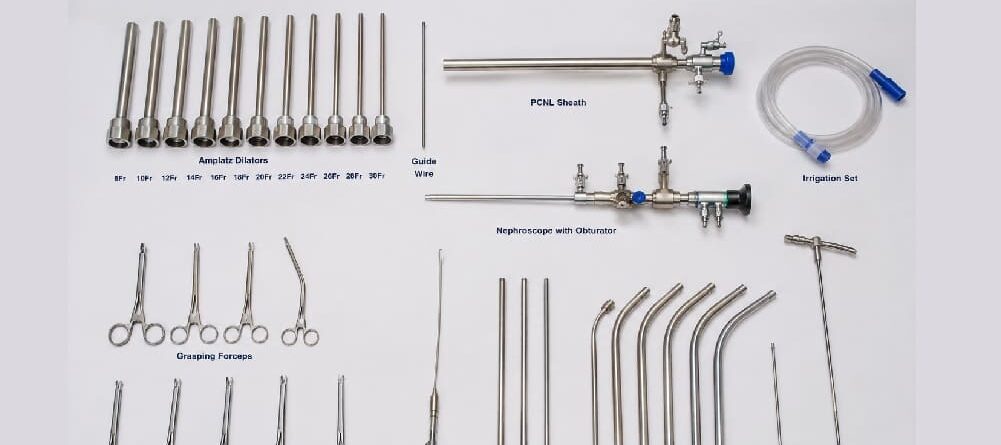
A Percutaneous Nephrolithotomy (PCNL) procedure isn’t performed with a single device — it depends on a coordinated set of instruments that take the surgeon from renal puncture through stone retrieval. This guide breaks down every component of a complete PCNL instrument set, in the order it’s used, and compares the standard PCNL set against the Mini-PCNL configuration.
Table of Contents
- What Is a PCNL Instrument Set?
- The PCNL Instrument Workflow (Step by Step)
- 1. Renal Access — Alken Needle
- 2. Tract Dilation — Telescopic Dilator Set & Central Rod
- 3. Alternative Dilation — Fascial Dilator Set & Renal Amplatz Dilator Set
- 4. Tract Access & Maintenance — Amplatz Sheath
- 5. Visualization — Nephroscope
- 6. Stone Fragmentation — Pneumatic Lithotripter
- 7. Stone Retrieval — PCNL Forceps & MiniPerk Push Handle
- Standard PCNL vs. Mini-PCNL Instrument Set: Comparison Table
- Complete PCNL Set: Component Summary Table
- FAQs
What Is a PCNL Instrument Set?
A PCNL instrument set is the full collection of surgical tools required to perform Percutaneous Nephrolithotomy — the minimally invasive procedure used to remove large or complex kidney stones through a small percutaneous tract rather than open surgery. A complete set covers five clinical stages: renal puncture, tract dilation, sheath-supported access, endoscopic visualization, and stone fragmentation/retrieval. Pulselith manufactures each of these components under ISO 13485:2012 and CE certification, supplying hospitals, urology departments, and distributors worldwide.
The PCNL Instrument Workflow (Step by Step)

1. Renal Access — Alken Needle
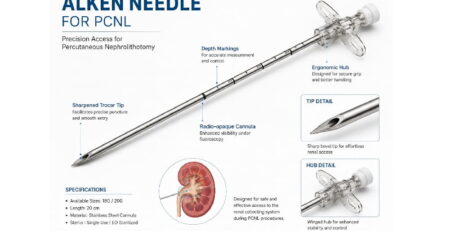
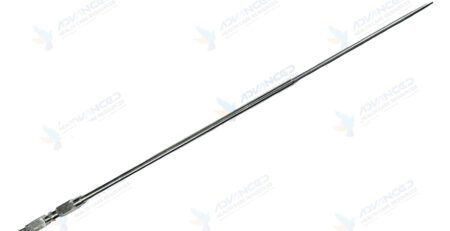
The procedure begins with the Alken Needle for PCNL, a precision puncture needle used for accurate renal access under fluoroscopic or ultrasound guidance.
- Gauge: Standard 18G
- Length: 15–18 cm
- Design: Long, thin, hollow metallic shaft with a sharp bevel tip for tactile feedback and minimal-trauma puncture
- Function: Provides controlled guidance into the collecting system and allows smooth guidewire passage once renal access is confirmed
2. Tract Dilation — Telescopic Dilator Set & Central Rod
Once the guidewire is in place, the Telescopic Dilator Set for PCNL (Stainless Steel) is used for sequential tract dilation.
- Design: Rigid, reusable, telescopic — sequential stainless-steel dilators (typically 8Fr to 30Fr) that slide concentrically over one another for gradual, controlled dilation
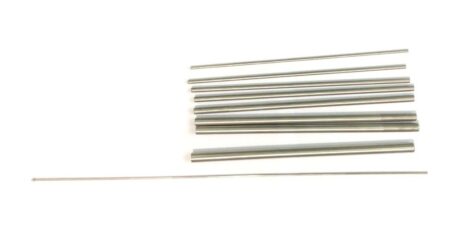
- Central Rod: The Central Rod for Metal Telescopic Dilator passes over the guidewire first, acting as the axial guide the telescopic segments expand and advance around — supplied in medical-grade stainless steel for stability and a smooth surface finish
- Optional Amplatz sheath: Inserted after full dilation to maintain the tract and allow nephroscope passage
3. Alternative Dilation — Fascial Dilator Set & Renal Amplatz Dilator Set
Depending on surgeon preference and tract requirements, two other dilation approaches are used in place of, or alongside, telescopic dilation:
- Fascial Dilator Set (6Fr–16Fr): Graduated dilators in medical-grade plastic or metal with a tapered tip, used to gradually widen the fascia and subcutaneous tissue before larger instruments are introduced
- Renal Amplatz Dilator Set (6Fr–30Fr): Combines an Amplatz sheath with tapered dilators in one system, dilating the tract and establishing the working sheath in the same pass — a common choice when surgeons want to minimize instrument exchanges
4. Tract Access & Maintenance — Amplatz Sheath
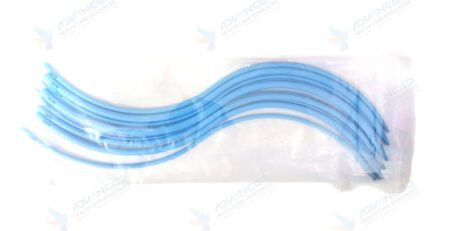
The Amplatz Sheath (22Fr/24Fr/26Fr) maintains the dilated tract and provides the working channel for the nephroscope.
- Material: Medical-grade PTFE (TFE) — biocompatible, low-friction, flexible yet structurally stable
- Radiopaque markers: For precise fluoroscopic placement
- Tapered tip: Atraumatic insertion, reduced tissue trauma
- Supply format: Sterile, single-use, individually packed for infection control
5. Visualization — Nephroscope
The Nephroscope is introduced through the Amplatz sheath for direct visualization inside the renal collecting system.
- Structure: Rigid shaft for stability during fragmentation and extraction
- Components: Sheath (irrigation and working channel) plus a telescope (optical system) for visualization
- Working channel: Accommodates lithotripter probes, forceps, and suction devices
6. Stone Fragmentation — Pneumatic Lithotripter
Once the stone is visualized through the nephroscope, an Intracorporeal Pneumatic Lithotripter is passed through the working channel to fragment the stone before retrieval. See our detailed guide on pneumatic lithotripter technology and related lithotripsy articles for a deeper look at this stage.
7. Stone Retrieval — PCNL Forceps & MiniPerk Push Handle
Fragmented stones are removed using PCNL Forceps, available in four jaw configurations, each suited to a different stone shape:
- Alligator Jaw: Long, slender, serrated jaws — strong grip on flat or irregularly shaped stones, good reach in narrow spaces
- Peanut Jaw: Rounded, bulbous tips — ideal for small, smooth, rounded stones, minimizes slippage and tissue trauma
- Triprong Jaw: Three flexible prongs in a triangular pattern — excellent for retrieving multiple small fragments or foreign bodies
- U-Handle Jaw: Ergonomic U-shaped handle with scissor-like action — improves control and comfort during long procedures, available across jaw types
For Mini-PCNL tracts, the MiniPerk Alligator Jaw Push Handle is used instead — a slender, elongated instrument designed for 12Fr–16Fr miniperc tracts, with an alligator jaw tip for secure grasping and retrieval of stones and fragments under direct nephroscopic vision.
Standard PCNL vs. Mini-PCNL Instrument Set: Comparison Table
| Parameter | Standard PCNL Set | Mini-PCNL Set |
|---|---|---|
| Tract / sheath size | 24Fr–30Fr (Amplatz sheath, telescopic dilator set) | 12Fr–16Fr (miniperc tract) |
| Renal puncture | 18G Alken Needle | 18G Alken Needle (same access instrument) |
| Tract dilation | Telescopic Dilator Set + Central Rod, or Renal Amplatz Dilator Set (6Fr–30Fr) | Fascial Dilator Set (6Fr–16Fr) or smaller-range telescopic dilation |
| Access sheath | Amplatz Sheath, 22Fr/24Fr/26Fr | Narrower Amplatz sheath sized to the 12–16Fr tract |
| Visualization | Standard nephroscope | Nephroscope with a smaller-diameter sheath, or Mini-PCNL-specific scope |
| Stone retrieval | PCNL Forceps — alligator, peanut, triprong, or U-handle jaw | MiniPerk Alligator Jaw Push Handle |
| Typical indication | Large or complex renal calculi, staghorn stones | Moderate-sized stones where a smaller tract reduces bleeding risk and recovery time |
| Clinical trade-off | Larger working channel supports faster fragmentation and retrieval of bigger stones | Smaller tract reduces tissue trauma and blood loss but limits instrument size and irrigation flow |
Complete PCNL Set: Component Summary Table
| Component | Size Range | Function |
|---|---|---|
| Alken Needle | 18G, 15–18 cm | Renal puncture & guidewire access |
| Telescopic Dilator Set | ~8Fr–30Fr | Sequential tract dilation |
| Central Rod | — | Axial guide for telescopic dilator segments |
| Fascial Dilator Set | 6Fr–16Fr | Fascia/subcutaneous tissue dilation |
| Renal Amplatz Dilator Set | 6Fr–30Fr | Combined dilation + sheath placement |
| Amplatz Sheath | 22Fr/24Fr/26Fr | Working channel maintenance |
| Nephroscope | — | Endoscopic visualization |
| Pneumatic Lithotripter | — | Stone fragmentation |
| PCNL Forceps | — | Stone/fragment retrieval |
| MiniPerk Push Handle | 12Fr–16Fr tracts | Mini-PCNL fragment retrieval |
FAQs
What instruments are included in a standard PCNL set?
A standard PCNL set includes an Alken needle for renal puncture, a telescopic dilator set with central rod (or a fascial/Amplatz dilator set) for tract dilation, an Amplatz sheath to maintain access, a nephroscope for visualization, a pneumatic lithotripter for fragmentation, and PCNL forceps for stone retrieval.
What is the difference between a PCNL set and a Mini-PCNL set?
The core difference is tract size: a standard PCNL set works through a 24Fr–30Fr tract, while a Mini-PCNL set works through a narrower 12Fr–16Fr tract and uses instruments like the MiniPerk alligator jaw push handle instead of standard PCNL forceps.
What is the Amplatz sheath used for in PCNL?
The Amplatz sheath maintains the dilated percutaneous tract, providing a stable working channel through which the nephroscope and other instruments pass during stone fragmentation and retrieval.
Why are there different jaw types for PCNL forceps?
Different stone shapes require different grasping mechanisms — alligator jaws grip flat or irregular stones, peanut jaws suit small rounded stones, triprong jaws capture multiple small fragments, and U-handle designs prioritize ergonomic control during long procedures.
Pulselith manufactures the complete PCNL instrument set — from the Alken needle through to stone-retrieval forceps — under ISO 13485:2012 and CE certification, for hospitals, urology departments, and distributors worldwide. Browse the full PCNL Set range or contact us for pricing and bulk enquiries.




Comment (1)
[…] The distinction matters clinically because tract size directly affects three things: how much tissue is disrupted to reach the stone, how much irrigation fluid can flow through the working channel (which affects visualization and stone clearance speed), and how large an instrument can pass through to fragment and retrieve the stone. A bigger tract means faster fragment clearance for large stone burdens; a smaller tract means less parenchymal trauma but a narrower working channel. Neither configuration is a strict upgrade over the other — they’re sized for different jobs. For a full walkthrough of every component in a complete kit, see our guide on what’s included in a complete PCNL instrument set. […]