
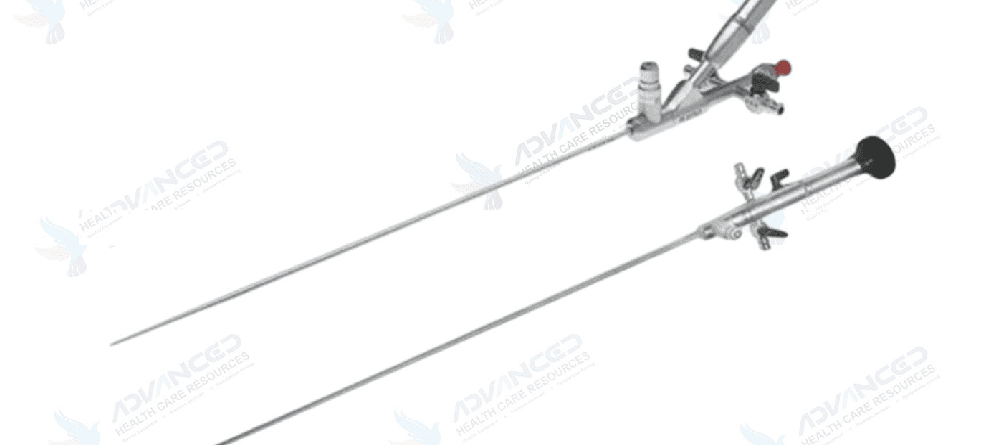
Introduction
In urology, access and visibility define outcomes. Procedures involving kidney and ureteric stones often require navigating narrow and complex anatomical pathways, where both precision and flexibility are critical.
Reusable flexible ureteroscopes have become an essential tool in such cases. They allow urologists to reach difficult locations within the urinary tract and perform diagnostic and therapeutic procedures with greater control. Reusable flexible ureteroscopes are now widely used in modern urology for minimally invasive stone management and diagnostic procedures. Flexible ureteroscopes are often used alongside pneumatic lithotripters in stone management procedures.
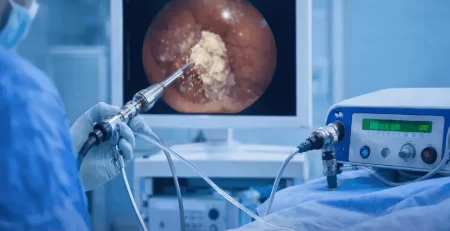
Watch the Flexible Ureteroscope in Clinical Use
See how AHCR’s reusable flexible ureteroscope performs in real procedural settings, offering clear visualization and controlled navigation during urological interventions.
This video demonstrates how the ureteroscope provides clear visualization and controlled navigation during urological interventions.
What is a Reusable Flexible Ureteroscope
A reusable flexible ureteroscope is a specialized endoscopic device used to examine and treat conditions affecting the ureter and kidney, particularly kidney and ureteric stones.
Unlike rigid scopes, flexible ureteroscopes are designed to bend through the natural curves of the urinary tract. This allows urologists to reach difficult-to-access regions with minimal trauma, making them highly effective in minimally invasive stone management procedures.
Reusable systems are built for repeated use, making them a cost-effective and practical choice for hospitals and surgical centers performing high volumes of urological procedures.
How It Supports Urological Procedures
Flexible ureteroscopes are commonly used in:
- Ureteroscopy (URS) for kidney and ureteric stones
- Laser lithotripsy procedures
- Diagnostic evaluation of the upper urinary tract
- Management of complex or hard-to-reach stones
Their ability to access the kidney through natural pathways reduces the need for more invasive procedures, supporting faster recovery and improved patient outcomes.
Key Features That Matter in Clinical Use
High-Definition Imaging
Clear visualization is essential during urological procedures. Modern ureteroscopes provide high-definition imaging that helps surgeons accurately identify stones, assess tissue, and guide treatment.
Enhanced Flexibility and Maneuverability
The ability to navigate tight and curved anatomical structures is one of the biggest advantages of flexible ureteroscopes. Smooth deflection and control allow better access to difficult areas within the kidney.
Durability for Repeated Use
Reusable ureteroscopes are designed to withstand repeated sterilization cycles and regular clinical use. A well-built system maintains performance over time, reducing long-term costs for healthcare providers.
Ergonomic Handling
Comfort during procedures is often overlooked but critical. Lightweight design and intuitive controls help reduce fatigue during longer procedures.
Reusable vs Disposable Ureteroscopes
Hospitals often evaluate reusable and disposable options based on usage and cost.
Reusable ureteroscopes:
- Lower cost over time for high-volume centers
- More sustainable option
- Require proper maintenance and sterilization
Disposable ureteroscopes:
- No maintenance required
- Useful for specific cases or low-volume usage
- Higher cost per procedure
For many hospitals, reusable systems offer better long-term value when supported by proper handling and care.
Why Flexibility Matters in Stone Management
Kidney stones are not always located in easily accessible areas. Flexible ureteroscopes allow urologists to:
- Reach lower pole stones
- Navigate complex calyceal structures
- Perform targeted treatment with precision
This improves the efficiency of procedures and reduces the need for secondary interventions.
Clinical Advantages
- Minimally invasive access through natural pathways
- Reduced patient recovery time
- Improved precision in stone treatment
- Suitable for a wide range of urological conditions
- Role in Modern Urology Practice
With the shift toward minimally invasive procedures, flexible ureteroscopes are now a standard part of urology setups. They support both diagnostic and therapeutic workflows and are widely used in combination with lithotripsy systems.
Manufacturers like AHCR focus on building reusable flexible ureteroscopes that perform consistently in real surgical environments—balancing imaging quality, maneuverability, and durability.
Role in Modern Urology Practice
As minimally invasive urology continues to evolve, reusable flexible ureteroscopes have become standard equipment in modern surgical practice.
They are frequently used alongside stone fragmentation systems such as pneumatic lithotripters, creating integrated treatment workflows for effective stone management.
At AHCR, our focus is on manufacturing ureteroscopes that perform consistently in real clinical settings—balancing imaging quality, maneuverability, and long-term durability.
Frequently Asked Questions
What is a reusable flexible ureteroscope used for?
It is used for diagnosing and treating kidney and ureteric stones during minimally invasive urology procedures such as ureteroscopy.
How long does a reusable ureteroscope last?
Its lifespan depends on usage frequency, sterilization handling, and maintenance protocols.
Is a reusable ureteroscope better than a disposable ureteroscope?
Reusable systems are often more cost-effective for hospitals with high procedural volumes.
Conclusion
As minimally invasive urology continues to evolve, reusable flexible ureteroscopes remain essential for improving procedural accuracy, reducing recovery time, and supporting better patient outcomes. For hospitals and surgical centers, choosing the right system comes down to reliability, ease of use, and long-term performance.
As procedural demand continues to grow, dependable and well-designed equipment will remain central to delivering effective patient care.






Leave a Reply