
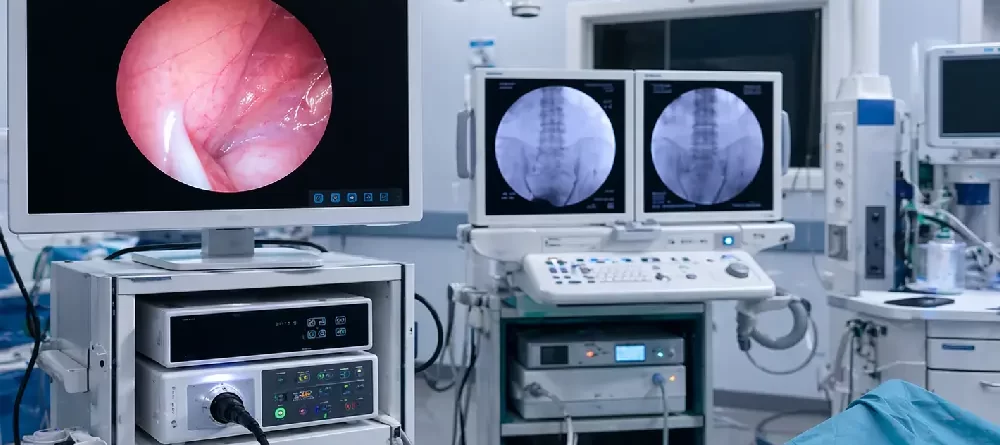
The New Diagnostic Challenge
Hospitals and multi-specialty healthcare networks across global markets are facing growing pressure to deliver faster diagnosis, higher imaging accuracy, and better patient outcomes while managing increasing diagnostic workloads. In urology departments, this challenge is especially critical because imaging plays a central role in detecting kidney stones, bladder tumors, prostate abnormalities, urinary obstructions, and post-surgical complications.
Traditional imaging interpretation relies heavily on specialist availability, manual review time, and radiologist consistency. As patient volumes increase, hospitals are turning to artificial intelligence to improve speed, reduce diagnostic bottlenecks, and strengthen precision in urological decision-making.
For enterprise hospitals handling high diagnostic volumes, AI is no longer optional—it is becoming a critical component of scalable and accurate urology imaging workflows.
Why AI Matters More in High-Volume Urology Environments
In enterprise hospital systems, even small delays in image interpretation can affect patient throughput, operating room scheduling, and treatment planning. AI-powered imaging systems help hospitals process large volumes of scans more efficiently by automating pattern recognition and assisting physicians in identifying abnormalities earlier.
For hospitals managing hundreds of urology imaging cases weekly, AI is becoming essential not just as a technological upgrade but as an operational necessity.
The adoption of artificial intelligence in medical imaging is supported by global healthcare research and regulatory bodies. Organizations like the World Health Organization (WHO) have highlighted the growing role of AI in improving diagnostic accuracy and healthcare delivery across clinical specialties.
How AI Is Improving Urology Imaging Across Hospital Departments
1. Faster Detection of Kidney Stones
AI algorithms can rapidly identify kidney stones on CT and ultrasound scans, analyze stone size and density, and support treatment pathway decisions. This reduces radiology review time and accelerates intervention planning in emergency and outpatient settings.
AI-driven imaging supports better treatment planning when combined with tools like the pneumatic lithotripter.
2. Earlier Bladder Tumor Identification
AI-assisted cystoscopy imaging enhances lesion visibility by highlighting subtle abnormalities that may otherwise be missed. This is especially valuable in early bladder cancer detection programs where timing directly affects treatment outcomes.
3. Smarter Prostate MRI Interpretation
AI helps radiologists detect suspicious prostate lesions with greater consistency, reducing false positives and improving biopsy targeting precision in oncology-focused hospital departments.
4. Real-Time Endoscopic Imaging Support
During live cystoscopy and ureteroscopy procedures, emerging AI systems can assist surgeons by flagging suspicious tissue patterns in real time, improving intraoperative confidence and decision accuracy.
Operational Benefits for Enterprise Hospitals
Beyond clinical accuracy, AI creates measurable operational advantages for large hospitals and healthcare groups.
Hospitals adopting AI-enabled urology imaging benefit from shorter diagnostic turnaround times, more efficient radiology workflow allocation, reduced repeat imaging, and better use of specialist expertise across multiple departments. In high-volume healthcare systems, these efficiencies translate into faster patient movement, improved resource utilization, and stronger revenue cycle performance.
AI vs Traditional Urology Imaging Workflows
The impact of AI on hospital imaging workflows can be clearly understood when compared with traditional diagnostic approaches:
| Traditional Imaging | AI-Assisted Imaging |
|---|---|
| Manual image interpretation | AI-supported pattern recognition |
| Higher variability between radiologists | More standardized diagnostic consistency |
| Longer reporting turnaround time | Faster diagnosis and reporting |
| Risk of missed subtle abnormalities | Enhanced detection of early-stage conditions |
| Limited scalability in high-volume hospitals | Improved workflow efficiency at scale |
How AI Supports Cross-Border Healthcare Standards
For hospitals serving international patient populations, consistency in imaging quality is critical. AI reduces variability in interpretation across physicians and locations, helping enterprise healthcare providers maintain standardized diagnostic quality across regional branches, partner hospitals, and cross-border care networks.
This is especially important for hospital groups operating across APAC, the Middle East, Europe, Africa, and the Americas, where centralized quality control improves global patient trust.
AI and Enterprise Urology Procurement Strategy
Hospital procurement teams are increasingly evaluating whether new imaging systems are AI-compatible before capital investment decisions are made.
When purchasing flexible cystoscopes, digital ureteroscopes, imaging consoles, and endourology platforms, enterprise hospitals now prioritize systems that can integrate with future AI diagnostic software. This makes AI readiness a growing procurement benchmark in modern urology infrastructure planning.
The Role of Smart Endoscopic Equipment in AI-Driven Hospitals
High-quality urology equipment plays a critical role in enabling accurate imaging for AI-assisted diagnosis. AI systems depend heavily on the quality of visual input, making reliable endoscopic devices essential in modern urology workflows.
Reusable flexible cystoscopes, ureteroscopes, and digital visualization systems must deliver clear, stable, high-definition imaging for AI platforms to analyze abnormalities effectively.
Challenges Hospitals Must Address Before AI Adoption
Despite its advantages, AI implementation requires careful planning. Enterprise hospitals must address system integration complexity, physician training, regulatory compliance, cybersecurity, and imaging data standardization before achieving full deployment value.
Successful adoption depends not only on software intelligence but also on hospital readiness infrastructure.
The Future: Predictive Urology Diagnostics
The next phase of AI in urology is moving beyond detection into prediction. Future systems are expected to forecast stone recurrence risk, predict tumor progression probabilities, and personalize treatment pathways based on imaging plus patient data analytics.
For enterprise hospitals, predictive diagnostics may become one of the most powerful tools in preventive urology care.
AHCR’s Perspective on AI-Ready Urology Infrastructure
At AHCR, we recognize that enterprise hospitals require more than standalone devices—they need scalable, future-ready urology equipment that aligns with evolving imaging ecosystems.
As AI transforms hospital diagnostics globally, the demand for dependable, high-clarity endoscopic equipment will continue to grow. Precision imaging remains the foundation for intelligent diagnosis.
Frequently Asked Questions
Why are enterprise hospitals adopting AI in urology imaging faster?
Because high patient volumes create pressure for faster diagnosis, standardized accuracy, and more efficient specialist workflows.
Can AI replace radiologists in urology departments?
No. AI supports radiologists and urologists by improving speed and detection accuracy, but clinical decisions remain physician-led.
What hospital departments benefit most from AI urology imaging?
Radiology, urology surgery, oncology, emergency care, and outpatient diagnostic departments all benefit significantly.
Is AI-compatible imaging becoming mandatory in hospital procurement?
Increasingly, yes, especially in large enterprise hospital groups planning long-term digital transformation strategies.
Conclusion
AI is no longer a future concept in urology imaging—it is becoming a competitive necessity for enterprise hospitals worldwide. By improving diagnostic speed, increasing imaging precision, and strengthening hospital-wide efficiency, AI is reshaping how leading healthcare institutions deliver urological care at scale.
For hospitals investing in long-term diagnostic excellence, AI-powered urology imaging represents both a technological advancement and a strategic advantage.
Also read,
https://pulselith.in/why-hospitals-worldwide-source-urology-instruments-from-india/
https://pulselith.in/frequently-asked-questions-about-surgical-instrument-manufacturing-in-india/
https://pulselith.in/understanding-iso-certification-in-surgical-instrument-manufacturing/











Leave a Reply