
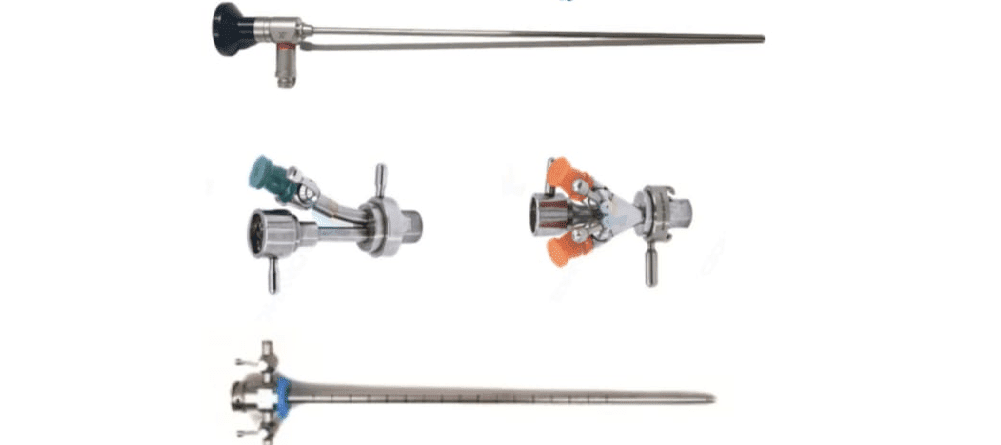
Introduction: Why Flexible Cystoscopy Has Become Essential in Urology
Bladder and urethral conditions often require direct visual examination for accurate diagnosis. Symptoms such as hematuria, recurrent urinary infections, bladder pain, urinary obstruction, and suspected tumors cannot always be fully evaluated through imaging scans alone.
This is where reusable flexible cystoscopes have become indispensable in modern urology.
Unlike rigid cystoscopy systems, reusable flexible cystoscopes allow physicians to navigate the urinary tract with greater precision, improved patient comfort, and minimal invasiveness. They have transformed how urologists diagnose bladder abnormalities, monitor disease progression, and perform outpatient interventions.
As minimally invasive urology equipment continues to advance globally, reusable flexible cystoscopy systems are now considered a core diagnostic and therapeutic tool in hospitals, surgical centers, and specialty urology clinics.
At AHCR, we manufacture reusable flexible cystoscopes designed for consistent performance in real clinical environments—where image clarity, maneuverability, and durability directly affect outcomes.
Watch the Reusable Flexible Cystoscope in Clinical Use
See how a reusable flexible cystoscope functions during an actual bladder examination and navigation inside the urinary tract.
What Is a Reusable Flexible Cystoscope?
A reusable flexible cystoscope is a specialized endoscopic medical device used to inspect the urethra and bladder.
It consists of:
- A flexible insertion tube
- High-definition imaging optics
- Illumination source
- Working channel for accessory instruments
Its flexible design allows physicians to maneuver naturally through curved urinary pathways, reducing discomfort during insertion while improving anatomical access.
Unlike disposable systems, reusable flexible cystoscopes are engineered for repeated sterilization and long-term clinical use, making them a cost-effective investment for healthcare institutions with frequent procedure volumes.
Why Flexible Cystoscopy Matters More Than Ever in Early Diagnosis
Flexible cystoscopy plays a critical role in identifying early-stage abnormalities that may not appear clearly on ultrasound, CT, or MRI scans.
- Early bladder tumors
- Carcinoma in situ lesions
- Urethral strictures
- Chronic inflammation
- Foreign bodies
- Bladder stones
- Recurrent bleeding sources
Early visualization allows faster intervention, which can significantly improve patient outcomes.
Clinical Applications of Reusable Flexible Cystoscopes
Diagnostic Applications:
- Hematuria investigation
- Bladder cancer screening
- Recurrent UTI assessment
- Chronic bladder pain evaluation
Therapeutic Applications:
- Stent insertion and removal
- Foreign body retrieval
- Bladder biopsy guidance
- Stone inspection and extraction support
Surveillance Applications:
- Post-tumor recurrence monitoring
- Follow-up bladder examinations
Key Technologies Behind Modern Flexible Cystoscope Performance
High-Definition Imaging Systems
Advanced imaging optics improve lesion detection, mucosal assessment, and biopsy targeting.
Superior Deflection and Navigation Control
Controlled bending enables easier bladder wall inspection and access to difficult anatomy.
Working Channel Integration
Integrated channels support biopsy forceps, retrieval baskets, stents, and irrigation tools.
Reprocessing Durability
Reusable systems are engineered for repeated sterilization cycles while maintaining structural integrity.
Reusable vs Disposable Flexible Cystoscope: Which Is Better?
Reusable Flexible Cystoscope Advantages:
- Lower long-term procedural cost
- Strong ROI in high-volume hospitals
- Sustainable repeated use
- Consistent physician familiarity
Disposable Cystoscope Advantages:
- No reprocessing required
- Useful in low-volume settings
- Reduced contamination risk
Also, read about the reusable flexible ureteroscope
Why Hospitals Continue Choosing Reusable Flexible Cystoscopes
Hospitals and urology centers continue to invest in reusable flexible cystoscopes because they offer a practical balance of clinical performance, long-term cost efficiency, and operational reliability. In high-volume medical environments where cystoscopy procedures are performed regularly, reusable systems provide measurable advantages over single-use alternatives.
1. Lower Long-Term Cost Per Procedure
While the initial investment in reusable flexible cystoscopes may be higher than that of disposable systems, the cost per procedure decreases significantly over time. Hospitals performing frequent bladder examinations and follow-up cystoscopies benefit from reduced recurring equipment expenses, making reusable systems a more economical choice in the long run.
2. Better Return on Investment for High-Volume Facilities
In busy hospitals and specialty urology departments, reusable cystoscopes deliver a stronger return on investment because one system can support hundreds of procedures when properly maintained. This makes them especially valuable for institutions managing large patient volumes and recurring surveillance cases.
3. Consistent Performance and Familiarity for Physicians
Reusable systems allow physicians to work repeatedly with the same equipment platform, creating familiarity in handling, control response, and image quality. This consistency improves procedural confidence and can contribute to a smoother workflow during diagnostic and therapeutic cystoscopy procedures.
4. High Imaging Reliability in Repeated Clinical Use
Modern reusable flexible cystoscopes are built with durable optical systems that maintain image clarity over repeated sterilization cycles. For physicians, dependable visualization is essential for identifying small lesions, inflammation, tumors, and structural abnormalities accurately.
5. Sustainable and Environmentally Responsible Choice
Compared with disposable devices, reusable cystoscopes generate significantly less medical waste over time. Hospitals increasingly consider sustainability as part of their procurement strategy, and reusable systems align better with long-term environmental responsibility goals.
6. Better Inventory Predictability and Workflow Planning
Hospitals using reusable systems can maintain predictable procedural scheduling without depending on continuous disposable stock replenishment. This reduces supply chain disruptions and helps ensure equipment availability for planned and urgent cystoscopy cases alike.
7. Stronger Value in Bladder Cancer Surveillance Programs
Patients undergoing bladder cancer follow-up often require repeated cystoscopic examinations over months or years. Reusable flexible cystoscopes make these long-term surveillance programs more affordable and practical, helping hospitals manage recurring diagnostic demand efficiently.
For hospitals balancing patient care quality, budget control, and operational efficiency, reusable flexible cystoscopes remain the preferred choice because they deliver lasting value far beyond the initial purchase.
Patient Benefits: Why Flexible Cystoscopy Improves Experience
- Less insertion discomfort
- Reduced urethral irritation
- Often performed under local anesthesia
- Faster recovery after the procedure
Infection Control and Sterilization Considerations
- Pre-cleaning immediately after use
- Leak testing
- Manual cleaning
- High-level disinfection or sterilization
- Dry storage controls
How Flexible Cystoscopy Supports Bladder Cancer Surveillance
Reusable flexible cystoscopes make long-term bladder cancer surveillance more affordable, practical, and easier to schedule regularly.
The Future of Flexible Cystoscope Technology
The future of flexible cystoscope technology is being shaped by advancements that aim to improve diagnostic precision, physician control, and patient outcomes.
Emerging innovations such as digital chip-on-tip imaging are enhancing visual clarity by delivering sharper, high-resolution images directly from the distal end of the scope, allowing earlier and more accurate detection of subtle abnormalities.
Narrow band imaging and other enhanced visualization technologies are also becoming more integrated, helping urologists better identify lesions, vascular patterns, and early-stage bladder tumors that may be difficult to detect under standard white light imaging.
At the same time, manufacturers are working toward lighter, slimmer, and more ergonomic designs that improve maneuverability while reducing physician fatigue during longer procedures.
Artificial intelligence is also expected to play a growing role, with AI-assisted image analysis likely to support real-time lesion detection and diagnostic decision-making in the years ahead. As these technologies continue to evolve, flexible cystoscopes will become even more precise, efficient, and valuable in supporting earlier diagnosis and minimally invasive bladder care.
AHCR’s Reusable Flexible Cystoscope Manufacturing
At AHCR, our reusable flexible cystoscopes are designed to meet the practical demands of everyday clinical use. We focus on delivering clear and reliable imaging, durable construction for repeated sterilization and long-term use, smooth maneuverability through complex anatomy, and ergonomic handling that supports ease of use for surgeons during procedures.
Frequently Asked Questions
What is a reusable flexible cystoscope used for?
It is used to diagnose and treat bladder and urethral conditions during minimally invasive cystoscopy procedures.
How long does a reusable flexible cystoscope last?
Its lifespan depends on usage frequency, sterilization handling, and maintenance quality.
Is flexible cystoscopy painful?
Flexible cystoscopy is generally well tolerated and causes significantly less discomfort than rigid cystoscopy.
Why is a reusable cystoscope preferred in hospitals?
Because it lowers long-term costs and performs better economically in high-volume clinical environments.
Conclusion
Reusable flexible cystoscopes continue to define modern bladder diagnosis because they combine precision imaging, patient comfort, procedural efficiency, and long-term cost value.
As urology moves toward earlier detection and minimally invasive care, reusable flexible cystoscopy remains one of the most important tools supporting better clinical decisions and better patient outcomes.







Leave a Reply