

For a hospital or urology department deciding what to stock, the question usually isn’t “which is better” — a standard PCNL instrument set and a Mini-PCNL set solve different clinical problems. The real question is which kit (or combination) matches your case volume, stone complexity, operative-time budget, and procurement capacity. This guide walks through that decision in detail, from clinical fit through sourcing.
Table of Contents
- What Separates a PCNL Set from a Mini-PCNL Set
- Matching the Kit to Your Case Volume
- Stone Complexity & Case Mix
- Operative Time, Learning Curve & Workflow
- Safety Profile: Bleeding, Hospital Stay & Complications
- Cost & Procurement Considerations
- Stocking Strategy: Standard, Mini, or Both?
- Inventory & Sterilization Turnaround
- Decision Table: Which Kit Fits Your Facility
- Sourcing Checklist: Choosing a PCNL Set Manufacturer
- Questions to Ask Before You Sign a Purchase Order
- FAQs
What Separates a PCNL Set from a Mini-PCNL Set
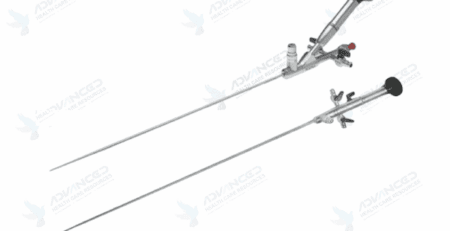
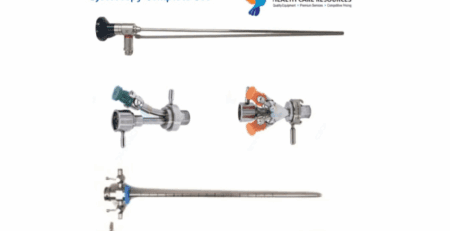
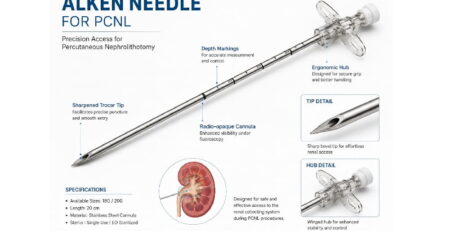
A complete PCNL instrument set works through a 24Fr–30Fr tract and covers renal puncture, dilation, sheath access, visualization, and retrieval — using instruments like the Alken needle, telescopic dilator set, Amplatz sheath (22Fr/24Fr/26Fr), nephroscope, and PCNL forceps. A Mini-PCNL set follows the same overall workflow — puncture, dilate, access, visualize, fragment, retrieve — but through a narrower 12Fr–16Fr tract, using a fascial dilator set (6Fr–16Fr) for dilation and a MiniPerk alligator jaw push handle in place of standard forceps.
The distinction matters clinically because tract size directly affects three things: how much tissue is disrupted to reach the stone, how much irrigation fluid can flow through the working channel (which affects visualization and stone clearance speed), and how large an instrument can pass through to fragment and retrieve the stone. A bigger tract means faster fragment clearance for large stone burdens; a smaller tract means less parenchymal trauma but a narrower working channel. Neither configuration is a strict upgrade over the other — they’re sized for different jobs. For a full walkthrough of every component in a complete kit, see our guide on what’s included in a complete PCNL instrument set.
Matching the Kit to Your Case Volume
Procedure volume changes what “the right kit” actually means in practice, not just in theory:
- Low-volume departments (under roughly 50 PCNL cases a year): A single, versatile standard PCNL tray that handles the widest range of stone sizes is usually more practical than maintaining two separate inventories. Splitting a small caseload across two kits means each set gets used less often, which increases per-use sterilization and maintenance overhead relative to how many procedures it supports. A standard set with a well-stocked forceps range (alligator, peanut, triprong, U-handle jaw) covers the majority of cases without duplicated stock sitting idle on a shelf.
- Moderate-volume departments: This is where the calculus starts to shift. If a meaningful share of your cases involve moderate-sized, uncomplicated stones, a second Mini-PCNL tray can reduce average blood loss and recovery time across that subset of patients without requiring you to double every piece of equipment — since several core components (Alken needle, nephroscope, sheath family) are shared between the two configurations.
- High-volume tertiary centers: Running both a standard PCNL set and a Mini-PCNL set in parallel lets surgeons match tract size to stone size case by case, rather than defaulting to one tract size for every patient. At this volume, the utilization rate on both trays justifies the procurement and sterilization overhead of maintaining two full inventories, and the clinical upside — better outcomes matched to stone profile — compounds across a larger number of patients.
- Ambulatory / day-care surgical centers: Mini-PCNL’s smaller tract, shorter recovery profile, and lower blood loss make it a natural fit for centers built around faster turnover and reduced inpatient stays. If your center’s business model depends on same-day discharge, a Mini-PCNL-first approach (with standard PCNL reserved as a referral-out or occasional-case option) often fits the operating model better than stocking a full standard set for infrequent use.
Also read: Alken Needle for PCNL: Specifications, Uses, and How to Choose the Right Gauge
What Hospitals Should Check Before Purchasing PCNL Puncture Needles
How PCNL Equipment Has Evolved in Modern Stone Management
Stone Complexity & Case Mix
Beyond raw volume, the stone profile your department actually treats matters just as much, if not more:
- Large or staghorn calculi: Favor a standard PCNL set. The larger 24Fr–30Fr working channel supports faster fragmentation and retrieval of bulkier stone burden, and the wider irrigation flow helps maintain visualization when stone dust and debris are higher in volume.
- Multiple or complex calyceal stones: Standard access generally allows for more flexible instrument angulation and, where needed, a second access tract — both of which are harder to achieve through a narrower Mini-PCNL channel.
- Moderate-sized, less complex stones: A Mini-PCNL set reduces tissue trauma and bleeding risk without materially extending operative time for these cases, and is increasingly the preferred approach where stone burden doesn’t demand the larger channel.
- Pediatric or anatomically smaller patients: Mini-PCNL’s narrower tract is frequently the default choice regardless of stone size, simply because the smaller renal anatomy doesn’t accommodate a standard tract as comfortably.
- Mixed case mix (most departments): This is the most common real-world scenario, and it’s the strongest argument for stocking both rather than trying to standardize on one tract size. Departments that see a genuine spread of stone sizes and patient profiles tend to get the most clinical value out of having both options available rather than forcing every case through one configuration.
Operative Time, Learning Curve & Workflow
Kit choice also has downstream effects on how a case runs inside the OT, which matters for scheduling and throughput as much as for the patient:
- Operative time: Standard PCNL often clears large stone burdens faster because of the wider working channel and irrigation flow, while Mini-PCNL can take longer for larger stones simply because more fragmentation passes are needed through the narrower channel.
- Learning curve: Surgeons trained primarily on standard PCNL may need a deliberate adjustment period on Mini-PCNL instrumentation, particularly around the narrower dilator sequence and the MiniPerk-style retrieval technique, which handles differently from standard forceps.
- Fluoroscopy and imaging time: Tract size doesn’t meaningfully change imaging time on its own, but case complexity (multiple tracts, difficult access) does — so departments doing more complex, multi-tract standard PCNL cases should budget accordingly for radiology time and staff radiation exposure.
- Turnover between cases: A well-organized department running both kit types benefits from clear labeling and separated storage, since mixing dilator sets or forceps between the two configurations mid-list slows the OT down and creates instrument-tracking headaches.
Safety Profile: Bleeding, Hospital Stay & Complications
The clinical literature on PCNL and Mini-PCNL consistently points to a few recurring trade-offs worth building into your procurement decision:
- Blood loss and transfusion risk: Smaller tract size in Mini-PCNL is generally associated with reduced blood loss and lower transfusion rates compared to standard PCNL, since less renal parenchyma is disrupted to establish access.
- Hospital stay: Mini-PCNL patients often have shorter inpatient stays, which is part of why the approach fits well with ambulatory and day-care surgical models.
- Stone-free rates for complex stones: For larger or staghorn stone burdens, standard PCNL tends to achieve higher single-session stone-free rates, since the wider channel supports more efficient fragment clearance in a single sitting rather than requiring staged procedures.
- Post-operative pain and recovery: The smaller access tract in Mini-PCNL is generally associated with less post-operative discomfort, which can translate into faster mobilization and, again, shorter recovery windows.
None of this means one approach is categorically safer — it means the safety profile shifts with the clinical scenario, which is exactly why matching the right kit to the right patient (rather than standardizing on one tract size for every case) tends to produce better outcomes across a mixed caseload.
Cost & Procurement Considerations
PCNL instrument set price depends on more than tract size — construction quality, certification, and whether components are reusable or single-use all factor into the real cost picture:
- Reusable stainless steel instruments: A reusable PCNL instrument set in stainless steel (dilators, forceps, nephroscope) carries a higher upfront cost but a lower per-procedure cost over time compared to single-use alternatives, since the same instruments are sterilized and reused across hundreds of cases rather than discarded after one.
- Certification: Confirm ISO 13485 and CE certification before comparing price across suppliers. Uncertified instruments may look cheaper on a quote but complicate hospital procurement approval, import clearance, and insurance/reimbursement documentation down the line — costs that don’t show up on the initial invoice but show up later.
- Shared components reduce incremental cost: Since the two sets share several components (Alken needle, nephroscope shell, sheath family), adding Mini-PCNL capability to an existing standard PCNL inventory is often an incremental spend rather than a full duplicate purchase — mainly the fascial dilator set and MiniPerk push handle, plus a narrower Amplatz sheath sized to the smaller tract.
- Bulk procurement: Hospitals and distributors ordering for multiple departments or branch facilities should ask suppliers directly about bulk PCNL instrument set pricing and lead times rather than costing per unit. Bulk orders also make sense from a sterilization-cycle-planning perspective, since a larger standing inventory reduces the risk of instrument availability bottlenecks during high-volume periods.
- Total cost of ownership: Factor in expected instrument lifespan, sterilization/autoclave cycle limits, and the manufacturer’s after-sales support (replacement parts, repair turnaround) — not just the sticker price of the initial set. A marginally cheaper set from a supplier with poor after-sales support can end up costing more once you account for downtime or premature replacement.
Stocking Strategy: Standard, Mini, or Both?
A simple way to frame the decision, building on the volume and complexity factors above:
- Stock standard only if your case mix skews toward larger or complex stones and procedure volume doesn’t justify a second inventory — this is the right call for many low-volume general urology departments.
- Stock Mini only if you’re an ambulatory or day-care center focused on moderate-sized stones with fast patient turnover, and you’re comfortable referring out the occasional large-stone case that genuinely needs a standard tract.
- Stock both if you’re a mid-to-high volume department seeing a genuine mix of stone sizes — this is the most common setup at tertiary and multi-specialty hospitals, and it’s generally the configuration that produces the best average outcomes across a varied caseload, provided utilization on both trays is high enough to justify the added procurement and sterilization overhead.
Inventory & Sterilization Turnaround
Stocking decisions aren’t purely clinical — they also depend on how your central sterile supply department (CSSD) handles turnaround:
- Turnaround time between cases: If your CSSD can reliably sterilize and return a set between same-day cases, a single, well-stocked standard set may cover more of your schedule than it first appears to. If turnaround is slower, having a second complete tray (rather than relying on fast reprocessing) reduces the risk of case delays.
- Duplicate critical components: Regardless of whether you stock one kit type or two, it’s worth holding duplicate stock of the components most prone to damage or loss during use — forceps jaws and dilator tips in particular — so a single damaged instrument doesn’t take an entire kit out of rotation.
- Tracking and labeling: Departments running both standard and Mini-PCNL inventories should maintain clearly separated storage and tray labeling, since the two dilator sets and retrieval instruments are easy to mix up under time pressure.
Decision Table: Which Kit Fits Your Facility
| Facility Profile | Recommended Kit | Why |
|---|---|---|
| Low-volume urology department | Standard PCNL set | One versatile tray covers most cases without duplicated, under-used inventory |
| Moderate-volume department, mixed caseload | Standard set, with Mini-PCNL as a planned add-on | Shared components (needle, scope, sheath family) keep incremental cost low |
| High-volume tertiary hospital | Both standard + Mini-PCNL | Case volume justifies matching tract size to stone size per patient |
| Ambulatory / day-care surgical center | Mini-PCNL set | Smaller tract supports faster recovery and same-day turnover |
| Center treating complex/staghorn cases | Standard PCNL set | Larger working channel needed for bulkier stone burden and higher single-session stone-free rates |
| Pediatric urology unit | Mini-PCNL set | Narrower tract better suited to smaller renal anatomy regardless of stone size |
| Mixed general urology caseload | Both standard + Mini-PCNL | Reflects real-world variation in stone size and patient profile across a typical department |
Sourcing Checklist: Choosing a PCNL Set Manufacturer
Whichever kit (or combination) you land on, the supplier matters as much as the configuration:
- Certification: ISO 13485 and CE certification, verifiable rather than just claimed on a product page — ask for documentation up front.
- Complete component range: A manufacturer who supplies the full set — Alken needle through nephroscope for standard PCNL, plus the fascial dilator set and MiniPerk handle for Mini-PCNL — rather than piecing together components from multiple vendors, which complicates warranty and replacement-part sourcing later.
- Construction quality: Reusable stainless steel components built for repeated autoclave cycles, not just a one-time-use specification dressed up as durable.
- Export experience: For international buyers, a PCNL instrument set exporter with established documentation and shipping processes reduces import friction and customs delays.
- OEM/private label capability: Relevant for distributors who want to sell under their own brand rather than the manufacturer’s, particularly in export markets where brand recognition matters.
- Support for bulk hospital procurement: Suppliers who can handle multi-unit, multi-facility orders without treating each order as a one-off, and who can commit to consistent lead times across repeat orders.
- After-sales support: Ask about repair turnaround, replacement-part availability, and whether the manufacturer offers any warranty on reusable components.
Pulselith manufactures both standard and Mini-PCNL compatible instruments — including the Alken needle, telescopic dilator set, nephroscope, and the full forceps range — as a single-source PCNL set manufacturer and exporter in India.
Questions to Ask Before You Sign a Purchase Order
- What is the expected sterilization cycle life of the reusable components, and what’s the replacement process once that limit is reached?
- Can the supplier provide ISO 13485 and CE certification documents directly, not just a logo on the website?
- What is the standard lead time for a bulk order, and does it change for repeat orders versus first-time orders?
- Does the manufacturer supply both standard and Mini-PCNL compatible components, so future expansion doesn’t require switching suppliers?
- What after-sales support exists for damaged or lost components — can individual pieces (a forceps jaw, a single dilator size) be reordered without buying a full replacement set?
- For international orders: what export documentation does the supplier provide, and have they shipped to your specific market or region before?
FAQs
Is Mini-PCNL replacing standard PCNL sets in hospitals?
No — most departments run both rather than replacing one with the other. Mini-PCNL is preferred for moderate-sized stones where reduced tract size limits bleeding and trauma, while standard PCNL remains necessary for larger or staghorn calculi that need a bigger working channel and higher single-session stone clearance.
Do I need to buy a completely separate inventory for Mini-PCNL?
Not entirely. Several components — the Alken needle, nephroscope, and sheath family — overlap between the two setups. The main additions for Mini-PCNL are the fascial dilator set (6Fr–16Fr) and the MiniPerk push handle, along with a narrower Amplatz sheath sized to the smaller tract.
What should a hospital check before buying a PCNL instrument set in bulk?
Confirm ISO 13485 and CE certification, check that the supplier offers the complete component range rather than partial sets, clarify bulk pricing, lead times, and export documentation upfront if ordering across multiple facilities, and ask about after-sales support for individual component replacement.
Which is more cost-effective long-term: reusable stainless steel or single-use PCNL instruments?
Reusable stainless steel instruments carry a higher upfront cost but a lower per-procedure cost over time, since components like dilators, forceps, and the nephroscope are built for repeated sterilization cycles rather than one-time use.
Does Mini-PCNL take longer than standard PCNL?
It depends on stone burden. For moderate-sized stones, operative time is comparable. For larger stones, Mini-PCNL can take longer because more fragmentation passes are needed through the narrower working channel compared to a standard tract.
How do I decide the right ratio of standard to Mini-PCNL cases to plan inventory around?
Start by reviewing your department’s stone-size distribution over the past 12–24 months. Departments where a meaningful share of cases fall in the moderate-stone-size range typically find that stocking both kit types, weighted toward whichever configuration matches their more common case profile, produces the best balance between clinical fit and inventory efficiency.
AHCR manufactures complete PCNL and Mini-PCNL compatible instrument sets under ISO 13485:2012 and CE certification, supplying hospitals, distributors, and urology departments worldwide. Browse the full PCNL Set range or contact us for pricing and bulk procurement enquiries.





Leave a Reply