
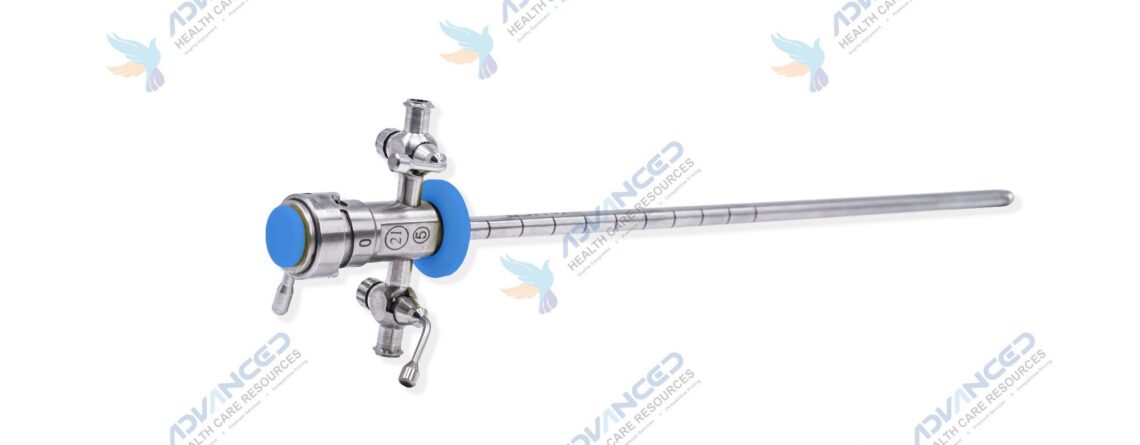
Buying the right cystoscopy sheath isn’t just about price — it’s about fit, compatibility, and reliability during a procedure where there’s no room for error. Whether you’re outfitting a new OT or replacing worn-out instruments, the same handful of questions come up again and again among urologists and hospital procurement teams.
Below are the five questions we hear most often, along with straightforward answers to help you make a confident, informed purchase.
Table of Contents
- 1. What size cystoscopy sheath do I actually need — and what does “21 Fr” mean?
- 2. Is the sheath compatible with my existing telescope and obturator?
- 3. What material is the sheath made of, and how does that affect durability?
- 4. Is it autoclavable, and how many sterilization cycles can it withstand?
- 5. Is it suited for diagnostic cystoscopy only, or also for procedures like TURP?
- Final Thoughts
1. What Size Cystoscopy Sheath Do I Actually Need — and What Does “21 Fr” Mean?
This is almost always the first question, especially for residents and newly equipped clinics. Cystoscope and sheath sizes are measured on the French gauge (Fr) scale, where each unit equals roughly 0.33 mm in outer diameter. So a 21 French cystoscope sheath has an outer diameter of about 7 mm.
Common sizes range from 15 Fr (pediatric/slim diagnostic use) up to 26–28 Fr (resection procedures requiring larger working channels). 21 Fr sits in a practical middle ground — it’s wide enough to accommodate continuous-flow irrigation and small working instruments, yet narrow enough for routine diagnostic and minor operative cystoscopy without excessive patient discomfort.
| French Size | Approx. Diameter | Typical Use |
|---|---|---|
| 15–17 Fr | 5–5.7 mm | Diagnostic, pediatric |
| 19 Fr | 6.3 mm | Diagnostic cystoscopy |
| 21 Fr | 7 mm | Diagnostic + minor operative work |
| 24–26 Fr | 8–8.7 mm | TURP, resection procedures |
If your practice handles a mix of diagnostic cystoscopy and minor operative work, a 21 Fr sheath is usually the most versatile choice to stock.
2. Is the Sheath Compatible With My Existing Telescope and Obturator?
Compatibility is where many buyers get tripped up — a sheath is only useful if it fits your existing telescope, bridge, and obturator set. Before purchasing, confirm:
- The sheath’s inner diameter matches your telescope’s outer diameter
- The obturator supplied (or your existing one) seats properly inside the sheath for smooth, atraumatic insertion
- The proximal fitting is compatible with your bridge/adaptor and irrigation setup
Our 21 Fr cystoscopy sheath with obturator is supplied as a complete, matched set — so you avoid the compatibility guesswork that comes with mixing sheaths and obturators from different manufacturers.
3. What Material Is the Sheath Made Of, and How Does That Affect Durability?
Most cystoscopy sheaths are made from surgical-grade stainless steel, though the finishing and wall thickness vary between manufacturers. This matters for three reasons:
- Corrosion resistance: Repeated autoclave cycles can degrade lower-grade steel over time, leading to pitting or discoloration.
- Structural rigidity: A thin-walled sheath may flex or feel less stable during insertion, particularly at larger working lengths.
- Longevity: Well-finished, properly hardened stainless steel instruments typically outlast budget alternatives by several years of regular use.
Always ask the supplier for material specifications and expected instrument lifespan under standard hospital sterilization protocols — not just the price per unit.
4. Is It Autoclavable, and How Many Sterilization Cycles Can It Withstand?
For reusable instruments, sterilization compatibility is non-negotiable. Nearly all rigid cystoscopy sheaths are designed for standard steam autoclaving, but urologists should still confirm:
- Recommended autoclave temperature and cycle time from the manufacturer
- Whether the obturator and sheath can be sterilized together as a set
- Any manufacturer guidance on maximum cycle count before inspection or replacement
Following the manufacturer’s sterilization guidelines not only protects patients but also preserves the instrument’s working life — cutting corners here is one of the most common (and costly) mistakes in instrument management.
5. Is It Suited for Diagnostic Cystoscopy Only, or Also for Procedures Like TURP?
Not every sheath is built for the same scope of use. Diagnostic-only sheaths tend to be narrower with a simpler single-flow design, while sheaths intended for minor operative or resection work need continuous-flow capability and a wider working channel to accommodate instruments.
A 21 Fr sheath generally covers both diagnostic cystoscopy and minor operative procedures, making it a practical single-instrument solution for general urology practices. For dedicated TURP or larger resection work, most urologists still prefer stepping up to a 24–26 Fr resectoscope sheath.
If your practice needs one dependable, versatile size to start with, the 21 Fr cystoscopy sheath with obturator is built to handle both diagnostic and minor operative use.
Final Thoughts
Buying a cystoscopy sheath comes down to matching size, compatibility, material quality, and sterilization requirements to how your practice actually works day to day. Getting these five questions answered upfront — before you compare quotes — will save you from costly compatibility issues and instrument replacements down the line.
Have a specific compatibility question about your existing cystoscope setup? Get in touch with our team — we’re happy to help you find the right fit.




Leave a Reply