
Introduction
Kidney stones are one of the most common urological conditions treated in hospitals and surgical centers worldwide. When stones become too large to pass naturally, they often require medical intervention to break them into smaller fragments for removal.
Among the most widely used technologies in minimally invasive stone management is the pneumatic lithotripter—a highly effective device designed to fragment urinary stones during endoscopic procedures with precision and control.
Pneumatic lithotripsy has become a preferred choice in modern urology because of its strong fragmentation power, cost-effectiveness, and dependable clinical performance.
What Is a Pneumatic Lithotripter?
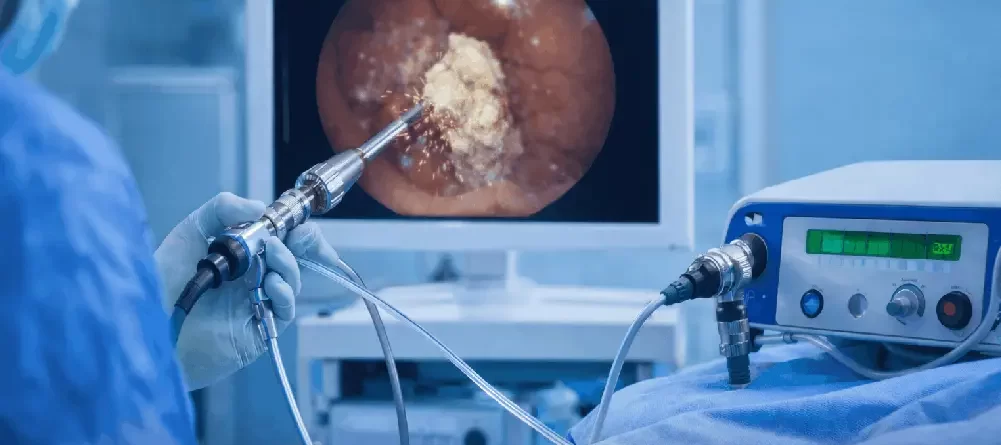
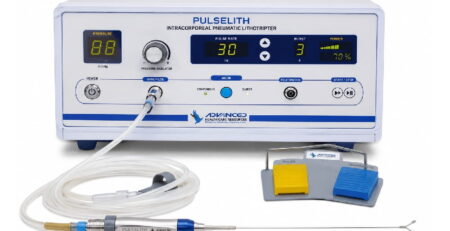
A pneumatic lithotripter is a medical device used to break kidney, ureteric, and bladder stones into smaller fragments during minimally invasive urological procedures.
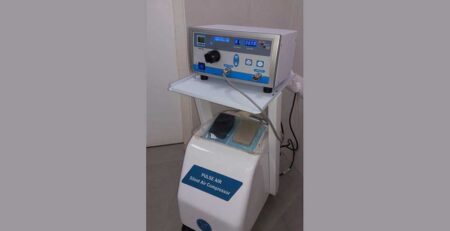
It works through compressed air energy, which creates rapid mechanical impulses that are transmitted through a metal probe directly onto the stone surface. These repeated impulses fracture the stone into manageable pieces that can then be removed or naturally passed.
Unlike laser systems, pneumatic lithotripters rely on mechanical kinetic energy rather than heat.
Why is stone fragmentation necessary
Kidney stones vary in size, composition, and location within the urinary tract. While smaller stones may pass naturally through urine with hydration and medication, larger or harder stones often remain lodged in the kidney, ureter, or bladder, causing significant complications if left untreated.
When stones are too large to pass on their own, they can obstruct the normal flow of urine, leading to severe pain, swelling of the kidney, recurrent urinary tract infections, and, in some cases, permanent damage to surrounding tissues. Delayed treatment may also increase the risk of kidney dysfunction and emergency hospitalization.
Stone fragmentation becomes necessary when conservative treatments such as medication, hydration therapy, or observation are no longer effective. Breaking stones into smaller fragments allows them to be safely removed or naturally expelled with less trauma to the patient.
- Stones cannot pass naturally: Larger stones may become trapped in narrow urinary pathways and fail to exit on their own.
- Stones cause blockage or infection: Obstructed urine flow can lead to pain, pressure buildup, infection, and inflammation.
- Large stones require surgical intervention: Stones that are too dense or large often need fragmentation before removal through minimally invasive procedures.
- Conservative treatment fails: If pain management, medication, or watchful waiting does not resolve the condition, active stone treatment becomes necessary.
In such cases, pneumatic lithotripsy offers a reliable and effective way to fragment stones while preserving surrounding tissue and reducing the need for open surgery.
Step-by-step: how the Pneumatic Lithotripter works
1. Stone Identification
The procedure begins by locating the stone through endoscopic visualization using devices such as a ureteroscope, nephroscope, or cystoscope.
2. Probe Positioning
A pneumatic lithotripter probe is inserted through the working channel of the endoscope and placed in contact with the stone.
3. Compressed Air Activation
Compressed air is delivered into the lithotripter system, driving an internal projectile mechanism that generates rapid impact pulses.
4. Mechanical Impact Transfer
The internal projectile strikes the probe repeatedly, transmitting kinetic energy directly onto the stone and causing fragmentation.
5. Fragment Removal
Stone fragments are either removed using baskets/graspers or allowed to pass naturally.
Clinical procedures where Pneumatic Lithotripters are used
Pneumatic lithotripters are widely used in minimally invasive urology because they can effectively fragment stones in different parts of the urinary tract with precision and control. Their versatility makes them suitable for a range of endoscopic procedures performed in hospitals and specialized surgical centers.
Ureteroscopy (URS)
In ureteroscopy, a ureteroscope is passed through the urinary tract to reach stones lodged in the ureter. Pneumatic lithotripters are commonly used during this procedure to break ureteric stones into smaller fragments that can either be extracted using baskets or passed naturally. This approach avoids open surgery and allows quicker patient recovery.
Percutaneous Nephrolithotomy (PCNL)
PCNL is typically used for large or complex kidney stones that cannot be treated effectively through simpler procedures. During PCNL, a small incision is made in the back to access the kidney directly. Pneumatic lithotripters help fragment dense kidney stones efficiently, making removal easier and reducing overall surgical trauma.
Cystolithotripsy
Cystolithotripsy is performed to treat bladder stones that are too large to pass naturally. In this procedure, the lithotripter is introduced through a cystoscope into the bladder, where mechanical impulses break the stones into manageable pieces. The fragments are then removed or flushed out safely.
Because pneumatic lithotripters deliver strong mechanical impact without heat generation, they are especially valued in these procedures for their reliability, safety, and effectiveness in treating hard urinary stones.
Advantages of Pneumatic Lithotripter in Kidney Stone Treatment
Pneumatic lithotripters are widely preferred in kidney stone treatment because they combine strong stone fragmentation capability with dependable clinical performance. Their mechanical impact technology makes them especially effective in breaking hard urinary stones while supporting minimally invasive procedures that reduce patient trauma and recovery time.
Strong Fragmentation Power
One of the biggest advantages of pneumatic lithotripters is their ability to fragment hard and dense stones efficiently. The high-impact mechanical impulses generated by compressed air can break even stubborn calculi into smaller pieces, making removal easier during surgery.
No Heat Generation
Unlike laser-based lithotripsy systems, pneumatic lithotripters do not generate thermal energy during operation. This eliminates the risk of heat-related damage to surrounding tissues and makes the procedure safer for delicate urinary tract structures.
Cost-Effective Solution
Pneumatic lithotripters are generally more affordable than laser systems in terms of equipment cost, maintenance, and operation. This makes them an attractive option for hospitals and surgical centers seeking reliable stone treatment technology without excessive investment.
Reliable and Durable Performance
These systems are designed for repeated clinical use and perform consistently in high-volume surgical environments. Their robust construction and lower maintenance complexity contribute to long-term operational reliability.
Effective in Multiple Urological Procedures
Pneumatic lithotripters are versatile and can be used across several procedures, including URS, PCNL, and cystolithotripsy. Their adaptability makes them valuable in treating stones located in the kidney, ureter, and bladder.
Supports Minimally Invasive Treatment
Because they work through endoscopic access, pneumatic lithotripters help avoid open surgery in many cases. This reduces incision size, shortens hospital stays, lowers complication risks, and supports faster patient recovery.
For many urology specialists, pneumatic lithotripters remain a trusted choice because they deliver an ideal balance of efficiency, safety, durability, and affordability in modern kidney stone management.
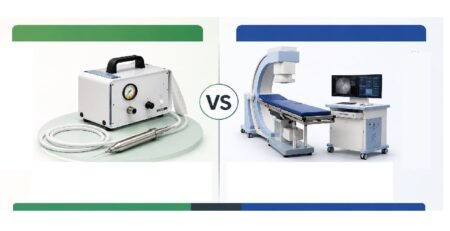
Pneumatic Lithotripter vs Laser Lithotripter
| Feature | Pneumatic Lithotripter | Laser Lithotripter |
|---|---|---|
| Energy Type | Mechanical impact | Laser energy |
| Heat Generation | None | Yes |
| Cost | Lower | Higher |
| Stone Fragmentation | Strong on hard stones | Fine dusting possible |
| Maintenance | Lower cost | Higher complexity |
Why Hospitals Continue Choosing Pneumatic Lithotripters
Hospitals continue to choose pneumatic lithotripters because they offer a dependable combination of clinical effectiveness, affordability, and long-term operational value. In high-volume urology settings where kidney stone procedures are performed regularly, these systems provide consistent stone fragmentation performance without the higher acquisition and maintenance costs associated with more complex laser technologies.
Their strong mechanical impact makes them especially reliable for treating hard and dense stones, which is essential in demanding surgical environments. Pneumatic lithotripters are also easier to maintain, require lower operating costs, and integrate smoothly into established minimally invasive urology workflows such as ureteroscopy, PCNL, and cystolithotripsy.
For hospitals balancing patient care quality with budget efficiency, pneumatic lithotripters remain a practical and trusted solution because they deliver proven results while supporting cost-effective surgical care over time.
Role of Pneumatic Lithotripter in Minimally Invasive Urology
Pneumatic lithotripters play an essential role in modern minimally invasive urology by enabling effective stone treatment without the need for open surgical procedures. As urology has increasingly shifted toward techniques that reduce patient trauma and improve recovery time, pneumatic lithotripsy has become a key technology in procedures such as ureteroscopy (URS), percutaneous nephrolithotomy (PCNL), and cystolithotripsy.
These devices allow surgeons to access stones through natural urinary pathways or small incisions, fragmenting them precisely while preserving surrounding tissue.
This approach significantly reduces surgical pain, shortens hospital stays, lowers complication risks, and helps patients return to normal activity more quickly. Because pneumatic lithotripters deliver strong mechanical fragmentation without heat generation, they offer a safe and efficient solution that supports the core goals of minimally invasive urology—precision, reduced invasiveness, and better patient outcomes.
AHCR’s Approach to Pneumatic Lithotripter Manufacturing
At AHCR, our pneumatic lithotripters are designed for real surgical environments where precision, durability, and consistent performance are essential.
- Reliable fragmentation efficiency
- Durable repeated-use design
- Smooth operational control
- Practical usability for surgeons
Frequently Asked Questions
What is a pneumatic lithotripter used for?
It is used to break kidney, ureteric, and bladder stones into smaller fragments during minimally invasive urology procedures.
Is pneumatic lithotripsy safe?
Yes, it is widely used and considered safe when performed by trained urology specialists.
Does pneumatic lithotripter generate heat?
No, pneumatic lithotripters use mechanical energy and do not generate heat.
Which is better: pneumatic or laser lithotripsy?
Both have advantages. Pneumatic systems are cost-effective and strong on hard stones, while laser systems offer fine fragmentation precision.
Read more
Pneumatic Lithotripter Buyer’s Guide: Choosing the Best Equipment for Your Hospital
How Hospitals Can Negotiate Better Pneumatic Lithotripter Prices
Pneumatic Lithotripsy Machine Price Comparison: Indian vs Imported Models
The Growing Role of Indian Lithotripter Manufacturers in Minimally Invasive Urology
How to Choose the Right Lithotripter Machine Without Overspending
Conclusion
Pneumatic lithotripters remain one of the most effective and widely trusted technologies in kidney stone treatment. Their ability to deliver powerful mechanical fragmentation without heat makes them a reliable choice for hospitals, surgeons, and patients alike.
As minimally invasive stone treatment continues to evolve, pneumatic lithotripsy remains central to safe, efficient, and cost-effective urological care.





Leave a Reply