
Highlights
- Pneumatic and laser lithotripters are two widely used technologies for fragmenting kidney stones during minimally invasive urology procedures.
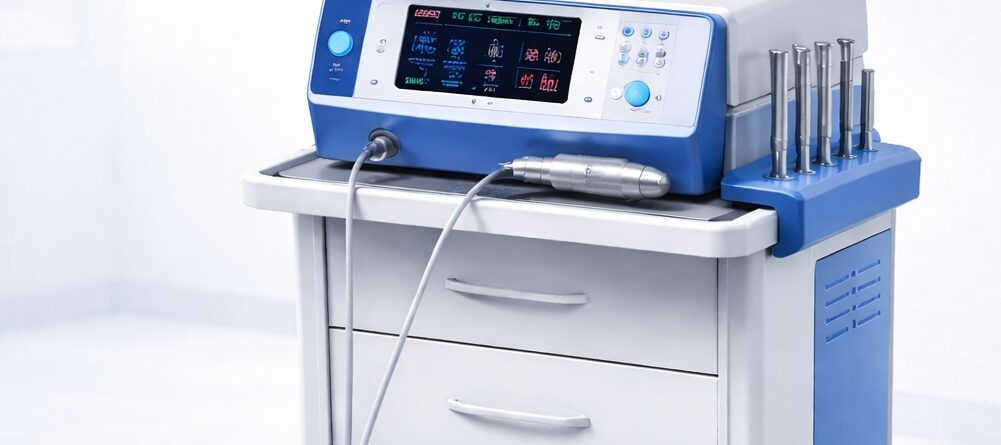
- Pneumatic lithotripters use compressed air to generate mechanical impulses that break stones into fragments.
- Laser lithotripters typically use holmium: YAG laser energy to fragment or dust stones.
- Pneumatic systems are known for their strong fragmentation power and cost efficiency.
- Laser systems provide high precision and are commonly used with flexible ureteroscopes.
- Hospitals worldwide increasingly source equipment from India for reliable and cost-effective urology devices.
Introduction
Kidney stone disease is one of the most common urological conditions worldwide, affecting millions of patients every year. Advances in minimally invasive surgery have transformed the way urologists manage urinary stones, allowing surgeons to treat patients using endoscopic procedures rather than traditional open surgery.
Modern stone management techniques rely on specialized equipment that can fragment stones inside the urinary tract so they can be removed or passed naturally. Among the most widely used technologies are pneumatic lithotripters and laser lithotripters, both of which play a critical role in endourological procedures such as ureteroscopy and percutaneous nephrolithotomy (PCNL).
These devices allow surgeons to safely break kidney stones located in the kidney, ureter, or bladder using controlled energy delivered through endoscopic instruments. As a result, patients benefit from smaller incisions, shorter recovery times, and reduced surgical complications.
For hospitals, urology clinics, and medical distributors evaluating equipment options, understanding the differences between pneumatic and laser lithotripters is essential. Each system offers unique advantages depending on clinical needs, stone characteristics, surgical techniques, and budget considerations.
In recent years, many international healthcare providers have also begun sourcing equipment from experienced lithotripter manufacturers in India, who produce reliable urology devices designed for modern surgical environments. Manufacturers focusing on endourology technology provide equipment such as pneumatic lithotripters that deliver powerful stone fragmentation while maintaining durability and operational efficiency.
This guide compares pneumatic and laser lithotripters, explains how each technology works, and highlights the key factors hospitals and urology centers should consider when selecting lithotripsy equipment for kidney stone treatment.
Understanding Kidney Stone Fragmentation Technologies
Kidney stones, also known as urinary calculi, form when minerals and salts crystallize within the urinary tract. These stones can develop in the kidney and travel through the ureter, often causing severe pain, obstruction, and urinary complications.
When stones become too large to pass naturally, urologists typically use specialized lithotripsy technologies to break them into smaller fragments.
Lithotripsy refers to the process of fragmenting kidney stones using mechanical or energy-based devices so that the stone pieces can either be removed during surgery or pass naturally through the urinary tract. This technique plays a central role in modern endourology procedures used for kidney stone treatment.
Several minimally invasive procedures rely on advanced kidney stone fragmentation devices, including:
- Ureteroscopy (URS) – a procedure in which a thin endoscope is inserted through the urethra and bladder to reach stones located in the ureter or kidney.
- Percutaneous nephrolithotomy (PCNL) – a minimally invasive procedure used to remove larger kidney stones through a small incision in the back.
- Bladder stone fragmentation procedures – used when stones develop within the bladder.
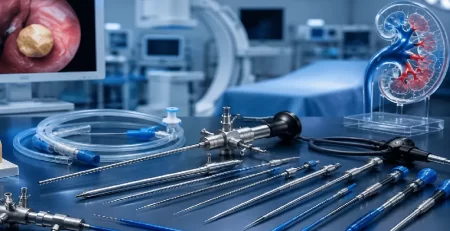
During these procedures, surgeons use specialized urology surgical instruments such as ureteroscopes, nephroscopes, and stone retrieval baskets to access and remove stone fragments. Lithotripter devices are used alongside these instruments to break stones efficiently within the urinary tract.
The two most widely used technologies for stone fragmentation are pneumatic lithotripters and laser lithotripters. Both systems are widely used in modern urology operating rooms and are designed to work with endoscopic surgical equipment.
Hospitals evaluating lithotripter equipment for kidney stone treatment often compare these technologies to determine which system best fits their clinical workflow, surgical preferences, and equipment budgets. Factors such as stone hardness, procedural technique, device reliability, and cost can influence the selection of a lithotripsy system.
In recent years, global healthcare providers have increasingly sourced endourology equipment and kidney stone treatment devices from experienced lithotripter manufacturers in India, who supply hospitals and distributors with reliable equipment designed for high-volume surgical environments.
What Is a Pneumatic Lithotripter?
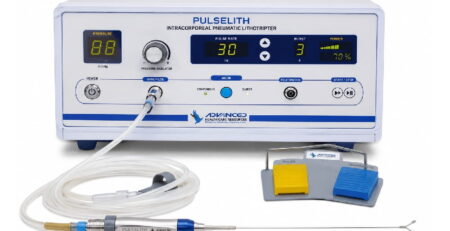
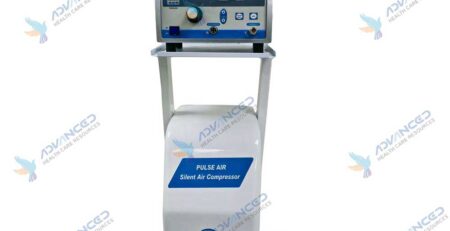
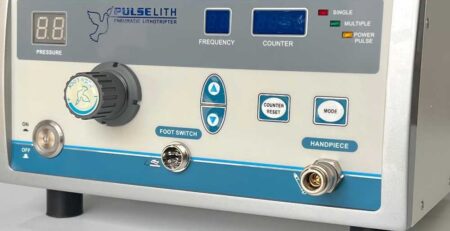
A pneumatic lithotripter is a mechanical device used in urology procedures to fragment kidney stones and urinary tract calculi. The system operates using compressed air that generates high-frequency mechanical impulses. These impulses are transmitted through a rigid metal probe that comes into direct contact with the stone, causing it to break into smaller fragments.
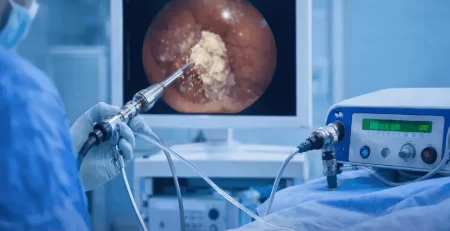
Pneumatic lithotripters are widely used in modern endourology procedures such as ureteroscopy (URS) and percutaneous nephrolithotomy (PCNL). During these procedures, the lithotripter probe is inserted through the working channel of an endoscope to reach the stone within the urinary tract.
Once the probe touches the stone, the pneumatic system delivers rapid mechanical pulses that fracture the stone into pieces. These fragments can then be removed using stone baskets, graspers, or suction devices during the procedure.
Because of their strong mechanical impact, pneumatic lithotripters are particularly effective for fragmenting dense stones composed of calcium oxalate, calcium phosphate, or other hard mineral compositions.
Hospitals and urology centers evaluating reliable kidney stone fragmentation equipment often consider solutions from experienced pneumatic lithotripter manufacturers in India. Manufacturers specializing in endourology equipment design pneumatic lithotripsy systems that provide durable performance and consistent stone fragmentation during high-volume surgical procedures.
Key Features of Pneumatic Lithotripters
- Uses compressed air to generate mechanical impact energy
- Effective for breaking hard kidney stones
- Compatible with rigid and semi-rigid ureteroscopes
- Provides strong and reliable stone fragmentation
- Typically requires minimal consumables compared with laser systems
Due to their durability and mechanical efficiency, pneumatic lithotripters remain widely used in hospitals and surgical centers worldwide. Many healthcare providers rely on pneumatic lithotripter systems as a dependable solution for treating kidney stones during minimally invasive urology procedures.
What Is a Laser Lithotripter?
A laser lithotripter is a medical device used in urology procedures to fragment kidney stones using laser energy. The most commonly used system in modern endourology is the holmium: YAG laser lithotripter, which delivers pulsed laser energy through a flexible optical fiber.
During procedures such as ureteroscopy (URS) or flexible ureteroscopic lithotripsy, the laser fiber is passed through the working channel of the ureteroscope and positioned directly against the kidney stone. When the laser energy is activated, it fragments the stone into smaller pieces or fine particles.
Laser lithotripsy allows surgeons to perform either stone fragmentation or stone dusting. In fragmentation mode, the stone is broken into pieces that can be retrieved using baskets or graspers. In dusting mode, the stone is reduced to very small particles that can pass naturally through the urinary tract.
Because laser energy can be delivered through very thin flexible fibers, laser lithotripters are particularly useful in flexible ureteroscopy procedures, where access to stones located deep within the kidney is required.
Key Features of Laser Lithotripters
- Uses holmium: YAG laser energy for stone fragmentation
- Compatible with flexible ureteroscopes
- Allows stone dusting and fine fragmentation
- Provides high precision energy delivery
- Effective for a wide range of urinary stone compositions
Laser lithotripsy systems are commonly used in advanced endourology centers where flexible ureteroscopy is frequently performed. However, the technology typically involves higher equipment costs and requires laser fibers as consumables during procedures.
For many hospitals treating large volumes of kidney stone patients, pneumatic systems supplied by pneumatic lithotripter manufacturers in India remain an effective and cost-efficient option for routine stone fragmentation procedures.
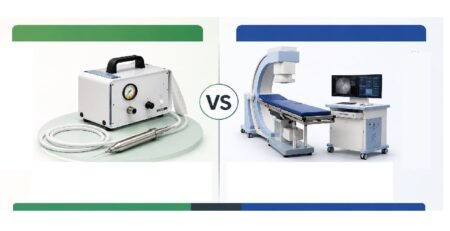
Pneumatic vs Laser Lithotripters: Key Differences
Both pneumatic and laser lithotripters are widely used technologies for kidney stone fragmentation during minimally invasive urology procedures. While both systems effectively break urinary stones, they operate using different energy mechanisms and offer distinct advantages depending on the surgical situation.
Hospitals and urology centers comparing lithotripsy technologies often evaluate factors such as stone fragmentation efficiency, device cost, maintenance requirements, and compatibility with surgical instruments. Understanding these differences helps healthcare providers choose the most suitable kidney stone treatment device for their clinical environment.
| Feature | Pneumatic Lithotripter | Laser Lithotripter |
|---|---|---|
| Technology | Mechanical impact energy generated by compressed air | Laser energy, typically using holmium:YAG laser systems |
| Fragmentation Method | Breaks stones into larger fragments that can be removed with baskets | Can fragment stones or reduce them into fine dust particles |
| Stone Types | Highly effective for hard stones such as calcium oxalate calculi | Effective for most stone compositions |
| Scope Compatibility | Works best with rigid and semi-rigid ureteroscopes | Compatible with flexible ureteroscopes |
| Equipment Cost | Lower acquisition cost and fewer consumables | Higher equipment cost and requires laser fibers |
| Maintenance | Relatively simple mechanical system | More complex laser equipment requiring specialized servicing |
| Clinical Use | Commonly used in ureteroscopy and PCNL procedures | Often used in flexible ureteroscopy and advanced endourology procedures |
Because pneumatic lithotripters provide strong mechanical fragmentation with relatively simple system design, many hospitals rely on equipment supplied by pneumatic lithotripter manufacturers in India for routine kidney stone treatment procedures.
Laser lithotripters, on the other hand, are frequently used in specialized endourology centers that perform complex flexible ureteroscopy procedures where precision energy delivery is required.
Clinical Applications of Pneumatic Lithotripters
Pneumatic lithotripters are widely used in modern endourology procedures for the fragmentation of urinary stones. Because they deliver strong mechanical impact energy, these devices are particularly effective in breaking dense kidney stones during minimally invasive surgical procedures.
Hospitals performing high volumes of kidney stone treatment procedures often rely on pneumatic lithotripsy systems due to their reliability, durability, and strong stone fragmentation capability. These devices are commonly used alongside endoscopic instruments such as ureteroscopes, nephroscopes, and stone retrieval baskets.
Ureteroscopic Lithotripsy (URS)
One of the most common applications of pneumatic lithotripters is ureteroscopic lithotripsy. During this procedure, a ureteroscope is inserted through the urethra and bladder into the ureter to reach the stone.
A pneumatic lithotripter probe is then advanced through the working channel of the ureteroscope until it contacts the stone. Mechanical impulses generated by compressed air break the stone into fragments, which can then be retrieved using stone baskets or graspers.
Because of their strong fragmentation power, pneumatic lithotripters are particularly useful for treating hard ureteral stones that may be difficult to fragment using other techniques.
Percutaneous Nephrolithotomy (PCNL)
Pneumatic lithotripters are also frequently used in percutaneous nephrolithotomy (PCNL), a minimally invasive procedure performed to remove larger kidney stones directly from the kidney.
During PCNL, surgeons create a small access tract through the patient’s back into the kidney. A nephroscope is inserted through this tract, allowing surgeons to visualize and fragment the stone using a lithotripter device.
Pneumatic lithotripsy is highly effective in PCNL procedures because the mechanical impact energy can quickly fragment large stones into removable pieces.
Bladder Stone Fragmentation
In addition to ureteral and kidney stones, pneumatic lithotripters can also be used to fragment bladder stones. During cystoscopic procedures, the lithotripter probe is inserted through a cystoscope to reach and break the stone inside the bladder.
The fragmented pieces can then be removed using graspers or evacuated through suction systems.
Many hospitals worldwide source reliable lithotripsy equipment from experienced pneumatic lithotripter suppliers in India, who design urology devices capable of supporting a wide range of endourological procedures.
Cost Considerations for Hospitals When Choosing Lithotripters
When hospitals evaluate equipment for kidney stone treatment, cost is an important factor alongside clinical performance and reliability. Healthcare providers often compare the overall investment required for different lithotripsy technologies, including equipment acquisition costs, maintenance requirements, and ongoing consumables.
Both pneumatic and laser lithotripters are effective kidney stone fragmentation devices, but they differ significantly in terms of operating costs and long-term maintenance. Understanding these differences helps hospitals choose equipment that fits their surgical workload and budget.
Equipment Investment
Pneumatic lithotripters generally require a lower initial investment compared with laser lithotripters. Because they use mechanical energy generated by compressed air rather than laser systems, pneumatic devices often involve simpler hardware architecture.
Hospitals performing large numbers of ureteroscopy and PCNL procedures frequently prefer pneumatic systems because they offer strong stone fragmentation capability at a lower capital cost.
Consumables and Operating Costs
Laser lithotripsy systems require specialized optical fibers that are used during procedures and must be replaced periodically. These fibers represent an additional consumable cost for hospitals performing high volumes of lithotripsy procedures.
Pneumatic lithotripters typically require fewer consumables, which can reduce the long-term operating cost for hospitals and urology centers.
Maintenance and Service
Maintenance requirements also differ between technologies. Pneumatic lithotripters rely on relatively simple mechanical systems, which can make servicing and maintenance easier in many clinical environments.
Laser lithotripters involve more complex electronic and optical components, often requiring specialized technical support for maintenance and calibration.
For hospitals evaluating reliable kidney stone treatment devices, many healthcare providers work with top pneumatic lithotripter suppliers in India to access durable lithotripsy equipment designed for high-frequency surgical use.
How Hospitals Choose Lithotripter Manufacturers
Selecting the right lithotripsy equipment supplier is an important decision for hospitals and urology clinics. Because lithotripters are used during delicate endourological procedures, healthcare providers typically evaluate several technical and operational factors before purchasing a system.
Hospitals often compare different lithotripsy device manufacturers based on product reliability, surgical performance, compatibility with endoscopic instruments, and the availability of long-term technical support.
Product Reliability and Build Quality
Durability is one of the most important factors when evaluating a kidney stone treatment device. Hospitals performing frequent ureteroscopy and PCNL procedures require equipment that can withstand repeated use in high-volume surgical environments.
Many healthcare providers therefore prefer robust pneumatic lithotripter systems designed for consistent stone fragmentation during endourological procedures.
Compatibility with Urology Instruments
Lithotripters must integrate smoothly with existing surgical instruments such as ureteroscopes, nephroscopes, and stone retrieval baskets. Compatibility with rigid and semi-rigid ureteroscopes is particularly important in ureteroscopic lithotripsy procedures.
Technical Support and Service
Hospitals also evaluate the availability of technical service, spare parts, and maintenance support when selecting endourology equipment suppliers. Reliable service support ensures that surgical equipment remains operational and minimizes downtime in operating rooms.
Compliance with Medical Device Standards
Healthcare providers generally prefer equipment manufactured under recognized quality management systems and medical device standards. Compliance with international manufacturing standards helps ensure consistent product performance and patient safety.
Working with experienced urology equipment manufacturers allows hospitals to access dependable lithotripsy devices designed for modern surgical practice.
Conclusion
Both pneumatic and laser lithotripters play an important role in modern kidney stone treatment. Each technology offers unique advantages depending on the type of procedure being performed, the characteristics of the stone, and the equipment available in the operating room.
Laser lithotripsy systems provide high precision and are particularly useful in flexible ureteroscopy procedures where delicate maneuverability is required. These systems allow surgeons to perform stone dusting or fine fragmentation during complex endourological procedures.
Pneumatic lithotripters, on the other hand, remain widely used because of their strong mechanical fragmentation capability, operational reliability, and cost efficiency. Many hospitals performing ureteroscopy and percutaneous nephrolithotomy procedures rely on pneumatic systems to fragment dense kidney stones quickly and effectively.
For healthcare providers evaluating kidney stone treatment equipment, the most suitable lithotripsy system often depends on clinical workflow, surgical techniques, and long-term operational costs. Hospitals treating large numbers of kidney stone patients frequently consider durable mechanical systems that can support high-volume procedures.
Healthcare institutions looking for reliable lithotripsy equipment can explore solutions such as
pneumatic lithotripter systems for endourology procedures, which are designed to support efficient stone fragmentation in modern urology practice.
Ultimately, selecting the right lithotripsy technology helps ensure effective kidney stone management while supporting safe and efficient surgical procedures for patients.




Leave a Reply