
If you’ve ever compared quotes for surgical instruments, you’ll notice something quickly—prices can vary a lot, even for similar-looking products.
That variation isn’t random. It usually comes down to a mix of material quality, manufacturing standards, compliance, and how the supplier operates. For hospitals and distributors sourcing from India, understanding these factors helps avoid two common mistakes: overpaying for average quality or underpaying and compromising performance.
Here are the key factors that actually influence surgical instrument pricing in India.
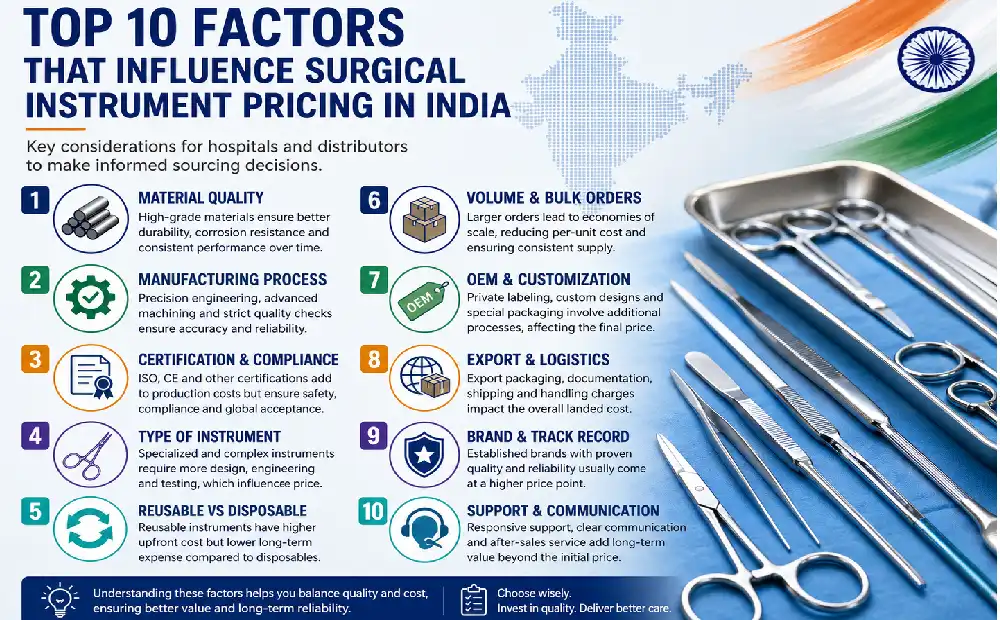
1. Material Quality
If there’s one factor that quietly drives pricing, it’s the material.
On paper, two instruments may look identical. In actual use, they behave very differently. Instruments made with better-grade stainless steel or medical-grade materials tend to hold up well—less rusting, less wear, and more consistent performance over time. That matters, especially in busy setups where the same instrument is used repeatedly.
Cheaper materials can bring the price down initially, but they usually show signs of fatigue early—discoloration, reduced strength, or loss of precision. Over time, that leads to more frequent replacements, which often ends up costing more than expected.
For hospitals and distributors sourcing surgical instruments in India, material quality is not something to compromise on. It directly affects both performance and long-term value.
2. Manufacturing Process
Material is one part of the story. How the instrument is actually made matters just as much.
In India, you’ll find a wide range of manufacturing setups, from small workshops to fully structured facilities. The difference shows up in the finish, precision, and overall consistency of the instrument.
Well-manufactured instruments go through proper machining, finishing, and quality checks. Edges are clean, movement is smooth, and the instrument feels balanced in hand. That doesn’t happen by chance—it comes from controlled processes.
On the other hand, poorly manufactured instruments may look fine initially but tend to have issues like stiffness, uneven finishing, or inconsistency across batches.
This is why buyers often prefer working with an established urology equipment manufacturer in India that follows structured production standards. It reduces variability and gives confidence in long-term use.
3. Certification and Compliance
This is where many buyers try to cut corners—and usually regret it later.
Certifications like ISO 13485 and CE are not just labels. They indicate that the manufacturer is following proper systems for quality control, documentation, and traceability.
Naturally, this adds to the cost. But it also ensures that the product can be used confidently across different markets, especially if you’re dealing with exports.
Instruments without proper compliance may be cheaper, but they come with limitations—both in terms of usability and regulatory acceptance.
4. Type of Instrument
Not all surgical instruments are priced the same, and that’s expected.
Basic instruments are relatively straightforward to manufacture. But when you move into specialized devices—especially in urology—the complexity increases.
Take something like a pneumatic lithotripter. It’s not just about assembly; it involves precise engineering, controlled energy delivery, and durability under repeated use.
That level of design and testing naturally reflects in the pricing.
5. Reusability vs Disposable Design
This is more of a strategic decision than a pricing one.
Reusable instruments come with a higher upfront cost but are more economical over time, especially in high-volume hospitals.
Disposable instruments, on the other hand, are convenient and eliminate sterilization concerns—but they add to recurring costs.
Most hospitals today use a mix, depending on the procedure and workflow.
6. Volume and Bulk Orders
In India, pricing is often closely tied to volume.
If you’re placing small, one-off orders, the cost per unit will naturally be higher. But as quantities increase, manufacturers are able to optimize production—raw material sourcing, machine time, and labor all become more efficient.
For hospitals with recurring requirements or distributors handling multiple clients, bulk ordering makes a noticeable difference. It not only reduces per-unit cost but also helps ensure consistent supply over time.
Most serious buyers discuss long-term volume rather than just immediate pricing—and that usually leads to better commercial terms.
7. OEM and Customization
Customization is quite common, especially for distributors building their own brand.
This could include:
- Private labeling
- Custom packaging
- Minor product adjustments
While these don’t drastically change the product itself, they do add steps in production and coordination. That’s where the pricing difference comes in—not because the product is different, but because the process is.
Manufacturers who regularly handle OEM orders tend to manage this more efficiently, which keeps costs reasonable while still meeting branding requirements.
8. Export and Logistics
For international buyers, pricing goes beyond the instrument.
There are several additional layers involved:
- Export-grade packaging
- Documentation and compliance
- Freight and handling
These costs can vary depending on the destination and shipment size. A manufacturer with established export experience will already have systems in place to handle this smoothly.
In many cases, working with an export-ready supplier actually simplifies the process and avoids unexpected delays or additional costs later.
9. Brand and Track Record
This is one factor that doesn’t always show up on a quote—but becomes clear over time.
Manufacturers with a strong track record usually offer:
- Consistent product quality
- Reliable supply
- Fewer issues during use
They may not always be the lowest-priced option, but they reduce uncertainty.
With newer or less established suppliers, pricing may look attractive initially. But inconsistencies in quality or delays in delivery can create problems, especially in clinical settings where reliability is critical.
10. Support and Communication
This is often underestimated, but it plays a big role in long-term partnerships.
Clear communication helps with:
- Faster order processing
- Better understanding of requirements
- Fewer errors in supply
A responsive supplier also makes it easier to handle issues if they arise.
That’s why many buyers take the time to connect directly with the manufacturer before finalizing anything. It gives a practical sense of how the working relationship will be, beyond just pricing.









Leave a Reply