

Ordering the wrong cystoscope sheath is an easy mistake and an expensive one. A sheath that does not match its obturator, bridge or telescope stays in the drawer, and the department waits for a replacement. This guide explains cystoscope sheath sizes in Fr and mm, how the parts of a rigid cystoscope fit together, which sizes suit which procedures, and how to check compatibility before you order.
It is written for urologists, OT managers, biomedical engineers and procurement teams, and it includes a free selection sheet you can send with your enquiry.
Parts of a rigid cystoscope
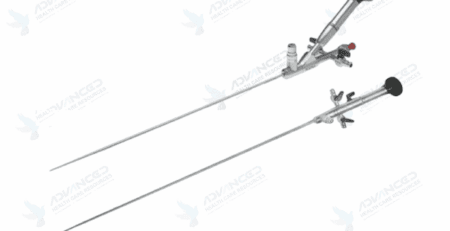
A rigid cystoscope is not one instrument but an assembly of five parts. Understanding what each does makes size and compatibility questions much easier.
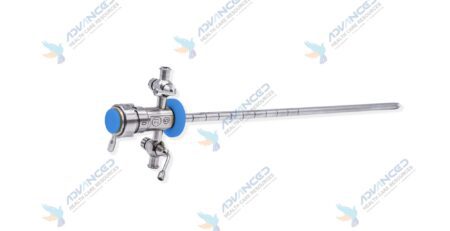
- Sheath: the outer tube that enters the urethra. It carries stopcocks for irrigation and drainage.
- Obturator: a blunt insert placed in the sheath for entry. It is specific to the sheath it fits.
- Bridge: locks the telescope to the sheath and may add an instrument channel.
- Telescope: the optical part. Rigid cystoscope systems from many manufacturers are built around 4 mm telescopes.
- Light cable: connects the telescope to the light source.
How cystoscope sheath size works: Fr to mm
Sheath size is measured in French, written Fr or F, and also called Charriere (Ch). One French equals one third of a millimetre of outside diameter. To convert, divide by 3. A larger Fr number means a thicker sheath, which can offer a larger channel and more flow but is a larger instrument to pass through the urethra.
Cystoscope sheath size chart
This chart lists sizes commonly found across manufacturers. Typical uses are general patterns, and they differ between makers, so always confirm the channel size and recommended use with your supplier.
| Size (Fr) | Outside diameter (mm) | Typical use | AHCR lists |
|---|---|---|---|
| 15.5 | 5.2 | Smaller diagnostic sheath | No |
| 17 | 5.7 | Diagnostic cystoscopy, the usual starting size | Yes |
| 19 to 20 | 6.3 to 6.7 | Diagnostic or light operative work | 19 Fr |
| 21 | 7.0 | Operative cystoscopy with a bridge channel | Yes |
| 22 | 7.3 | Operative work, and the sheath size in the AHCR stone punch set | Stone punch set |
| 22.5 | 7.5 | Operative cystoscopy | No |
| 23.5 | 7.8 | Larger channel and flow capacity | Yes |
| 25 | 8.3 | Larger channel and flow capacity | Yes |
As a real-world example, a government hospital tender specification we reviewed for a diagnostic rigid cystoscopy set asked for a 30 degree, 4 mm telescope, a single lockable channel bridge, and 17 Fr and 19 to 20 Fr sheaths with obturators and two Luer-lock connectors. That is a typical combination for a diagnostic set. See our tender specification checklist if you buy through procurement rules.
Choosing a sheath size by procedure
Diagnostic cystoscopy
A 17 Fr sheath with a diagnostic or single channel bridge is the usual starting point, and some departments add a 19 Fr sheath. A smaller sheath is gentler on the urethra, which matters in busy outpatient lists.
Biopsy, catheters and small instruments
If you pass ureteric catheters or small instruments, you need a bridge with an instrument channel, and a sheath large enough to carry the telescope plus the instrument. Mid-range sizes of about 19 to 22 Fr with a single or double channel bridge are common. The Albarran-type bridge is designed for catheter work.
Stone punch and cystolitholapaxy
Stone punch work uses a dedicated stone punch sheath, not a standard cystoscopy sheath. The AHCR stone punch sheath with obturator is part of the Bladder Stone Set and is listed at 22 Fr. Read our guide to bladder stone lithotripsy options for the equipment choices.
Continuous flow and laser work
Larger sheaths of about 23 Fr and above can carry higher flow and a larger working channel, and many manufacturers offer dedicated continuous-flow or laser cystoscope sheaths with matching working inserts. Buy these as a matched system from one maker.
Resectoscopes are different
A resectoscope sheath for TURP is a different instrument from a cystoscope sheath. If you are comparing resection systems, read monopolar vs bipolar TURP. Flexible cystoscopes have no rigid sheath, so these sizes do not apply. See our guide to the reusable flexible cystoscope.
Obturators: standard and visual
Every sheath is supplied with an obturator that matches its size. A standard obturator is a solid, blunt insert that makes the sheath tip smooth for entry, and you introduce the sheath without a view. A visual obturator has an optical channel that holds a telescope, so the surgeon can see the urethra and bladder as the sheath advances. After entry, the obturator is withdrawn and the bridge and telescope are fitted.
Because obturators are specific to a sheath, you cannot freely swap them between sizes or makers. Read more about the visual obturator for stone punch and the top questions before buying a cystoscopy sheath.
Bridges and telescopes
Bridge types
- Diagnostic bridge: joins telescope and sheath with no instrument channel.
- Single channel bridge: one working channel for a catheter or small instrument. See the single channel bridge.
- Double channel bridge: two channels, for example for two catheters. See the double channel bridge.
Telescope diameter and angle
Most rigid cystoscope systems are built around a 4 mm telescope, so confirm the diameter of the one you own. The viewing angle changes what you see: a 0 degree telescope is commonly used to view the urethra, a 30 degree telescope for the bladder, and a 70 degree telescope to reach areas such as the anterior wall. AHCR supplies a 4 mm 0 degree cystoscope and a 4 mm 30 degree cystoscope.
Checking compatibility before you order
Parts from different manufacturers may look alike and still not fit. Before you order, ask the supplier to confirm these points in writing:
- Each obturator matches its sheath size exactly.
- The bridge locks onto the sheath you are ordering.
- The bridge suits your telescope diameter.
- The instrument channel size suits your catheters and instruments.
- The stopcocks are Luer-lock and suit your irrigation tubing.
- The light cable connector suits your telescope and light source.
- Sheath and telescope lengths match so the telescope reaches the tip.
- The material, sterilisation method and instructions for use are stated.
For wider supplier checks, read what to look for in a urology instruments manufacturer, how to validate quality before a bulk order and our virtual factory audit checklist.
Inspection, care and reprocessing
A sheath that arrives in good condition can still be damaged by handling or reprocessing. Inspect on arrival and again at regular intervals:
- Stopcocks: they turn smoothly and seal without leaking.
- Tip and edges: the distal tip is smooth, with no burrs, dents or sharp edges.
- Obturator seating: the obturator seats fully and locks, and the blunt tip sits flush with the sheath tip.
- Bridge lock: the bridge engages the sheath securely and the telescope seats correctly.
- Surface: no pitting or corrosion marks after repeated cycles.
Clean and sterilise exactly as the instructions for use specify, and replace any sheath or obturator that is bent, dented or damaged. Our guide to validating quality before a bulk order gives a bench-inspection routine you can reuse on delivery.
How to read a cystoscope set quotation
| Line | What the quotation should state |
|---|---|
| Sheath | Size in Fr, material, number and type of stopcocks, length |
| Obturator | Standard or visual, and the sheath size it fits |
| Bridge | Diagnostic, single or double channel, and channel size |
| Telescope | Diameter, viewing angle, length and light connector |
| Documents | Instructions for use, certificates, warranty and delivery time |
AHCR cystoscopy range
AHCR (Advanced Health Care Resources) is an ISO 13485 and CE certified manufacturer in Okhla Industrial Area, New Delhi. It lists cystoscopy sheaths with obturators in 17, 19, 21, 23.5 and 25 Fr, and supplies the telescopes and bridges that go with them.
- Cystoscopy sheath 17 Fr with obturator
The standard diagnostic size. Other sizes available on request. - Cystoscope 4 mm 0 degrees and 30 degrees
Telescopes for urethral and bladder inspection. - Single channel and double channel bridges
Instrument channels for catheters and small instruments. - Bladder Stone Set
Stone punch, 22 Fr sheath with obturator and cystoscope. A visual obturator is available.
Browse the urology instruments range or the full catalogue. Importing? Read how to import surgical instruments from India and what makes a reliable urology instruments exporter.
Free cystoscope sheath selection sheet
Use our editable workbook to convert Fr to mm, list the sizes and accessories you need, and check compatibility points with your supplier. It has a Fr to mm converter, an order and enquiry sheet with dropdowns, and a ten-question compatibility checklist.
Common mistakes when buying cystoscope sheaths
- Ordering by Fr alone. Telescope diameter, bridge and obturator must fit too.
- Assuming brands are interchangeable. Get compatibility confirmed in writing.
- Forgetting the obturator. It is specific to each sheath size.
- Choosing too large. A bigger sheath is not always better for the patient or the case.
- Skipping instrument channel checks. Confirm your catheters and instruments pass through.
- Not asking for instructions for use. You need them for reprocessing and training.
Frequently asked questions
What size cystoscope sheath should I buy?
It depends on what you will do through the scope. A 17 Fr sheath is the usual size for diagnostic cystoscopy, and some departments also stock 19 to 20 Fr. For biopsy, catheters and small instruments, sheaths of about 19 to 22 Fr with a single or double channel bridge are common, and larger sheaths of about 23 Fr and above suit higher flow or laser work. Confirm the exact fit with your supplier.
How do I convert Fr to mm?
Divide the French size by 3. French (Fr), also written Ch or Charriere, is one third of a millimetre of outside diameter, so a 17 Fr sheath is about 5.7 mm and a 25 Fr sheath is about 8.3 mm.
Are cystoscope sheaths from different brands interchangeable?
Not reliably. A rigid cystoscope is a system of sheath, obturator, bridge, telescope and light cable, and fit rules differ by manufacturer. Marketplace listings often claim compatibility with other makes, so ask the supplier to confirm in writing that each part fits your existing set.
What is the difference between a standard obturator and a visual obturator?
A standard obturator is a solid, blunt insert used to enter the urethra without a view. A visual obturator has a channel for a telescope, so the surgeon can watch the sheath advance. Both must match the sheath size.
What does a cystoscope bridge do?
The bridge locks the telescope to the sheath and joins them into one assembly. A diagnostic bridge has no instrument channel, a single channel bridge gives one working channel, and a double channel or Albarran-type bridge gives two for catheters or instruments.
What sheath sizes does AHCR supply?
AHCR lists cystoscopy sheaths with obturators in 17, 19, 21, 23.5 and 25 Fr, and its stone punch set uses a 22 Fr sheath. AHCR also supplies 4 mm telescopes and single and double channel bridges. Confirm sizes and availability in your quotation.
Does AHCR export cystoscopy sheaths and sets?
Yes. AHCR is a New Delhi manufacturer that supplies hospitals, clinics and distributors in India and exports to the Asia-Pacific region, the Middle East, Africa and the Americas. OEM and bulk enquiries are welcome.
Need help choosing a sheath?
Send us your telescope details, existing set and the procedures you perform. We will confirm sizes, compatibility and a quotation.
This guide is general information for equipment selection. Sizes and uses vary by manufacturer, so follow the instructions for use supplied with your instruments and the judgement of the treating urologist.


Leave a Reply