
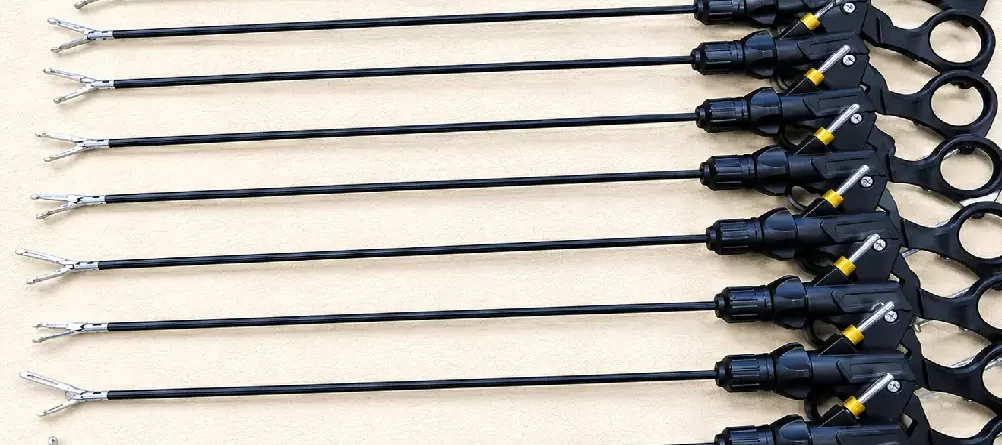
Introduction
When hospitals and surgical centres evaluate laparoscopic instruments, the purchase price is almost always the number that dominates procurement conversations. That instinct is understandable — budgets are finite, and the sticker cost of a trocar or grasper is immediately visible on an invoice. What rarely appears on that invoice, however, is the compounding downstream cost that substandard instruments quietly generate across every procedure they touch.
According to a peer-reviewed study published in the National Library of Medicine, poor-quality surgical instruments were implicated in over 160 documented patient safety incidents — including reoperations, severe harm events, and moderate harm — suggesting the actual volume of unreported incidents could approach 1,500 cases per year within national health systems alone. These are not edge cases. They are systemic, predictable, and largely preventable consequences of compromising on instrument quality.
The costs that follow — absorbed silently by surgical teams, hospitals, and ultimately patients — fall into four recurring categories: surgeon fatigue, accelerated replacement cycles, procedure delays, and inconsistent grip performance. Each deserves a clear-eyed examination.
1. Surgeon Fatigue: The Cost Nobody Invoices
Laparoscopic surgery demands fine motor precision sustained over long, concentrated periods. When an instrument transmits poor tactile feedback, requires excess grip force to compensate for weak jaw tension, or behaves unpredictably under load, the surgeon’s neuromuscular system compensates. That compensation is invisible in the moment — but cumulative across a full operating list, it translates directly into physical exhaustion, reduced concentration, and elevated error risk.
Using poor-quality medical instruments can make performing even routine surgical tasks significantly more taxing for operating staff — a reality confirmed by those who evaluate surgical instrument procurement across healthcare settings. When a dissector slips, when a clip applier requires repeated repositioning, or when a needle driver lacks consistent spring tension, the surgeon absorbs the mechanical deficit through increased muscular compensation. Over a four- or five-hour list, that deficit compounds.
This matters beyond individual discomfort. The AMA’s latest data shows that urological surgeons — who rely heavily on laparoscopic and endoscopic instruments — rank among the highest burnout rates of any surgical specialty, with nearly 49.5% reporting at least one burnout symptom. While burnout is multifactorial, the quality of the physical tools a surgeon works with throughout every operating day is a direct and modifiable contributor.
The hidden cost here is not just absenteeism or attrition (though both carry real financial weight). It is the erosion of surgical performance during the procedures themselves — microsecond hesitations, less decisive movements, and reduced confidence in instrument behaviour that collectively elevate risk for the patient on the table.
2. Replacement Cycles: Paying the Cheap Price Twice (and Then Again)
The economic argument for cheaper laparoscopic instruments is seductive: lower unit cost equals lower spending. In practice, this calculation ignores replacement frequency entirely.
High-quality laparoscopic instruments — manufactured from precision-grade stainless steel with properly calibrated ratchet mechanisms, insulated shafts, and durable jaw tips — are designed to withstand hundreds of sterilisation and use cycles before performance degrades. Poor-quality equivalents, often using inferior alloys or shortcuts in surface finishing and heat treatment, begin degrading far earlier. Jaw tips lose their bite alignment. Insulation develops micro-cracks. Ratchet mechanisms loosen, creating unintended release during critical moments.
Low-quality instruments are usually less resilient due to ineffective materials or manufacturing processes, requiring more thorough or frequent cleaning, sterilisation, and ultimately earlier replacement than premium alternatives. When a set of instruments that costs 40% less needs to be replaced three times as often, the hospital has not saved money — it has created an administrative burden, a procurement overhead, and a gap in instrument availability during the reorder window.
For surgical departments running high-volume laparoscopic lists — cholecystectomies, appendicectomies, bariatric procedures, gynaecological interventions — instrument availability is a scheduling constraint. An accelerated replacement cycle means a higher frequency of trays going out of service, more emergency procurement decisions, and greater risk of operating with instruments that are past their safe performance threshold but not yet replaced because the requisition is still pending.
The true lifecycle cost of a laparoscopic instrument set must account for replacement frequency, sterilisation overhead per cycle, staff time spent on instrument inspection and rejection, and the logistical cost of managing a faster-moving inventory. When these are factored in, the apparent savings of cheaper instruments almost invariably evaporate.
3. Procedure Delays: The Operating Theatre as a Cost Centre
An operating theatre is among the most expensive physical spaces in any hospital. Estimates for operating room running costs vary by region and institution, but the consensus across healthcare economics literature is consistent: every unplanned minute of downtime carries a measurable financial and clinical cost.
Poor-quality laparoscopic instruments are a reliable source of unplanned downtime. The failure modes are well-documented: a jaw that won’t lock, an insulation defect discovered mid-procedure, a port seal that leaks insufflation pressure, a ratchet that releases under tissue tension. Each of these events — individually minor-sounding — forces the operating team to pause, assess, re-scrub, and either replace the instrument or adapt the technique. In laparoscopic procedures where the operative field is small, and gas insufflation must be maintained, these interruptions are not trivial.
Low-quality medical instruments increase costs through extended surgery times, the need for additional procedures, and the administrative and clinical burden that follows instrument failure intraoperatively. Beyond time, there is the matter of patient risk: a procedure that runs longer due to equipment failure exposes the patient to extended anaesthetic time, increased risk of complications, and — in already complex cases — a narrowing margin for recovery.
Procedure delays also have a cascading effect on surgical lists. A delayed first case pushes every subsequent case later. A late finish means overtime staffing costs, reduced recovery room capacity, and in some institutions, cases being bumped entirely to the following day. The downstream cost of a single instrument failure — priced properly against the full consequence chain — is routinely many multiples of the cost difference between a premium instrument and the substandard alternative it replaced.
4. Inconsistent Grip Performance: The Invisible Variable in Surgical Precision
Of all the performance characteristics in a laparoscopic instrument, grip is perhaps the most consequential and the hardest to quantify from a catalogue page. Grip performance encompasses jaw closure force, tissue bite depth, jaw alignment under load, tactile feedback transmitted through the shaft to the surgeon’s hand, and the consistency of all of these parameters across the instrument’s use life.
Premium laparoscopic instruments are engineered to deliver consistent grip performance from the first use to the hundredth sterilisation cycle. The jaw geometry is precision-machined to close flush, the spring mechanism is calibrated to deliver predictable resistance, and the insulation is bonded at a specification that does not degrade under repeated autoclaving. The surgeon holding such an instrument develops a reliable kinetic memory of how it behaves — a micro-expertise that enhances speed, precision, and confidence.
Poor-quality instruments fail on exactly this axis. Jaw surfaces may be misaligned from manufacture. Spring tension varies unit to unit, or degrades after a handful of cycles. Grip force becomes inconsistent, meaning tissue that should be held firmly slips, or tissue that should be grasped gently is crushed. The surgeon cannot build reliable kinetic memory because the instrument does not behave reliably. Every case with a degraded or inconsistent instrument is a case where the surgeon is operating with reduced certainty — compensating, adjusting, and second-guessing a tool that should be an extension of their intention.
Poor-quality instruments may break or fail intraoperatively, leading to a failed procedure or causing direct harm to the patient — a finding documented across hundreds of recorded safety incidents. Inconsistent grip performance is the precursor state to these failures: the gradual degradation that turns a functional instrument into an unreliable one before it fails entirely.
What This Means for Procurement Decisions
The conversation around laparoscopic instrument quality is not a luxury consideration for well-resourced institutions. It is a foundational economic and safety argument that holds across every surgical volume and every budget constraint.
Quality and cost are intimately related in surgical settings — compromising instrument quality to reduce upfront cost does not reduce cost; it displaces and amplifies it across a longer, harder-to-measure horizon.
A procurement framework that evaluates laparoscopic instruments on total cost of ownership — accounting for replacement frequency, procedure delays, sterilisation overhead, and the unquantifiable but real cost of surgeon fatigue and performance degradation — will consistently point toward investment in quality instruments as the lower-cost decision over any meaningful time horizon.
At AHCR, our laparoscopic instruments are manufactured to the precision standards that surgical teams rely on for consistent performance across high-volume lists. If you are reviewing your instrument procurement strategy, we are available to discuss specifications, lifecycle performance data, and how to calculate the true cost of your current instrument set.
Frequently Asked Questions: Buying Lithotripters in India
Where can I buy a lithotripter in India?
You can buy Pneumatic Lithotripters through authorised medical device distributors and manufacturers operating in India. Buyers should verify that the supplier holds valid CDSCO registration for the device and can provide post-sale service support in their region. AHCR supplies lithotripters and urology instruments to hospitals and surgical centres across India — contact us for procurement assistance.
What is the price of a lithotripter in India?
Lithotripter pricing in India varies significantly by type and specification. Intracorporeal laser lithotripsy systems (holmium:YAG) typically range from a few lakhs for entry-level generators to several tens of lakhs for advanced pulse-modulated systems. ESWL units with integrated imaging are capital equipment investments in a higher range. Patient treatment costs for lithotripsy procedures in India typically range from Rs. 30,000 to Rs. 80,000 depending on modality, facility, and city. For current equipment pricing and financing options, contact Pulselith directly.
What is the difference between ESWL and intracorporeal lithotripsy?
ESWL (Extracorporeal Shock Wave Lithotripsy) is a non-invasive procedure that uses focused shock waves delivered through the skin to fragment kidney stones. Intracorporeal lithotripsy uses instruments introduced into the urinary tract during ureteroscopy or PCNL to fragment stones under direct vision, using laser, pneumatic, or ultrasonic energy. The choice depends on stone size, location, composition, and patient suitability.
Is CDSCO approval required to buy a lithotripter in India?
Yes. Pneumatic Lithotripters are classified as medical devices under Indian regulations and must carry CDSCO (Central Drugs Standard Control Organisation) registration. Hospitals purchasing lithotripters should verify that the device and its supplier hold valid CDSCO clearance before completing procurement, particularly for facilities seeking or maintaining NABH accreditation.
Which type of lithotripter is best for a urology centre in India?
The best lithotripter for a urology centre depends on patient case mix, procedure volume, and available infrastructure. High-volume centres treating a broad range of ureteric and renal stones typically benefit most from a holmium laser lithotripsy system, which offers versatility across stone sizes and locations. Centres with a focus on non-invasive management of smaller renal stones may prioritise ESWL capability. Many facilities invest in both modalities to cover the full clinical spectrum.



Leave a Reply