
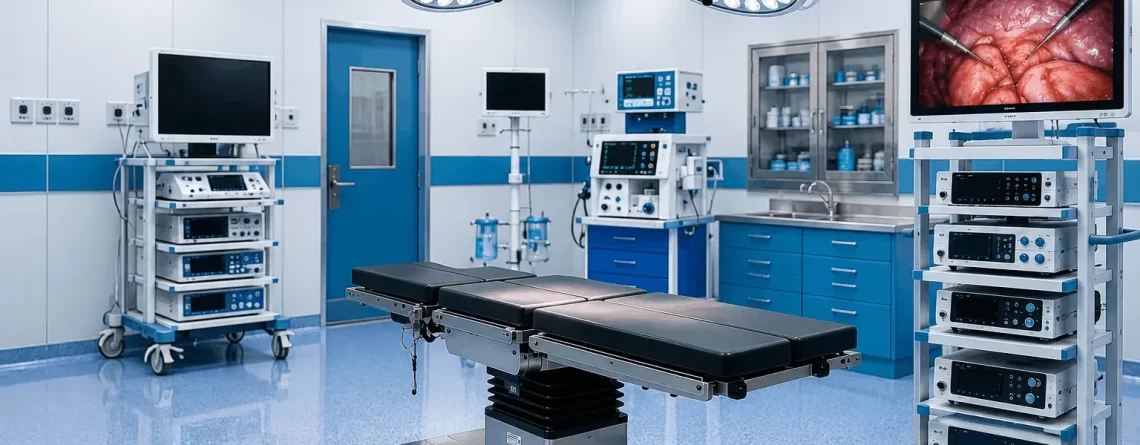
Industry Deep Dive & Tech Report
The Silent Engine of Healthcare Transformation: How Indian Manufacturers Are Supporting the Growth of Ambulatory Surgery Centers (ASCs)
Table of Contents
- 1. Introduction: The Global Shift and the Indian ASC Context
- 2. The Economic Equation: Reducing Capital Expenditure (CapEx)
- 3. Tailored Technological Innovation: Size, Mobility, and Customization
- 4. The Regulatory Tailwind: PLI Schemes and ‘Make in India’ Quality Baselines
- 5. Supply Chain Resilience and Lifecycle Management
- 6. Impact Across Medical Specialties: Case Studies in Brief
- 7. Future Outlook: Scaling the ASC Frontier Globally
1. Introduction: The Global Shift and the Indian ASC Context
The landscape of global surgery is undergoing a major structural shift. Historically, surgical interventions mandated intensive, multi-day hospital admissions, utilizing extensive institutional footprints and staggering capital expenditure. Today, clinical breakthroughs, specialized anesthesia protocols, and minimally invasive surgical (MIS) techniques have decoupled complex medical procedures from standard overnight hospital stays.
This optimization is driven by Ambulatory Surgery Centers (ASCs)—modern, standalone facilities dedicated exclusively to same-day diagnostic and preventive surgical care.
The metrics tracking this growth outline a clear narrative of market expansion. According to industry data from the IMARC Group, the India medical devices market size was valued at USD 19.11 Billion in 2025 and is projected to reach USD 31.85 Billion by 2034, registering a Compound Annual Growth Rate (CAGR) of 5.83%.
Crucially, hospitals and ASCs combined dominate end-user demand, accounting for approximately 70.0% of this total market utilization. In parallel, specialized assessments of the domestic clinical footprint by TechSci Research show that the specific India Ambulatory Surgical Centers Market was valued at USD 274.42 Million in 2024 and is on track to hit USD 393.08 Million by 2030, expanding at a steady CAGR of 6.25%.
While the clinical advantages of ASCs—such as minimized nosocomial (hospital-acquired) infection risk, accelerated discharge timelines, and streamlined administrative processing—are well-recognized, a vital backend driver of this transformation is often overlooked: the rise of domestic medical device manufacturing.
For an ASC to remain economically viable, its operational model must be agile. It cannot absorb the multi-year return-on-investment (ROI) timelines associated with heavy, hyper-expensive imported machinery. Indian medical equipment manufacturers have successfully addressed this challenge. Historically focused on basic consumables, domestic producers have successfully moved up the value chain.
They now design, manufacture, and distribute high-precision surgical instruments, advanced diagnostic imaging, customized operating theater furniture, and smart workflow integration solutions tailored precisely to the lean operating models of modern outpatient surgical clinics.
2. The Economic Equation: Reducing Capital Expenditure (CapEx)
The business model of a standard Ambulatory Surgery Center relies heavily on predictable cost metrics and high patient turnaround. Unlike corporate multi-specialty tertiary hospitals, an ASC functions within tighter operational margins, lower baseline liquidity, and an acute focus on procedure-specific resource consumption. For an ASC, procurement delays or excessive capital overhead when purchasing capital equipment can severely delay break-even targets.
Indian medical equipment manufacturers have structurally altered this economic environment. By establishing indigenous manufacturing processes, localized component sourcing, and regional distribution networks, they supply medical tech configurations at a fraction of the cost of legacy global conglomerates—frequently yielding capital equipment cost savings of 30% to 50%.
| Equipment Category | Legacy Import Model (Est. Multipliers) | Domestic Indian Model Advantages | Direct Operational Impact on ASCs |
|---|---|---|---|
| Surgical Imaging & C-Arms | High baseline CapEx + Extended shipping lead times | Value-engineered digital radiography modules | Lower procedural cost entry points; rapid unit replication |
| Advanced OT Tables & Lighting | Premium ergonomic pricing + Fixed configuration parameters | Modular designs with field-swappable positioning actuators | Multi-specialty utilization of individual surgical suites |
| Patient Monitors & Telemetry | Proprietary closed-loop software ecosystems | Open-architecture API layers with native cloud sync | Seamless integration with light, agile outpatient EHRs |
This cost reduction is not achieved by sacrificing regulatory compliance or material safety. Instead, it is the result of value engineering—stripping away non-essential parameters that complicate maintenance while preserving core diagnostic and therapeutic capabilities.
When a local surgical facility can acquire premium, certified double-dome LED surgical lamps, high-frequency surgical generators, or fully articulated hydraulic operating tables without the premium markup of international supply chains, the financial barrier to launching new surgical clinics drops significantly. This cost advantage allows healthcare groups to scale and expand their geographic footprint into Tier-2 and Tier-3 urban centers.
3. Tailored Technological Innovation: Size, Mobility, and Customization
Ambulatory Surgery Centers operate within precise architectural and spatial constraints. Floor plans are designed to minimize real estate overhead, optimize patient flow from pre-op to recovery, and maximize the throughput of surgical suites. Consequently, standard hospital equipment—often bulky, heavy, and intended for permanent installation in deep institutional basements—is poorly suited for ambulatory layouts.
Recognizing this structural mismatch, Indian med-tech manufacturers have prioritized ergonomic adaptation and high equipment mobility.
- Optimized Form Factors: High-frequency diagnostic X-ray units and ultrasound machines have been re-engineered into lightweight, rugged, trolley-based or ultra-portable configurations. These designs allow a single unit to serve multiple clinical zones within the center seamlessly.
- Modular Surgical Infrastructures: Outpatient environments require maximum flexibility. A room configured for orthopedic arthroscopy in the morning may need to pivot to an ophthalmic phacoemulsification configuration by the afternoon. Domestic manufacturers supply modular integrated pendants, high-intensity focused LED lights with variable color temperatures, and lightweight electro-hydraulic tables that transition seamlessly between diverse clinical postures.
- Digital Interoperability and Open Frameworks: Modern Indian electronic patient tracking modules and telemetry arrays are developed using open API standards. This focus allows seamless data transmission across digital health records and local laboratory software without forcing the ambulatory center to pay for expensive, proprietary software ecosystems.
These purposeful design choices mean that ASC planners can optimize every square meter of real estate, turning physical space directly into functional, high-yield clinical zones.
4. The Regulatory Tailwind: PLI Schemes and ‘Make in India’ Quality Baselines
The structural transformation of Indian manufacturing from basic industrial supply to high-precision medical technology is accelerated by strategic government policy. The Department of Pharmaceuticals, under the central government’s banner, has implemented forward-looking regulatory updates and structural incentives designed to build deep self-reliance in high-value med-tech verticals.
Foremost among these interventions is the Production Linked Incentive (PLI) Scheme for Medical Devices. By providing targeted financial incentives for incremental sales of items manufactured indigenously, the PLI scheme has successfully driven capital investments into key advanced fields:
- Cancer care and radiotherapy equipment arrays.
- Radiology and advanced diagnostic imaging technologies (including high-frequency C-arms, CT systems, and digital X-ray sub-assemblies).
- Anesthetic delivery systems, respiratory equipment, and multi-parameter critical care monitors.
- High-precision implants and specialized structural biomaterials for orthopedics and joint reconstruction.
Simultaneously, the development of dedicated Medical Device Parks across strategic manufacturing clusters provides a shared infrastructure model. This setup helps local innovators mitigate high initial development and testing overhead.
Crucially, this policy framework has raised domestic quality standards. Indian manufacturers are designing and engineering their systems to align with rigorous international benchmarks, including CDSCO approvals, ISO 13485 certifications, CE marks, and US FDA clearances.
For an ASC navigating strict clinical audits and insurance empanelment processes, the option to procure locally made, internationally certified equipment ensures they can meet high patient-safety standards while keeping capital expenditures highly efficient.
5. Supply Chain Resilience and Lifecycle Management
For any outpatient surgical facility, operational downtime is a critical risk factor. If an integrated operating theater light fails, an infusion pump array malfunctions, or a surgical endoscope camera control unit goes offline, the facility’s schedule is disrupted immediately. Because ASCs run lean schedules without redundant standby suites, equipment downtime leads directly to cancelled procedures, patient dissatisfaction, and immediate revenue loss.
This is an area where relying on domestic manufacturers provides a major operational advantage over foreign supply chains. Legacy imported platforms often require long wait times for specialized replacement components to clear customs, and field service engineers may need to travel from major metro hubs or international offices.
In contrast, domestic manufacturers provide highly responsive lifecycle management support:
- Rapid Turnaround on Spare Components: Because regional parts inventories are maintained within local industrial hubs, replacement components can be delivered rapidly, often minimizing equipment downtime to less than twenty-four hours.
- Direct Technical Support Channels: ASCs can coordinate directly with the original engineering teams who built the equipment, bypassing complex international customer service queues.
- Preventive Maintenance Agreements: Local teams offer highly cost-effective, routine maintenance contracts. This affordable support ensures calibration metrics stay sharp, extending the operational life of the equipment and keeping clinical outcomes highly predictable.
By building this operational reliability, domestic manufacturers offer ASCs a secure foundation, allowing clinical managers to focus entirely on patient care rather than supply chain risks.
6. Impact Across Medical Specialties: Case Studies in Brief
The practical impact of Indian medical manufacturing can be clearly seen in how specific outpatient specialties are scaling their operations.
Ophthalmology
Ophthalmic micro-surgeries, particularly cataract extractions via phacoemulsification, represent a highly successful outpatient model globally. Indian manufacturers have developed highly competitive phacoemulsification systems, precision operating microscopes, and reliable single-use consumables. These advanced, affordable platforms have enabled dedicated eye clinics to deliver premium surgical care at scale, making life-changing vision procedures highly accessible throughout regional communities.
Orthopedics and Sports Medicine
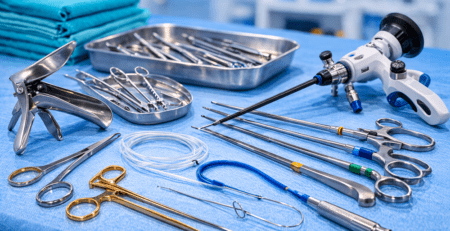
Driven by advancements in arthroscopic interventions, complex ligament repairs and joint debridements are increasingly performed in day-surgery environments. Domestic manufacturers support this shift by producing durable high-definition endoscopy camera towers, specialized cold-light LED sources, and precision arthroscopic shavers and handpieces. Additionally, local production of certified orthopedic implants and bio-absorbable fixation screws keeps high-volume procedures affordable and accessible.
Gastroenterology
With routine diagnostic and interventional endoscopies growing rapidly, the demand for reliable visualization systems is high. Indian medical technology companies produce durable, high-definition flexible video-endoscopes, specialized insufflators, and automated endoscope reprocessors (AER). This equipment allows gastroenterology ASCs to maintain high hygiene standards and rapid room turnover, maximizing daily procedure capacity safely.
7. Future Outlook: Scaling the ASC Frontier Globally
The partnership between Indian medical device manufacturers and Ambulatory Surgery Centers is moving into a promising new phase. As domestic producers increase their investment in research and development, we are seeing the emergence of advanced, next-generation technologies, including artificial intelligence-driven diagnostic imaging software, smart IoT-enabled telemetry arrays, and agile robotic-assisted surgical platforms optimized for outpatient environments.
This evolution has positive implications that extend far beyond domestic borders. The value-engineered, highly reliable, and space-efficient medical equipment designed for Indian ASCs is also exceptionally well-suited for outpatient clinics in emerging markets across Southeast Asia, the Middle East, Africa, and Latin America. By proving the viability of this model locally, Indian manufacturers are establishing a clear global benchmark for affordable, high-quality, and accessible outpatient surgical care.
Ultimately, this collaboration demonstrates that transforming healthcare does not require over-designed, hyper-expensive infrastructure. True progress lies in smart, purposeful innovation, rigorous quality standards, and an unwavering focus on operational efficiency.
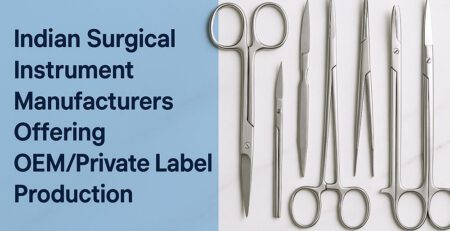
Guided by these principles, Indian surgical instrument manufacturers are helping build a more sustainable, resilient, and patient-centered future for healthcare delivery.
Data & Literature References Note: Baseline market statistics, compound annual growth metrics, and macro sector segmentation trends detailed throughout this analysis are sourced directly from registered industrial tracking datasets, including the India Medical Devices Market Architecture Framework (2026-2034) by IMARC Group, the India Ambulatory Surgical Centers Market Competitor Analysis Matrix (2024-2030) by TechSci Research, and contextual regulatory updates published by the Department of Pharmaceuticals, Government of India.







Leave a Reply