
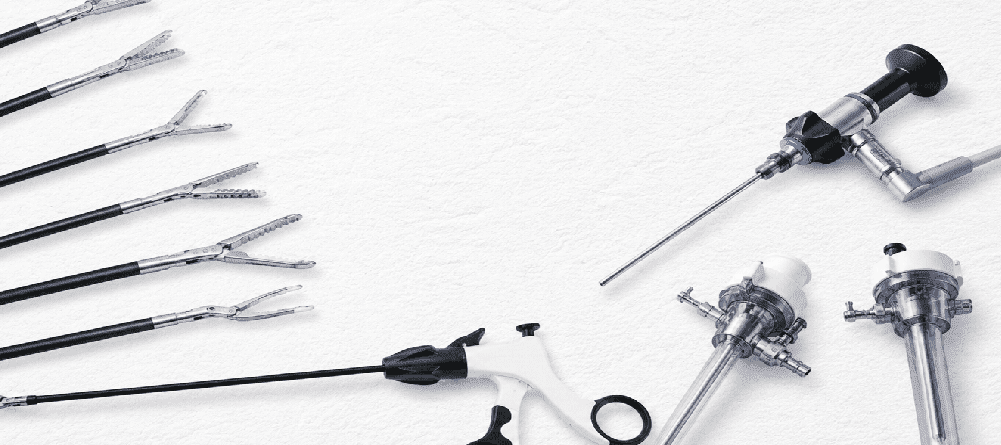
Minimally invasive surgery has fundamentally changed the way modern healthcare approaches treatment. Procedures that once required larger incisions, extended hospitalization, and longer recovery periods are now routinely performed using advanced laparoscopic instruments, endoscopy surgical equipment, and precision-driven medical devices.
But as minimally invasive procedures continue to evolve, one thing has become increasingly clear in operating rooms: surgical outcomes are influenced not only by surgeon skill but also by the precision of the instruments used.
In modern surgery, instrument precision affects almost everything: tissue handling, procedural control, operating room efficiency, surgeon comfort, visualization accuracy, and ultimately patient recovery. This is especially true in laparoscopic surgery, endourology, gynecology, and other procedures in which surgeons operate through narrow access points with indirect visualization.
For hospitals investing in modern surgical equipment and hospital-grade medical devices, precision is no longer viewed as a premium feature. It has become a basic clinical expectation.
Why Precision Matters More in Minimally Invasive Surgery
In open surgery, surgeons work with direct visibility and tactile feedback. They can physically feel tissue resistance and manipulate structures more freely. Minimally invasive surgery creates a very different environment.
Procedures performed using laparoscopic instruments or endoscopic urology systems rely heavily on monitor-based visualization and long surgical hand instruments. The surgeon’s ability to feel tissue directly is reduced, which means instrument response becomes critically important.
Even slight inconsistencies in jaw alignment, articulation, or grip stability become noticeable very quickly during surgery. A laparoscopic grasper that closes unevenly or a needle holder that loses precision after repeated sterilization cycles can affect procedural confidence far more than most people outside the operating room realize.
This is one reason hospitals increasingly evaluate experienced surgical instruments manufacturers and suppliers in India based not only on certifications, but also on long-term instrument consistency.
Also read:
Top 10 Factors That Influence Surgical Instrument Pricing in India
Frequently Asked Questions About Surgical Instrument Manufacturing in India
Understanding ISO Certification in Surgical Instrument Manufacturing
Precision Directly Influences Surgical Control
Modern minimally invasive surgery depends heavily on controlled movement.
During laparoscopic procedures, surgeons expect instruments to respond smoothly and predictably. Stable articulation, balanced grip pressure, and accurate force transmission help maintain procedural flow, especially during delicate dissection or intracorporeal suturing.
When precision is compromised, surgeons often compensate subconsciously by adjusting hand movement, applying additional pressure, or repositioning instruments more frequently. Over time, this affects efficiency and increases procedural fatigue.
High-quality laparoscopic surgical tools are designed to minimize these inconsistencies. Precision engineering helps ensure that the instrument behaves predictably throughout the procedure rather than becoming a source of distraction inside the operating room.
Also read:
Quality Standards for Laparoscopic Equipment Manufacturing
Laparoscopic Instrument Suppliers in Delhi: Why the Capital Is a Hub for Quality Tools
The Relationship Between Precision and Tissue Handling
One of the biggest goals of minimally invasive surgery is to reduce tissue trauma. Smaller incisions alone do not guarantee that outcome. Instrument quality also plays a major role.
Precision surgical tools allow surgeons to manipulate tissue with greater control and stability. This becomes especially important in procedures involving delicate anatomical structures.
Instruments with poor grip balance or inconsistent jaw closure may increase tissue slippage or require repeated repositioning. Over time, even these small inefficiencies can affect procedural smoothness.
This is particularly relevant in specialties using highly specialized equipment such as:
Gynecology surgical instruments, urology surgical instruments, pediatric surgical instruments, and advanced laparoscopic surgery equipment all require extremely controlled movement during procedures where visibility and access are limited.
Why Surgeons Notice Jaw Alignment Immediately
Among experienced surgeons, jaw precision is often one of the first things evaluated in a laparoscopic instrument.
If the jaws do not align properly, tissue handling becomes inconsistent almost immediately. The gripping force may vary across the surface, articulation may feel unstable, and overall procedural confidence decreases.
Modern laparoscopic grasping forceps, laparoscopic needle holders, biopsy forceps, and laparoscopic hand instruments are expected to maintain consistent alignment even after extensive clinical use.
This level of consistency depends heavily on manufacturing quality, machining accuracy, hinge engineering, and material selection.
Reliable medical device companies in India increasingly focus on precision manufacturing because surgeons today evaluate instruments with far greater scrutiny than before.
Precision and Visualization Work Together
Minimally invasive surgery relies heavily on visualization systems.
Modern operating rooms now use advanced:
Laparoscopy towers and monitors, surgical camera systems India, laparoscopic visualization tools, and endoscopy surgical equipment to improve procedural visibility.
However, visualization alone is not enough. Even the best imaging systems cannot compensate for inconsistent instrument movement.
When a surgeon sees tissue clearly but cannot manipulate it precisely due to unstable articulation or poor grip control, procedural efficiency declines quickly.
This is why modern minimally invasive surgery depends equally on imaging quality and instrument precision.
Why Repeated Sterilization Cycles Matter
Reusable laparoscopic instruments go through repeated sterilization cycles throughout their lifespan. Over time, lower-quality instruments may begin to show subtle but important changes.
Hinges may become stiff, jaw alignment may shift slightly, insulation can deteriorate, and articulation may lose smoothness. These issues often develop gradually, which is why hospitals increasingly focus on long-term durability rather than simply initial appearance.
Procurement teams now evaluate:
CE certified surgical devices, sterilization durability, stainless steel quality, passivation standards, and manufacturing consistency before selecting a certified surgical equipment supplier.
This shift reflects a broader understanding that precision must remain stable over repeated clinical use — not just during the first few procedures.
Operating Room Efficiency Depends on Instrument Reliability
Modern hospitals operate under constant pressure to improve efficiency.
Operating room delays, repeated instrument replacement, and workflow interruptions create significant operational costs over time. Even minor inconsistencies in surgical tools can affect:
- procedure duration
- staff coordination
- surgeon concentration
- patient throughput
Hospitals investing in quality assured OT equipment, reliable OT equipment vendor partnerships, and advanced surgery device supplier systems increasingly recognize that precision affects not only surgery itself, but also overall operating room performance.
This is one reason healthcare providers are becoming more selective about surgical equipment for hospitals and minimally invasive surgery systems.
Precision Is Especially Critical in Urology and Endoscopy
Precision becomes even more important in endourology and minimally invasive urology procedures.
Modern urology equipment manufacturers in India now design highly specialized systems for procedures such as ureteroscopy, PCNL, cystoscopy, TURP surgery, and endoscopic stone management.
These procedures involve extremely narrow anatomical pathways where even slight instrument instability may affect procedural control.
Devices such as nephroscopes, ureteroscopes, graspers, dilators, and lithotripsy systems must maintain highly controlled performance throughout the procedure.
This growing demand for consistency has increased focus on high-precision urology tools in India and advanced minimally invasive urology systems.
Also read:
How AI Is Transforming Urology Imaging and Diagnosis
Why Hospitals Worldwide Source Urology Instruments from India
The Growing Role of Indian Manufacturers
India has emerged as a major manufacturing hub for surgical instruments, laparoscopic devices, endoscopy systems, and hospital equipment.
Global healthcare providers increasingly source from experienced surgical equipment manufacturers in Delhi, India-based laparoscopic device companies, and Indian surgical devices exporter networks because of improving manufacturing capability and expanding international compliance standards.
However, procurement expectations are also becoming more sophisticated.
Hospitals now evaluate manufacturers based on: precision consistency, sterilization durability, export readiness, workflow compatibility, and long-term clinical reliability.
This has encouraged many top surgical suppliers in India to focus more heavily on manufacturing quality rather than purely price-driven competition.
Precision Also Impacts Surgeon Confidence
One of the less discussed aspects of minimally invasive surgery is the relationship between instrument precision and surgeon confidence.
When instruments behave predictably, procedures tend to flow more naturally. Surgeons spend less mental energy compensating for movement inconsistencies and more attention on procedural decision-making.
Over long procedures, this matters significantly.
Reliable articulation, stable grip response, and smooth instrument movement reduce cognitive strain during surgery. This is especially important in complex laparoscopic, gynecological, and urological procedures where precision directly influences procedural safety.
The Future of Precision-Driven Surgical Equipment
Modern minimally invasive surgery will continue evolving alongside advances in imaging systems, ergonomics, and digital integration.
Future developments are likely to focus on: lighter laparoscopic instruments, smarter visualization integration, better ergonomic handling, improved articulation systems, and more durable reusable surgical tools.
As procedures become more advanced, expectations around instrument precision will continue increasing as well.
Manufacturers that understand real operating room workflows — not just product specifications — will be better positioned to support modern healthcare systems in the coming years.
Conclusion
Instrument precision directly affects nearly every aspect of minimally invasive surgery, from tissue handling and procedural control to surgeon comfort and operating room efficiency.
Modern hospitals are no longer evaluating surgical instruments based only on cost or product appearance. Increasingly, they are prioritizing consistency, articulation quality, long-term durability, and predictable clinical performance.
As minimally invasive procedures continue growing worldwide, experienced surgical equipment suppliers in India, are playing an increasingly important role in supporting precision-driven surgical environments for modern healthcare systems.




Leave a Reply