
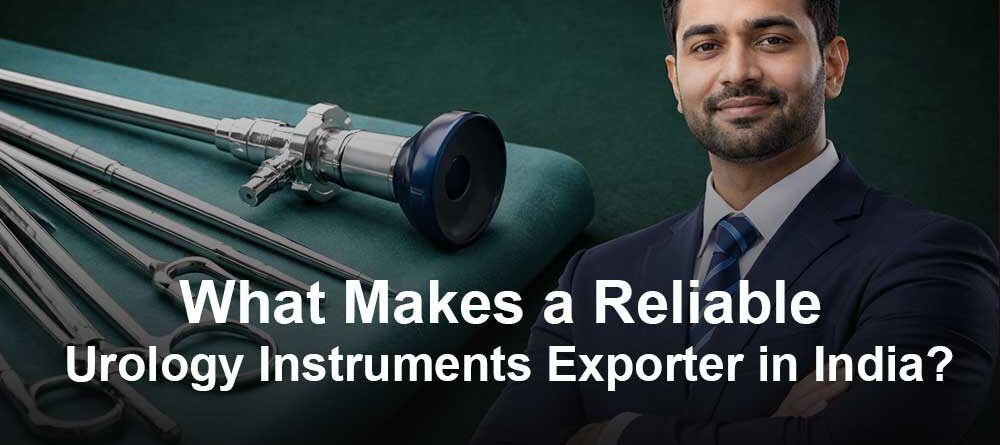
“Finding the right exporter changes more than a supply chain — it changes patient outcomes.”
When a hospital, clinic, or medical distributor outside India searches for high-quality urology tools, the decision often comes down to one question: can this supplier be trusted? Choosing a reliable Urology Instruments Exporter in India means balancing cost, quality, delivery, regulatory compliance, and long-term service. In this guide I’ll walk you through everything procurement teams and buyers need to know — from vetting factories and certifications to post-sale support, logistics, and real-world tips that save time and money.
Why choose an Indian exporter for urology instruments?
India has matured into a global hub for medical instruments. The reasons hospitals and distributors choose an Indian partner repeatedly are practical: competitive pricing, broad product ranges, manufacturing expertise that mixes craftsmanship with modern machining, and an export ecosystem built around compliance and responsiveness.
But not all exporters are equal. The best Urology Instruments Exporter in India blends technical know-how with dependable processes — and the ability to support you after the sale.
Core traits of a reliable urology instruments exporter
Look for these non-negotiable traits when shortlisting suppliers.
1. Proven quality systems and international certifications
A dependable exporter has documented quality systems. Certifications to check include:
- ISO 13485 — medical device quality management system
- CE marking — for exports into Europe (where applicable)
- US FDA registration/clearance — if they serve North American markets or supply OEMs that require FDA traceability
- GMP (Good Manufacturing Practices) and internal QA audits
Ask for certificates, recent audit reports, and the scope of each certificate (which products it covers). Genuine exporters will freely supply these documents and explain their quality controls.
2. Transparent manufacturing and material traceability
Top exporters track raw material batches (steel grade, heat-treatment records, etc.) and have visible process control points: forging, machining, heat treatment, finishing, and final inspection. For urology instruments — where corrosion resistance and precise tolerances matter — material traceability is essential. Request a material certificate (MTC) and batch test reports for the lot you’ll receive.
3. Consistent inspections and measurement capability
Reliable manufacturers use calibrated measurement tools (CMM, optical comparators, hardness testers) and maintain traceable calibration records. They also perform visual and functional checks — for example, hinge play for graspers or jaw alignment for forceps — and record pass/fail results for every batch.
4. Product range and specialty expertise
Urology is a specialized field. A good exporter offers more than a generic surgical instrument line: ureteroscopic graspers, stone baskets, dilators, resectoscopes, nephroscopes, PCNL sets, biopsy forceps, and endourology accessories. Depth of catalog indicates domain knowledge and allows you to source more items from a single trusted partner.
5. Regulatory support and documentation
Exporters must provide technical files, sterilization validation (if supplying sterile kits), device master records, and IFUs (instructions for use) in the language required by the importing country. They should assist with customs classification (HS codes) and provide CE/FDA documentation where necessary.
6. Strong service and spare parts capability
Urology tools often require spares (working elements, valves, O-rings) and occasional servicing. The exporter should offer spare-part listings, recommended inventory levels, and clear lead times. For high-use items, availability of local distributor stock is a huge advantage.
7. Manufacturer vs trader — know the difference
Some exporters are direct manufacturers (vertical integration), while others are trading companies reselling multiple brands. Both can be reliable, but they offer different benefits:
- Manufacturers: Better control over product quality, quicker customizations, and direct access to production tests and MTCs.
- Traders/distributors: Wider product selection and often faster logistics because they hold inventory.
Decide which model fits your risk profile and needs.
Red flags to watch for when evaluating an exporter
- No or vague certifications — if a supplier hesitates to show ISO/CE/FDA paperwork, move on.
- Reluctance for factory visits or virtual tours — transparency matters.
- Impossible lead-time claims — realistic suppliers provide production schedules and batch timelines.
- Unclear warranty terms or lack of after-sales support.
- Price-only negotiations with no discussion of TCO (lifecycle costs, probes, sterilization compatibility).
How to vet suppliers step-by-step
Follow this practical workflow when vetting a potential Urology Instruments Exporter in India.
Step 1 — Request documentation
- ISO 13485 certificate and scope
- CE/FDA registration details if applicable
- Material Certificates (MTCs), heat-treatment records
- Calibration certificates for measuring equipment
- Sample IFUs and packaging specifications
Step 2 — Ask for samples and test them
Never buy sight unseen. Order representative samples of the exact model and batch you plan to purchase. Put instruments through your clinical checklist:
- Visual finish and surface quality
- Functional checks (hinge action, jaw alignment, locking mechanism)
- Compatibility with your sterilization process (autoclave cycles)
- Dimensional checks against your acceptance criteria
Step 3 — Factory audit or virtual tour
For large or recurring orders, perform a factory audit. If travel is difficult, request a live virtual tour focusing on production lines, raw material storage, heat treatment furnaces, and final inspection areas. Ask to see batch documentation for the sample you received.
Step 4 — Check references and export history
Ask for client references, ideally in your region. A trustworthy exporter will provide contactable hospital or distributor references. Cross-check whether they’ve handled shipments to the same regulatory region as yours.
Step 5 — Confirm after-sales network
Clarify spare-part lead times, warranty claim processes, and who will handle on-site issues (local distributor, regional service partner, or the manufacturer directly).
Pricing and total cost of ownership (TCO)
Price is important, but the cheapest quote is rarely the best long-term value. Consider these TCO elements:
- Unit cost — initial purchase price
- Shipping & duties — landed cost depends on Incoterms (FOB, CIF, DDP)
- Consumables & disposables — stone baskets, single-use sheathes, etc.
- Sterilization & reprocessing — instrument lifespan is affected by the sterilization method and handling; cheaper instruments may wear out faster
- Spare parts & repairs — include likely part replacements over the instrument’s expected life
- Downtime costs — availability of spares and speed of repairs affect theatre scheduling
Ask each supplier for a simple 3–5 year TCO model. Compare on a per-case or per-year basis rather than a single upfront number.
Logistics, packaging, and sterilization considerations
Packed for transit and shelf life
Export packaging must protect instruments during long transports and multiple handling events. Look for:
- Shock-resistant inner packaging
- Clear labels with HS codes and batch numbers
- Sterility indicators if shipping sterile kits
Sterilization compatibility
Ensure instruments are compatible with your sterilization process. Many Indian exporters label instruments as autoclave-safe, but you should verify compatibility across your autoclave temperature/time cycles and with chemical sterilants if used. Ask for autoclave validation data where possible.
Customization and private labelling
One major advantage of working with Indian exporters is the ease of customization. Common options include:
- Instrument length or tip configuration changes
- Private labeling and custom packaging
- Custom instrument sets (assembled per your OR preferences)
If you need customizations, ensure changes are documented in the purchase order and test samples are approved before mass production.
Contracts, warranties, and payment terms
Standard commercial clauses to negotiate:
- Warranty scope — parts, workmanship, and specific exclusions (wear & tear, misuse)
- Lead times & penalties — agree realistic lead times and remedies if they are missed
- Payment terms — typical terms include 30–50% advance and balance on shipment or after inspection
- Inspection & acceptance criteria — define how goods will be inspected on arrival and what constitutes acceptance or rejection
- After-sales SLA — response times for spares and repair
Use Letters of Credit (LC) or escrow arrangements for high-value initial orders if trust is still being established.
Case studies: practical lessons from buyers
Case 1 — Multi-year partnership with an OEM manufacturer
A European distributor moved from a trading partner to a direct OEM manufacturer in India after a successful trial. Benefits included lower per-unit cost, faster customizations for private-label sets, and direct access to factory QA documentation. The transition required an initial factory audit and staged orders but resulted in a 20–30% reduction in landed costs over three years.
Case 2 — Fast-moving consumables and local stocking
A hospital group in Africa reduced stockouts by selecting an Indian exporter with a regional distributor who stocked high-use disposable stone baskets and guidewires. The distributor provided next-day delivery for common items, avoiding costly delays.
How to scale with your exporter as demand grows
Start with a pilot order and scale via clear KPIs:
- Quality acceptance rate (defects per batch)
- On-time delivery percentage
- Repair turnaround time
- Customer service response time
Set these KPIs in your contract and schedule quarterly reviews. A collaborative approach — sharing forecasts and production needs — helps both buyer and exporter plan capacity and avoid rush premiums.
Regulatory updates and import compliance
Import regulations vary by country and change. Reliable exporters proactively support compliance by:
- Providing accurate HS codes and tariff classifications
- Offering CE/FDA technical files and local language IFUs
- Assisting with product registration and registration dossiers where required
Buyers should check local regulatory requirements and ask potential exporters whether their products have been registered or cleared in similar markets.
Procurement checklist — quick reference
- Request ISO 13485 and relevant certificates.
- Order and test representative samples.
- Verify material certificates and calibration logs.
- Confirm sterilization compatibility and autoclave data.
- Get spare parts list and recommended inventory levels.
- Ask for client references and regional distributor contacts.
- Agree on detailed TCO for 3–5 years.
- Negotiate warranty, SLA, and lead-time penalties.
- Start with a pilot order and scale with KPIs.
Frequently asked questions (short)
Q: Should I choose a manufacturer or a trading company?
A: If you need heavy customization or want direct production oversight, pick a manufacturer. For a wide catalogue and local inventory, a trading company with good vendor relationships may be better.
Q: How many samples should I test?
A: At least 3–5 units per SKU for functional checks; more if items are highly specialized or SMT-like assemblies.
Q: Can I get private label packaging?
A: Yes — most Indian exporters offer private labelling and custom sets, but expect minimum order quantities (MOQs) for branded packaging.
Final thoughts — building a durable buying relationship
A reliable Urology Instruments Exporter in India is more than a supplier — they are a partner in patient care. The right exporter brings consistent quality, transparent compliance, predictable logistics, and fast post-sale support. Start small, verify carefully, and scale with clear metrics. When you build the relationship on verified quality data, site visits (or virtual audits), and mutual commercial clarity, you get far more than instruments — you get dependability.










Leave a Reply