
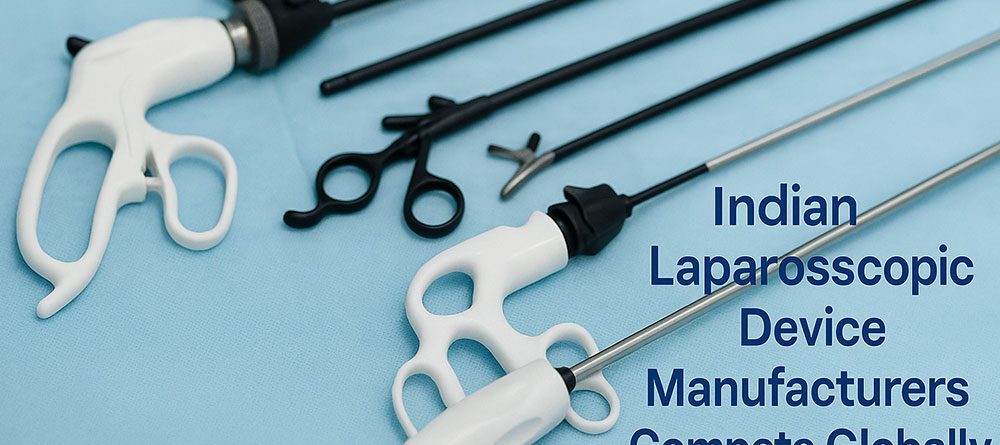
Over the last two decades, minimally invasive surgery (MIS) has become the international gold standard for hundreds of procedures. From appendectomies to bariatric surgeries, laparoscopic techniques offer smaller incisions, faster recovery, reduced patient trauma, and greater surgical precision. As the global demand for MIS increases, so does the need for reliable, durable, and technologically advanced laparoscopic devices. And in this rapidly expanding market, Laparoscopic Device Manufacturers in India have emerged as competitive global players.
Once considered a manufacturing hub for basic surgical tools, India is now recognized for producing world-class laparoscopic instruments that rival leading brands from Germany, the United States, and Japan. What sets India apart is the ability to blend cutting-edge engineering with affordability, customization, and large-scale production—making high-quality laparoscopic care accessible across the world.
This comprehensive 3000-word article presents a detailed, humanized, and comparative analysis of how Indian laparoscopic manufacturers stand against global competitors, what makes them unique, how their instruments perform, and why the world increasingly trusts India for advanced laparoscopic needs.
1. The Rise of Indian Laparoscopic Manufacturing
India’s entry into the global laparoscopic market was not accidental—it was the result of decades of medical engineering evolution. As MIS became more widely practiced in Indian hospitals during the early 2000s, a new wave of demand for locally produced, high-quality instruments began to grow. Instead of relying solely on expensive imports, domestic manufacturers invested in technology, precision engineering, and global certification.
Today, Laparoscopic Device Manufacturers in India supply to more than 80 countries, serving hospitals, distributors, OEM partners, and government healthcare programs. Their products are widely used in:
- General surgery
- Gynecology
- Urology
- Gastroenterology
- Bariatric surgery
- Colorectal surgery
This international presence is backed by years of innovation, consistent quality improvements, and a deep understanding of surgeon needs.
2. What Makes Indian Laparoscopic Manufacturers Globally Competitive?
To understand India’s success in the global laparoscopic device market, it’s important to look at the fundamental advantages Indian manufacturers bring to the table.
1. Advanced Manufacturing Technology
Modern Indian laparoscopic factories use the same technologies seen in top-tier global facilities:
- CNC-based precision machining
- German-grade stainless steel and titanium
- Laser cutting and micro-welding
- Robotic polishing systems
- Ultra-fine grinding for ergonomic handles
- Automated quality checks
These technologies ensure dimensional accuracy, surgical precision, durability, and smooth instrument function—critical factors in laparoscopic surgery.
2. Skilled Workforce with Generations of Craftsmanship
Indian surgical instrument technicians are globally respected for their metal craftsmanship. Many workers come from families with decades of experience in medical manufacturing. This blend of traditional craftsmanship and modern engineering creates instruments with exceptional performance and finish.
3. Cost Advantage Without Compromising Quality
One of the strongest advantages India offers is the ability to produce world-class quality at significantly reduced prices. This is primarily due to:
- Lower labor and operational costs
- Local availability of raw materials
- High-volume production capacities
- Efficient supply chains
Surgeons and hospitals across Europe, Africa, Asia, and Latin America often choose Indian manufacturers because they provide the same performance as global brands at a fraction of the cost.
4. Flexible Customization & OEM Capabilities
International brands looking to expand their laparoscopic product line often rely on Laparoscopic Device Manufacturers in India for OEM/private label manufacturing. Indian suppliers can tailor designs to client specifications, including:
- Custom handle ergonomics
- Device re-engineering for specific surgeries
- Branded engraving
- Sterile packaging
- Color-coded instruments
This flexibility gives Indian manufacturers a major competitive edge over older European companies, where customization often comes at a premium cost.
5. Strong Compliance with Global Standards
Indian exporters follow internationally accepted medical manufacturing benchmarks such as:
- ISO 13485
- CE certification
- GMP compliance
- RoHS standards
- Sterilization validation protocols
This ensures instruments meet the safety, performance, and durability expectations of healthcare systems worldwide.
3. Indian vs. Global Laparoscopic Equipment: A Side-by-Side Comparison
To understand how Indian instruments compare to international competitors, let’s examine key performance and quality parameters.
1. Material Quality
- Indian Manufacturers: Use high-grade stainless steel (SS304, SS410, SS420), titanium, and medical-grade polymers.
- Global Brands (Germany/US/Japan): Also use similar or identical materials, sometimes with proprietary coatings.
Conclusion: Material quality is nearly identical across Indian and global brands.
2. Precision Engineering
- Indian devices: Achieve precision through CNC machining, laser cutting, and multi-stage polishing.
- Global devices: Known for ultra-high tolerance machining and decades of engineering refinement.
Conclusion: The gap has significantly narrowed; top Indian manufacturers match global standards in machining accuracy.
3. Ergonomics and Surgeon Comfort
- Indian devices: Designed with ergonomic grips, lightweight instruments, and anti-slip handles.
- Global devices: Slight edge due to decades of R&D and surgeon feedback programs.
Conclusion: Indian ergonomics are excellent, but select global brands still offer more refined handle designs.
4. Durability & Reusability
- India: High-quality reposable and reusable instruments lasting 3–5 years with proper care.
- Global brands: Often last longer (5–8 years) due to proprietary alloys and advanced coatings.
Conclusion: Top Indian devices offer excellent value, but premium global brands may have longer lifespans.
5. Sterilization Compatibility
- Indian devices: Fully autoclave-compatible, rust-proof, and designed for repeated sterilization.
- Global devices: Often feature advanced anti-corrosion coatings.
Conclusion: Both perform well; coating differences offer marginal improvements for premium brands.
6. Pricing
- India: 30–70% more affordable than global manufacturers.
- Global brands: High premium pricing due to brand reputation and decades of R&D.
Conclusion: India wins by a significant margin when it comes to cost-effectiveness.
7. After-Sales Support
- India: Strong support for distributors and international customers, including quick replacements and OEM support.
- Global brands: More extensive global networks but slower and more expensive service.
Conclusion: India provides faster and more flexible after-sales support.
4. The Most Exported Laparoscopic Instruments from India
Indian manufacturers produce a complete range of laparoscopic devices used across surgical specialties. The most commonly exported include:
General Laparoscopic Instruments
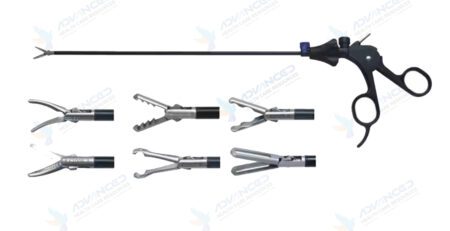
- Graspers (atraumatic, fenestrated, toothed)
- Dissectors
- Scissors (Maryland, Metzembaum, curved/straight)
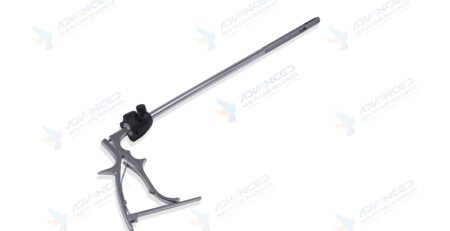
- Clip applicators
- Trocar and cannula systems
Energy & Electrosurgical Instruments
Advanced Laparoscopic Devices
- Hernia staplers
- Bariatric instruments
- Articulated tools
Reusable & Reposable Instruments
- Titanium instruments
- Polymer-handle instruments
- Hybrid reposable systems
These products are exported to hospitals, distributors, medical universities, and global brands for private labeling.
5. Why Global Hospitals Choose Indian Laparoscopic Devices
Hospitals worldwide turn to Indian suppliers for a variety of reasons—and not just cost. Here’s why Indian laparoscopic devices are becoming a global favorite.
1. Consistent and Reliable Performance
Modern Indian laparoscopic instruments deliver reliable clinical outcomes, smooth instrument handling, and precision control—all essential for MIS procedures.
2. Affordability for Emerging Markets
Africa, Latin America, and Southeast Asia rely heavily on Indian devices because they offer premium quality without the premium price tag.
3. Strong Export Capabilities
India has a well-developed export ecosystem with:
- Fast documentation
- Efficient shipping networks
- Low logistic barriers
4. Custom Surgical Kits
Indian manufacturers create complete surgical sets customized for specific specialties, saving hospitals time and effort in procurement.
6. The Future of Laparoscopic Device Manufacturing in India
The future looks exceptionally promising for Indian laparoscopic manufacturers as they invest in:
- Robotics-assisted manufacturing
- AI-powered QC inspections
- Biocompatible coatings
- Smart laparoscopic tools
- Disposable MIS instruments
India is moving from “cost-effective alternative” to “innovation-driven leader” in the global MIS industry.
7. Final Thoughts
Laparoscopic Device Manufacturers in India have secured their position on the world stage by offering world-class engineering, competitive pricing, flexible customization, and strong after-sales support. While global brands still lead in decades-old reputation and certain advanced coatings or robotic systems, Indian manufacturers have successfully bridged the quality gap—making high-end laparoscopic care accessible across continents.
For hospitals, medical distributors, and global healthcare companies looking for reliable laparoscopic solutions, India represents the perfect balance of innovation, performance, affordability, and long-term value.
As technology evolves and manufacturing systems become even more sophisticated, India is poised to become not just a competitive participant in the global MIS industry—but a leader shaping its future.





Leave a Reply