
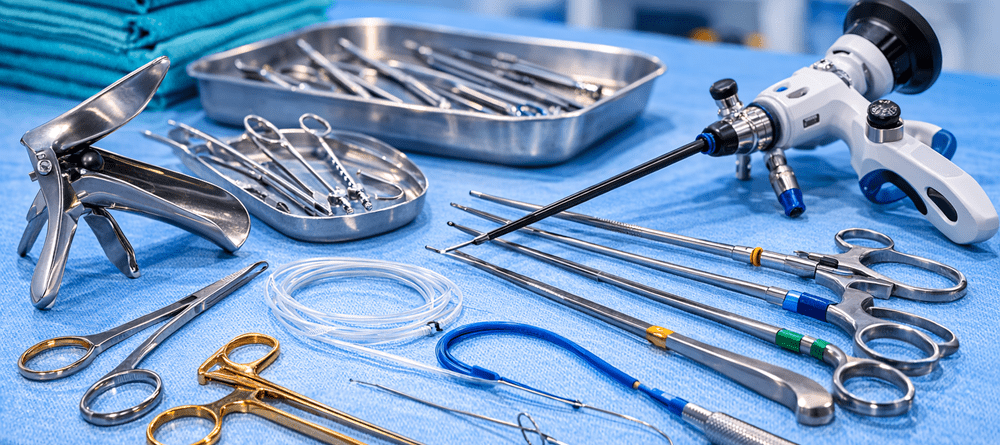
Hospitals and healthcare providers often have questions when selecting surgical equipment and medical device suppliers. Understanding how surgical instruments are manufactured, regulated, and used across different specialties can help procurement teams make informed decisions.
This FAQ guide answers common questions related to surgical instruments manufacturers in India, including topics such as gynecology instruments, laparoscopic equipment, urology tools, manufacturing standards, and medical device regulations.
1. Who are surgical instruments manufacturers in India?
Surgical instruments manufacturers in India design and produce medical tools used in surgical procedures across specialties such as gynecology, laparoscopy, and urology.
2. What are surgical instruments?
Surgical instruments are specialized medical tools used by surgeons to perform procedures such as cutting, grasping, retracting, suturing, and manipulating tissues during surgery.
3. What types of surgical instruments are commonly used in hospitals?
Hospitals use instruments such as scalpels, forceps, scissors, clamps, retractors, laparoscopic tools, and endoscopic instruments designed for different surgical specialties.
4. What are gynecology surgical instruments?
Gynecology instruments are tools used to diagnose and treat conditions related to the female reproductive system. Common examples include speculums, uterine dilators, curettes, biopsy forceps, and hysteroscopy instruments.
5. What are laparoscopic instruments?
Laparoscopic instruments are surgical tools used in minimally invasive procedures. They are inserted through small incisions and include graspers, scissors, trocars, needle holders, and clip applicators.
6. What are urology surgical instruments?
Urology instruments are tools used for diagnosing and treating conditions affecting the urinary tract and male reproductive system. Examples include cystoscopes, ureteroscopes, lithotripters, and PCNL instruments.
7. What is minimally invasive surgery?
Minimally invasive surgery uses specialized instruments and cameras to perform procedures through small incisions. This approach typically reduces recovery time, surgical trauma, and hospital stays.
8. What materials are used in surgical instrument manufacturing?
Surgical instruments are typically made from stainless steel, titanium alloys, or tungsten carbide. These materials provide strength, corrosion resistance, and compatibility with repeated sterilization.
9. Why is stainless steel used in surgical instruments?
Stainless steel is widely used because it is strong, corrosion-resistant, and able to withstand repeated sterilization without losing performance.
10. How are surgical instruments manufactured?
Surgical instruments are manufactured through processes such as forging, machining, heat treatment, polishing, and quality inspection to ensure accuracy and durability.
11. Why is precision important in surgical instruments?
Precision allows surgeons to perform procedures accurately and safely. High-precision instruments are especially important for laparoscopic and endoscopic surgeries.
12. Can surgical instruments be reused?
Many surgical instruments are reusable and designed to withstand multiple sterilization cycles without losing performance.
13. How are surgical instruments sterilized?
Common sterilization methods include steam sterilization (autoclaving), ethylene oxide sterilization, plasma sterilization, and dry heat sterilization.
14. Why is sterilization important for surgical instruments?
Sterilization eliminates bacteria and microorganisms from surgical tools, helping reduce the risk of infections during medical procedures.
15. What are surgical instruments manufacturers in India known for?
Surgical instruments manufacturers in India are known for producing high-quality medical tools across specialties such as gynecology, laparoscopy, and urology while maintaining competitive pricing.
16. Which cities in India are known for surgical instrument manufacturing?
Major manufacturing hubs include Delhi NCR, Jalandhar, Mumbai, Chennai, and Hyderabad.
17. Do Indian manufacturers export surgical instruments internationally?
Yes. Many surgical instruments manufacturers in India export medical devices and surgical tools to hospitals and distributors worldwide.
18. How do hospitals choose surgical instrument manufacturers?
Hospitals evaluate manufacturers based on certifications, product quality, regulatory compliance, manufacturing expertise, and supply reliability.
19. What certifications should hospitals look for in surgical instrument suppliers?
Hospitals typically prefer suppliers with ISO certification and documented quality management systems for medical device manufacturing.
20. What regulatory authority oversees medical devices in India?
The Central Drugs Standard Control Organization (CDSCO) regulates medical devices in India.
21. What are the Medical Device Rules 2017?
The Medical Device Rules 2017 establish regulations for the manufacture, import, and sale of medical devices in India.
22. How are medical devices classified in India?
Medical devices are categorized into Class A, B, C, and D depending on the level of risk associated with their use.
23. What surgical instruments fall under Class A medical devices?
Basic instruments such as scalpels, scissors, and forceps typically fall under Class A devices because they present relatively low risk.
24. What is ISO certification in surgical instrument manufacturing?
ISO certification indicates that a manufacturer follows internationally recognized quality management standards during production.
25. What is ISO 13485 certification?
ISO 13485 is a quality management system standard specifically designed for medical device manufacturers.
26. Why is ISO 13485 important for surgical instrument manufacturers?
ISO 13485 ensures manufacturers follow strict quality control, documentation, and risk management practices throughout the production process.
27. What is the difference between ISO 9001 and ISO 13485?
ISO 9001 applies to general quality management systems, while ISO 13485 focuses specifically on medical device manufacturing.
28. Why do hospitals prefer ISO-certified surgical instrument manufacturers in India?
ISO certification demonstrates that manufacturers follow recognized international standards for quality, safety, and regulatory compliance.
29. What is NABH accreditation?
NABH accreditation establishes quality and safety standards for hospitals and healthcare providers in India.
30. Why do NABH hospitals prefer certified suppliers?
Certified suppliers help hospitals maintain compliance with healthcare quality and patient safety standards.
31. Why should hospitals source from trusted surgical instruments manufacturers in India?
Trusted manufacturers provide reliable instruments that meet regulatory requirements, quality standards, and clinical performance expectations.
32. What laparoscopic equipment is used in minimally invasive surgery?
Laparoscopic surgery uses equipment such as trocars, graspers, scissors, clip applicators, needle holders, and high-definition cameras that allow surgeons to operate through small incisions.
33. What instruments are commonly used in gynecological procedures?
Gynecological procedures commonly use instruments such as vaginal speculums, uterine dilators, curettes, biopsy forceps, and hysteroscopy instruments.
34. What instruments are used in kidney stone treatment?
Kidney stone procedures often use ureteroscopes, lithotripters, stone retrieval baskets, and PCNL instruments to locate and remove stones from the urinary tract.
35. How long do surgical instruments typically last?
High-quality surgical instruments can last many years if they are properly maintained, sterilized correctly, and handled carefully during procedures.
36. How do hospitals evaluate surgical instrument quality?
Hospitals evaluate instrument quality by reviewing certifications, inspecting materials and finishes, testing functionality, and assessing manufacturer reliability.
37. What factors influence surgical instrument durability?
Durability depends on material quality, manufacturing precision, heat treatment processes, and proper cleaning and sterilization practices.
38. What is the difference between reusable and disposable surgical instruments?
Reusable instruments are designed for repeated sterilization and long-term use, while disposable instruments are intended for single use to reduce infection risk.
39. What should hospitals consider when selecting surgical equipment suppliers?
Hospitals should evaluate supplier certifications, product quality, manufacturing experience, technical support, and reliability of supply.
40. How is technology improving surgical instrument manufacturing?
Modern manufacturing technologies such as CNC machining, precision engineering, and automated quality inspection improve instrument accuracy and consistency.
41. Why is choosing the right surgical instrument manufacturer important?
Choosing the right manufacturer ensures hospitals receive reliable instruments that meet safety standards and support effective surgical procedures.
For a detailed explanation of quality standards in surgical instrument production, read our guide on
Understanding ISO Certification in Surgical Instrument Manufacturing
.








Leave a Reply